
Quick Reference
c. 1928
Harrison Keach Farm
Oil on Canvas
Landscape
Sugaring
24" X 36"
Hung in Greenfield's Weldon Hotel
The Weldon Hotel
NA
Related Links
- See also the...
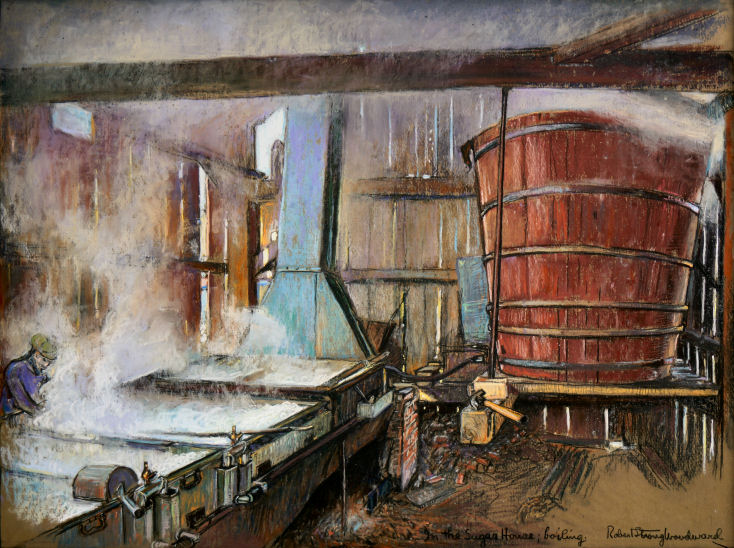 Sugaring Gallery to view related pieces.
- See also the...
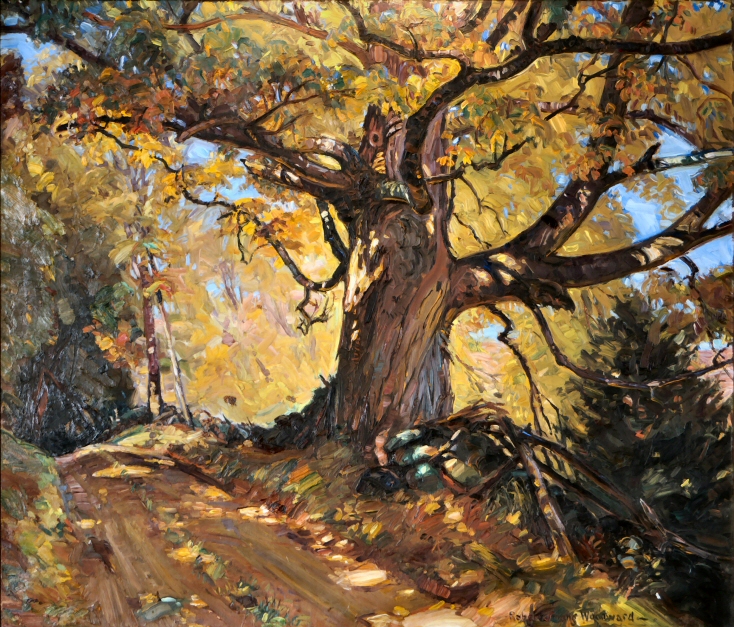 Trees Gallery to view related pieces.
- See also the...
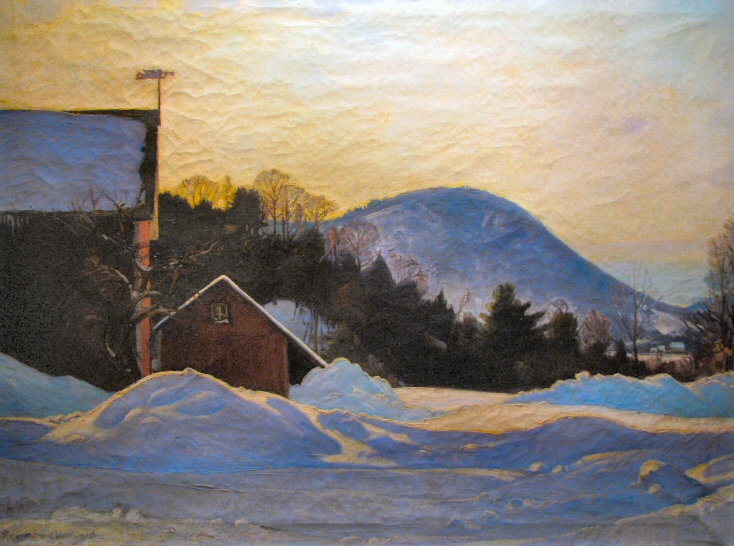 Snow on the Ground Gallery to view related pieces.
- See also the Scrapbook page devoted to Mr. F. Earl Williams
- See also the canvas...
734.png) When Drifts Melt Fast for another painting that hung in a popular local attraction.
When Drifts Melt Fast for another painting that hung in a popular local attraction.
.png)

Featured Artwork: Early Sugaring #3 (The Weldon Hotel Painting)

RSW's Diary Comments

Diary Entry for Early Sugaring #2:
"Painted prior to 1928. Made from Harrison Keach's sugar house, and painting from which the Weldon Hotel picture was made. Bought by Emmett H. Naylor of Springfield, Mass. and Cummington and hung in his Cummington home until his death in 1939, when the painting went into the hands of his son, Winford Caldwell Naylor (grandmother at 20 Ridgewood Place, Springfield, Mass, (Caldwells). 'A previous canvas, owned by F. E. Williams was also called "Early Sugaring" --so I have designated them as E.S. #1 and E.S. #2.'"
Editor's Note:
In essence, the diary remarks for Early Sugaring #2 (seen to the upper right) are also the de facto diary entry for this painting we have named Early Sugaring #3 because it is the same subject as Early Sugaring #2, only a different size.
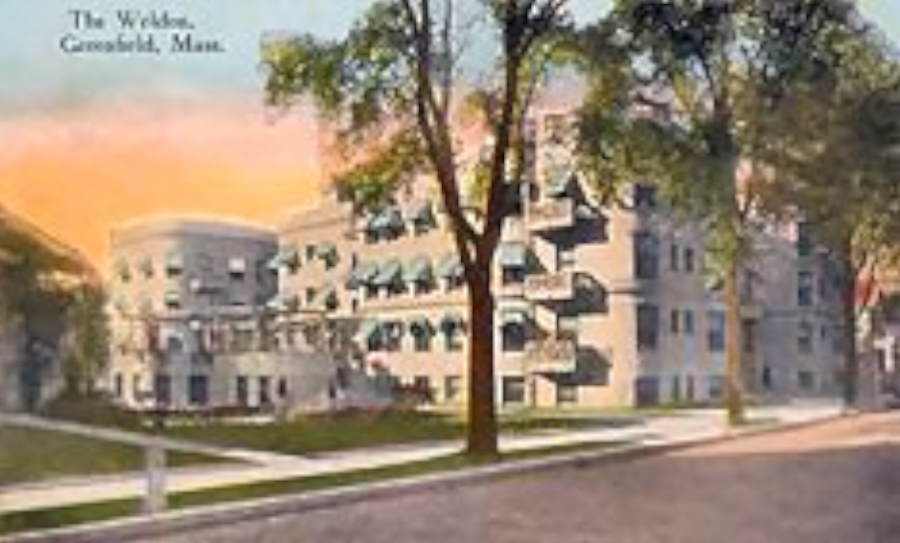
 An old Weldon Hotel postcard.

The image of Early Sugaring (#3) hanging above
the Weldon Hotel fireplace in its correct rectangular
aspect ratio from the published promotional booklet.
For all intent and purposes, we do not know if this painting technically has a name. Woodward
does not name it in the diary and does not even bother making a separate entry for this painting leaving us
with questions, like: Was it made special for the hotel? Did the hotel commissioned painting? Was it made as a
36" x 42" to fit the specific space? How was the subject chosen? Did the hotel select it or did Woodward make
it and brought it to them? He gives us no information, not even a hint, as to what occurred. The painting is
deserving of its own diary entry.
With that being said, we also did not bury this canvas in the Unnamed Gallery. Since Woodward says that he will number the original Early
Sugaring and the Naylor painting "ES #1 and ES #2", than this painting can be #three. Still another question
we find ourselves asking is -- Did its subject and commission to the Weldon Hotel have anything to do with
When Drifts Melt Fast hanging at the Sweetheart Tea house in Shelburne? Did the idea originate from
that? We may never know. The hotel is long gone and the whereabouts of this painting, right now, is
unknown.
⮜ For years, this painting was mistaken for being what is now known as the squarish
Early Surgaring #2 because of a squished image of the picture to the left. For that story, click the link
below...
Additional Notes

Early Sugaring #2 superimposed over top of
Early Sugaring #3 illustrates just how different the
two paintings are, not just in perspective.
Despite being very similar in subject, ES #3 clearly does not match the same aspect ratio of its sibling "ES #2," which is a rectangular 24" x 36" canvas. This changes the perspective dramatically. As you can see in the illustration to the right, the proximity of the sugar houses do not even line up in relation to the sugar maples that anchors both paintings. The young trees behind the maple also do not match, nor does the left side of the maple tree itself! If we didn't know any better from Woodward's diary entry we would suspect that he RETURNED to the location and painted the Harrison Keach sugar house, years later, en plein air a second time, given the changes in the scene... especially given the addition growth of trees! ES #2 has almost no trees surrounding the sugar maple.

North Adams Transcript, Apr. 14, 1928.
A blurb announcing painting to be hung.
Addendum, March 2025:
In our endeavors we stumbled across this tiny blurb in the North Adams Transcript announcing
the sale of Early Sugaring #3 and that it will hang in the Weldon Hotel lobby. We have to assume the
Hotel purchased the canvas. Prior to this we estimated that the painting was made sometime in the early 1930s
because all we had at the time was the promotional booklet from the hotel printed around that time. This new
information changes the date the painting was made but also, moves the date of Early Sugaring #2 a few years earlier.
The reason for this
is that the two canvases are so very different in brush style and composition that Early Sugaring #2
has to be older by a number of years. How many? That is hard to say but it is between the years 1920 (the year
Early Sugaring #1 was made) and 1928. The "c." before the year is for "circa" meaning "about." It is
customary to use when the exact year is unknown yet, a best guess could be "c. 1924 - give or take a couple of
years earlier or later." It is a range and we have enough evidence to place it between numbers one and three,
so we chose the middle.