Quick Reference
c. 1943
Main Street
Old Deerfield, MA
Pastel on Board
Unknown
House, Rocks & Stones
22" x 29"
Guild of Boston Artist, 1943 -'44
Unknown
NA
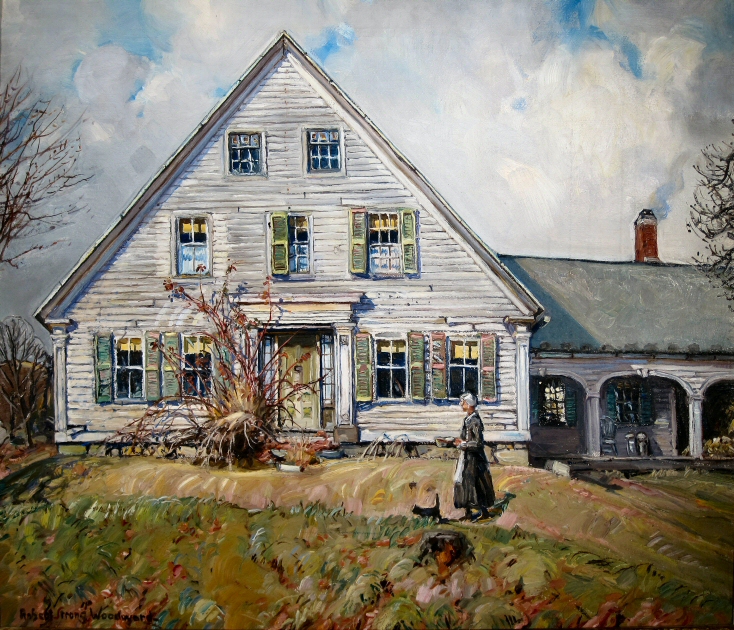
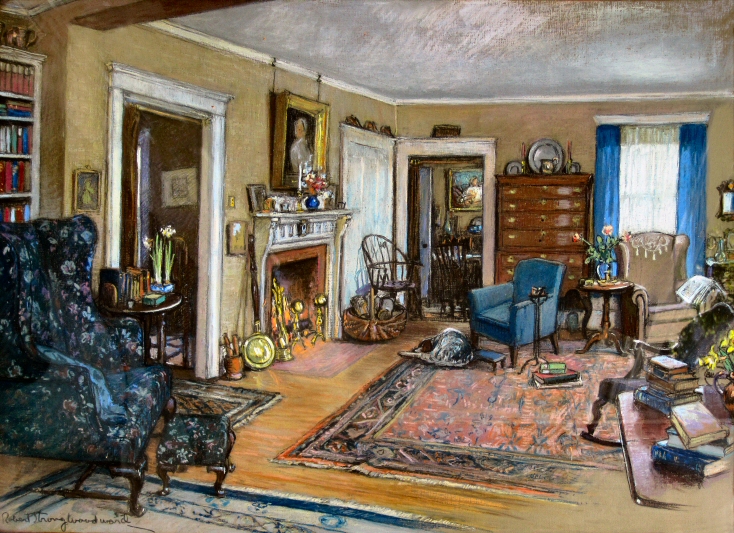
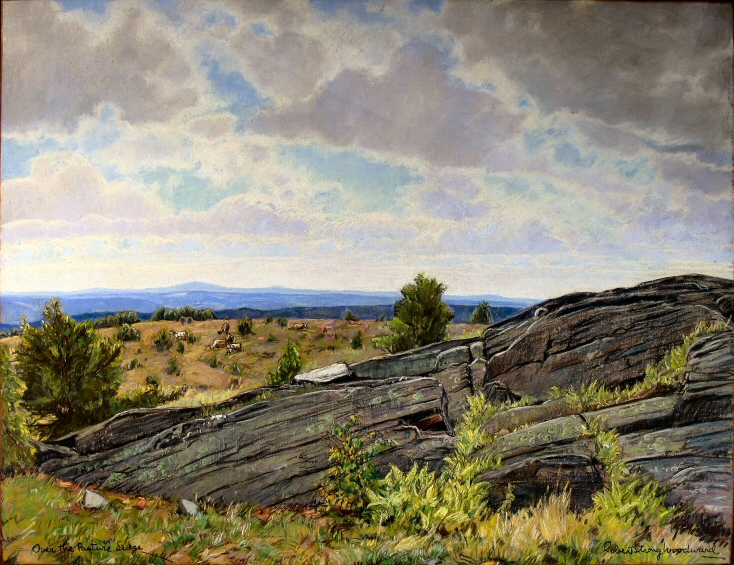
Featured Artwork: From Old Deerfield, Chalk
RSW's Diary Comments
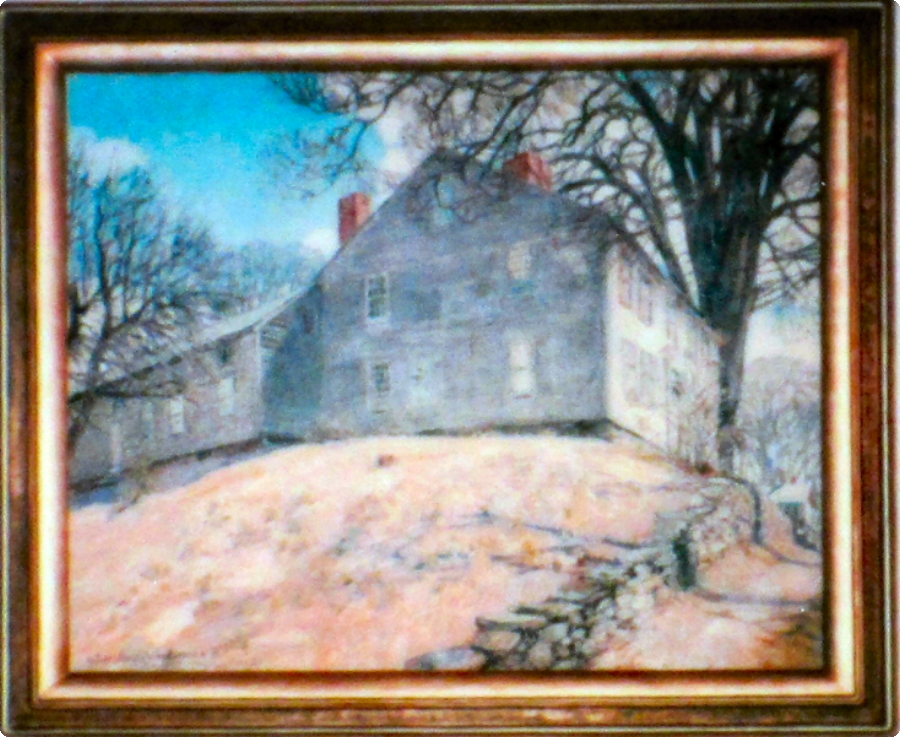
 An image of a Polaroid taken of From Old Deerfield.
Comments from the oil painting From Old Deerfield
"Painted in 1939. Painted in studio from an earlier canvas (1932) of the same subject which was never satisfactory and which I destroyed. The old Abercrombie House of Old Deerfield."
Comments on the back of the From Old Deerfield sepia print:
"One of the old stark gray houses in Old Deerfield, sunlit front, red chimneys, blue and white sky, rose, ochre, tan foreground with no or little green. Beautifully painted green, gray, sunlit embankment stone wall."
Additional Notes
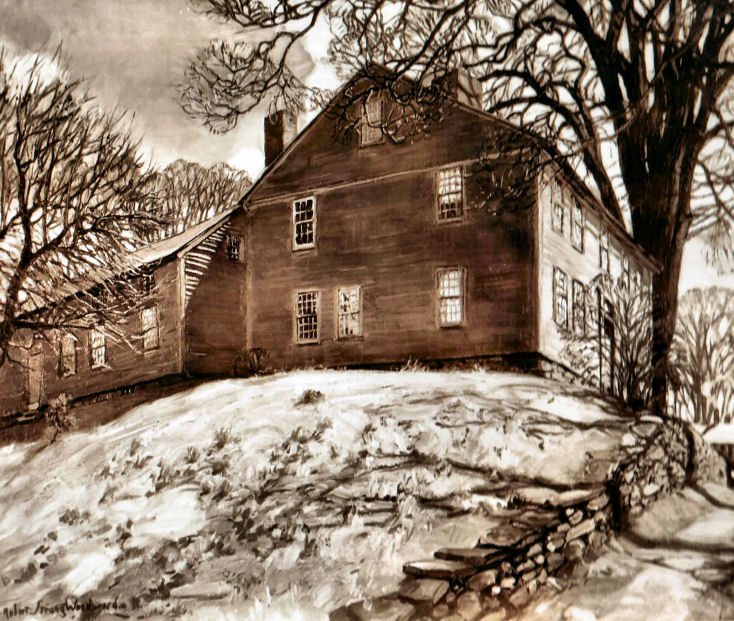
It was not until we did a deep dive into the exhibition list that we learned this chalk drawing existed. This
appeared to be an important subject to Woodward. Not only did he make a wax crayon of the scene in the
early-to-mid 1930's. According to Dr. Mark's
first hand account says Woodward retrieved it from his storage space, started the painting in his Southwick
Studio, and did the finishing touches in plain air at the scene.
It is not unreasonable to think this
chalk is the same scene but there is the slight chance it is not. Let's also note where the oil and chalk
paintings exhibited and for how long... These are not ordinary, run of the mill, galleries and this neither is
this scene to Woodward. [ See From Old Deerfield for more.
]
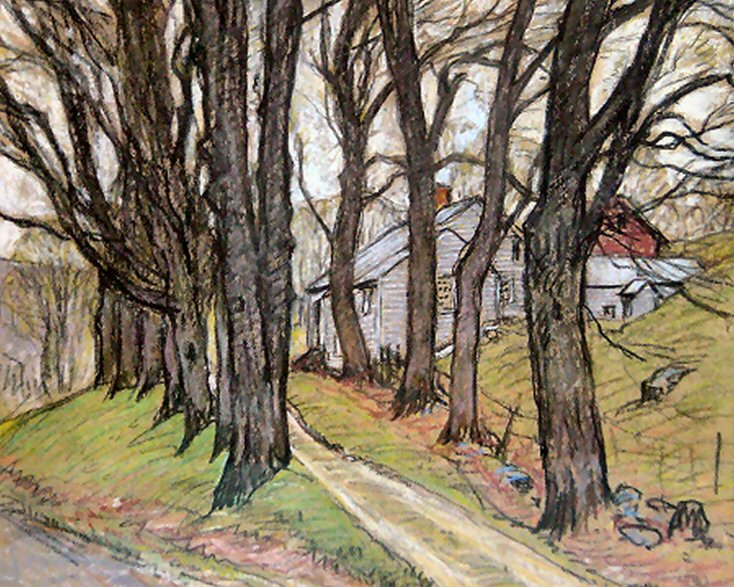
The Aste House, Crayon
The crayon, The Old Gray House, Deerfield's whereabouts is
unknown. We only have a couple surviving crayons. The Aste House to the left is one. The other is The Mary Lyon Church. Both are distinctly historic Upper St.
properties which is why we suggest the crayon may have been closer to the mid-1930's when Woodward moved to
Upper Street (Mar. 1935). Prior to that date, it is rare to find any Upper Street paintings. Perhaps Woodward
began experimenting with wax crayon before he moved to Southwick and continued briefly afterwards.
Just
a quick note: some newspapers often referred to pastels (Woodward called chalks) as crayons confusing the matter
even more but here Dr. Mark is very specific to point out it was wax, not pastel.
Promotional Items
.png)