
Quick Reference
Unknown
NA
Print, Bookplate
Landscape
Bookplates
Unknown
Unknown
Unknown
NA
.png)
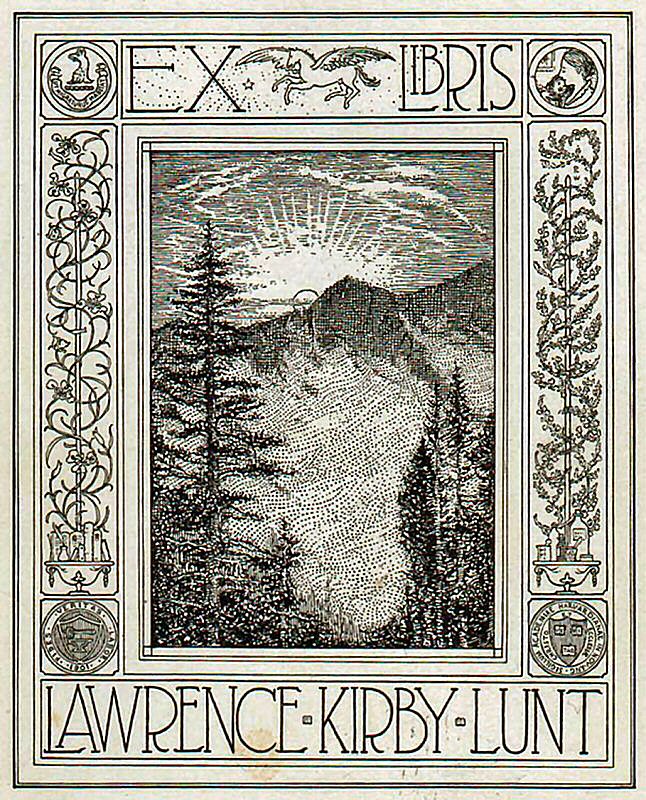
Featured Artwork: Lunt, Lawrence Bookplate
Editor's Comments
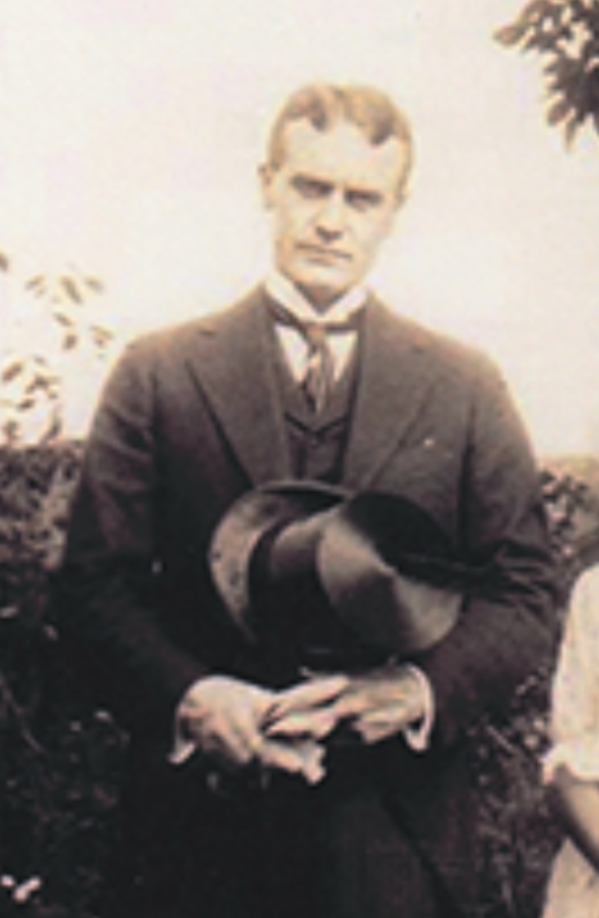
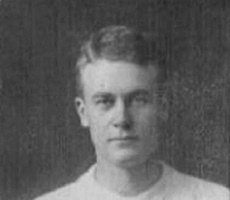
 Dr. Lawrence K. Lunt
on his wedding day.
Woodward did not keep records of his bookplates or they were lost in his Redgate Studio fire in December 1922.
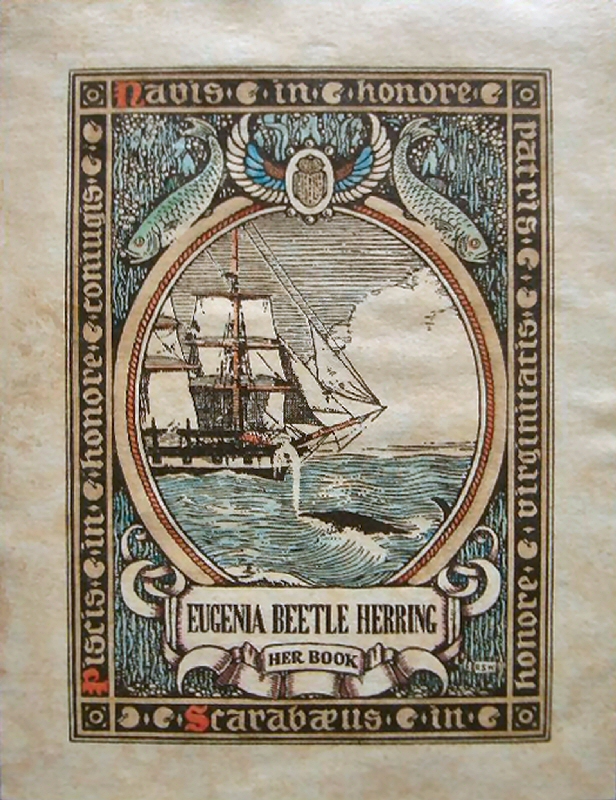
Bookplates, also referred
to as Ex Libris, are labels placed inside the book jacket identifying the "library" or collection the book is
from. In the early 1900s, this was a popular form of vanity-like plates we find today on cars. To understand
its importance, is to understand that at one time, books were only affordable to the upper classes of society
but with new innovations and progresses in the print industry the price of books dropped so much making them
available to more of the masses, thus book collecting or building a collection became very popular
indulgence.
Woodward made bookplates for a number of very prominent people. He is cited to have made
one for financier J.P. Morgan! He also made them for friends, even after he left commercial art behind to
become a professional landscapist, but Lawrence was there from the very start... he was the first person to
greet him at the train station in Boston to attend the Museum school of Fine Art in 1910.
Additional Notes
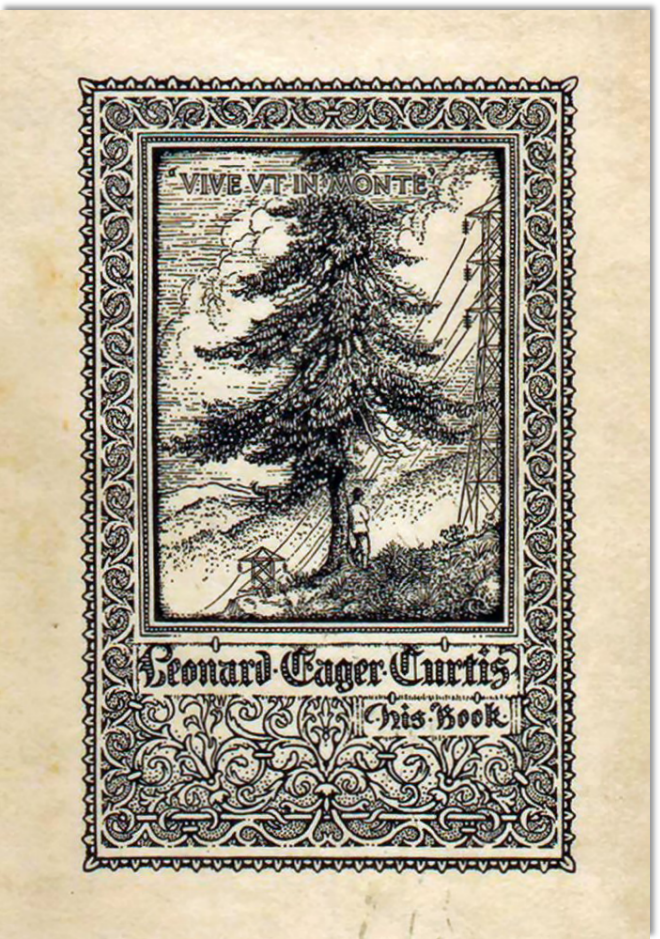
This bookplate is not that dissimilar to the one for Curtis Eager Leonard Bookplate. The is a reason for it and that is Colorado- both lived in the state. Lunt grew up there and Leonard moved there and made it his home.
In fact, we believe it was Lunt that connected Woodward to Leonard. Lunt's father was a lawyer, chaired the Chamber of Commerce in Colorado Springs where Leonard lived and had his headquarters, and was also a Circuit Court judge for a brief period of time.
Dr. Lunt was a HUGE advocate of Woodward. He was essential to his early career success and getting his work into the collections of the Stockbridge (MA) Library and the Austin Riggs Foundation. When Lunt, a psychiatrist, had his own facility, Valleyhead Sanitarium in Concord, MA, Woodward held nine exhibitions featuring seventy-five paintings over an eleven year period of time.