Quick Reference
late 1943-'44
Composite Painting
Oil on Canvas
Landscape
Roads & Streets
22 X 36
Unknown
Mr. and Mrs. Robert Abbott
Unknown
Related Links
- See also the...
 Roads & Streets Gallery to view related pieces.
- See also Wind'll Blow Hill to view related pieces.
- See also the...
 Rocks & Stone Walls Gallery to view related pieces.
- See also Just After Haying Time to view related pieces.
- See also the...
 Burning Autumn Gallery to view related pieces.
- See also In October Hills to view related pieces.
.png)

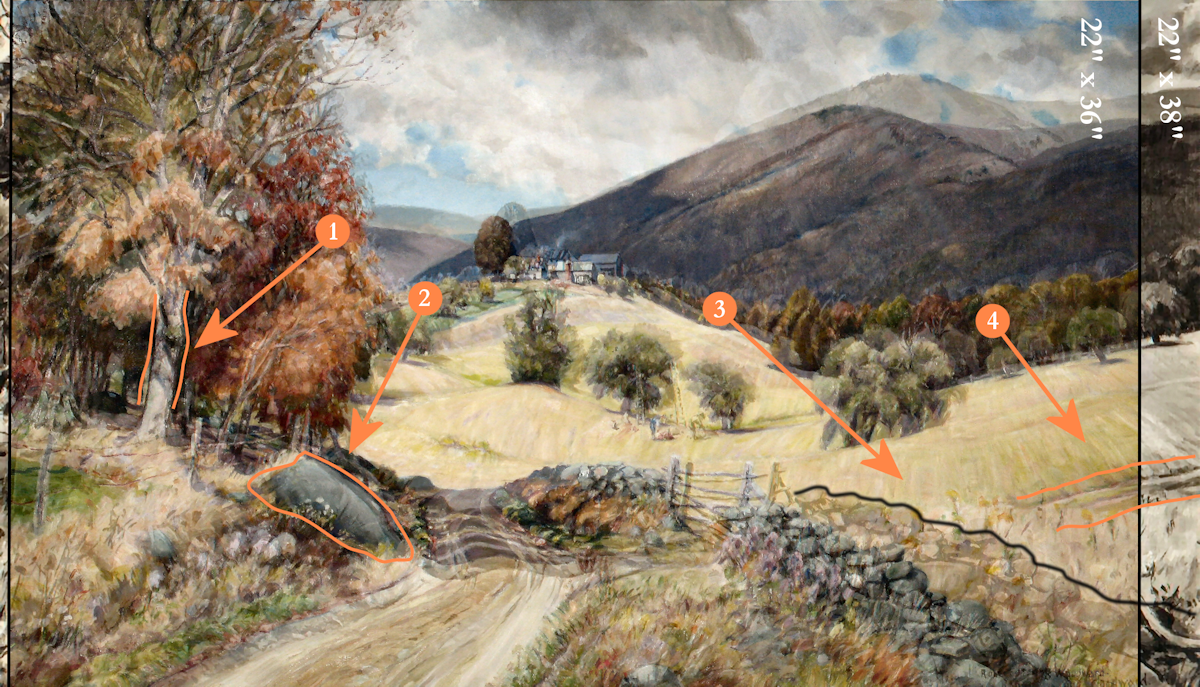
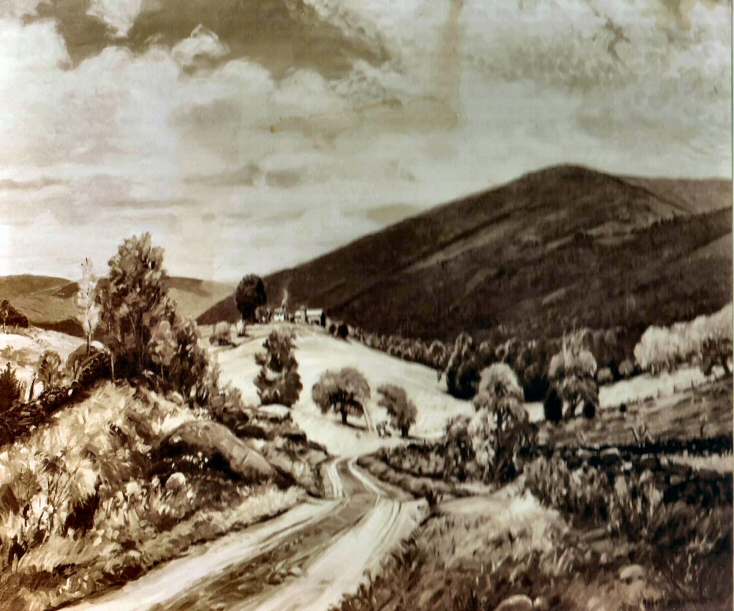
Featured Artwork: New England in October (The third of 4 similar paintings)
734.png)
The image above is actually Mountain Meadow. We do not have an
image of this painting. Still we believe
they are, if not identical, very close in resemblance because the two paintings are both 22" x 36" in size.
RSW's Diary Comments
734.jpg?url=photos/through_october_hills(24)734.jpg)
 Through October Hills, 1943, the 2nd painting
"Painted about 1944-5. Several paintings similar to this I made in the studio the winter of 1944 '5. The description under Through October Hills (which see) applies to this picture too, although the composition is somewhat different with the stone wall in Through October Hills, for instance, much more prominent. Sold Dec. '53 to Mr. and Mrs. Robert Abbott of Braintree, Mass."
Editor's Note:
 Just one month ago (03-29-2024) we made all kinds
of changes to three of the paintings related to the painting of this page. We proved through sepia prints and
painting diary evidence that the painting long thought to be Through October Hills was really,
New England in October. That conclusion was premature because we completely forgot about a
chalk drawing named Mountain Meadow which was photographed hanging in the home of Mr. & Mrs. Roger
Smith in Gardner (MA) in December of 1944. The photograph was taken by Woodward's close friend F. Earl
Williams, the Gardner High School principal, and it is assumed Williams helped arrange the small exhibition.
Not only did we learn the chalk was NOT a chalk but that is was really an oil painting named Mountain
Meadow. In this game of musical chairs (images) this painting was the one without a picture. SEE Mountain Meadow for the whole story.
Just one month ago (03-29-2024) we made all kinds
of changes to three of the paintings related to the painting of this page. We proved through sepia prints and
painting diary evidence that the painting long thought to be Through October Hills was really,
New England in October. That conclusion was premature because we completely forgot about a
chalk drawing named Mountain Meadow which was photographed hanging in the home of Mr. & Mrs. Roger
Smith in Gardner (MA) in December of 1944. The photograph was taken by Woodward's close friend F. Earl
Williams, the Gardner High School principal, and it is assumed Williams helped arrange the small exhibition.
Not only did we learn the chalk was NOT a chalk but that is was really an oil painting named Mountain
Meadow. In this game of musical chairs (images) this painting was the one without a picture. SEE Mountain Meadow for the whole story.
In October Hills, 1942, the 1st painting
Continuing with this
painting: We have a theory about the second painting Through October Hills, and as to why it is
so different in size and perspective than the painting above and even the first painting... it is the
prospective customer from the Vose Gallery. We believe the size, the closer perspective, the more prominent
stonewall and even the change in the group of trees from the first painting where specifications given by the
client who in the end, still did not buy the painting!
With that being said, this would make
the third painting of this page's subject Woodward's preferred perspective and truer to his intent as to the
aesthetic he initially selected in his first composition. It is almost as if he HAD to make the painting above
to "right" the previous painting.
Additional Notes