
Quick Reference
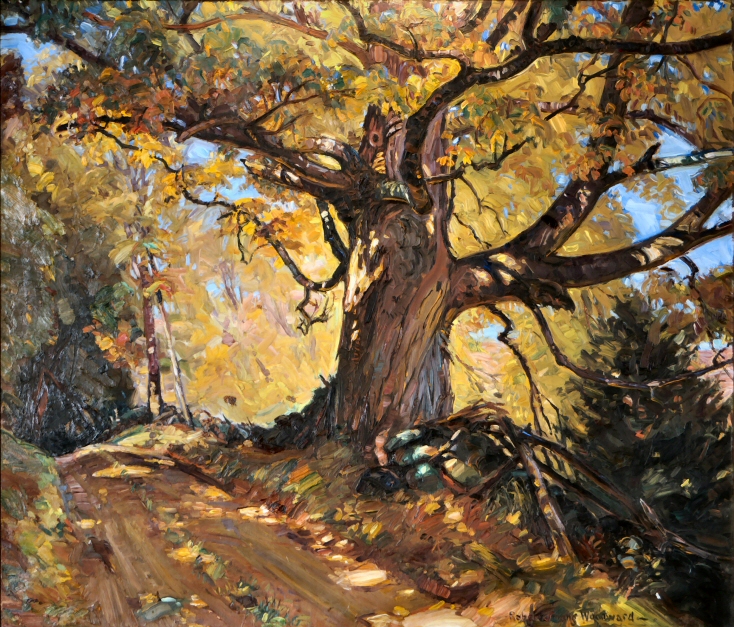
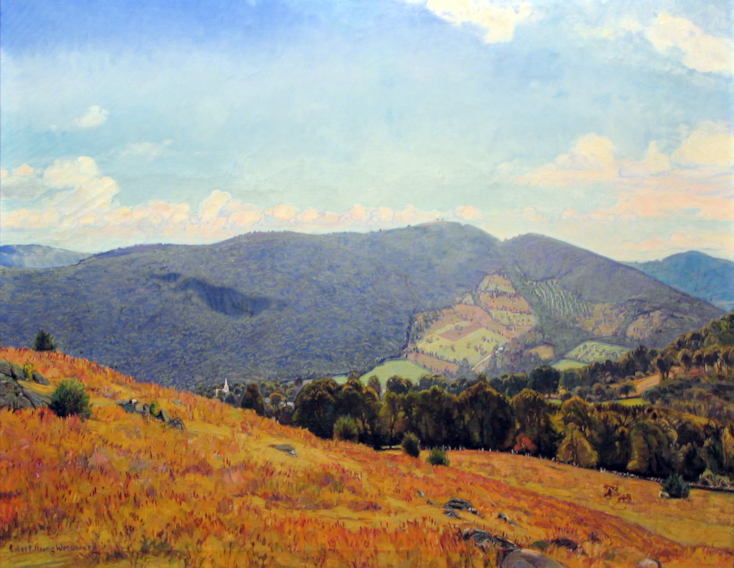
Painted in 1944
Orcutt Hill (looking
towards Mary Lyon Hill)
Buckland Center, MA
Oil on Canvas
Landscape
Mountains
36" x 42"
Springfield Art League, 1944 ★
> Award: Top Honor, Fall Show
Mr. E. M.Switzer, Jr.
N/A
Related Links
- See also the...
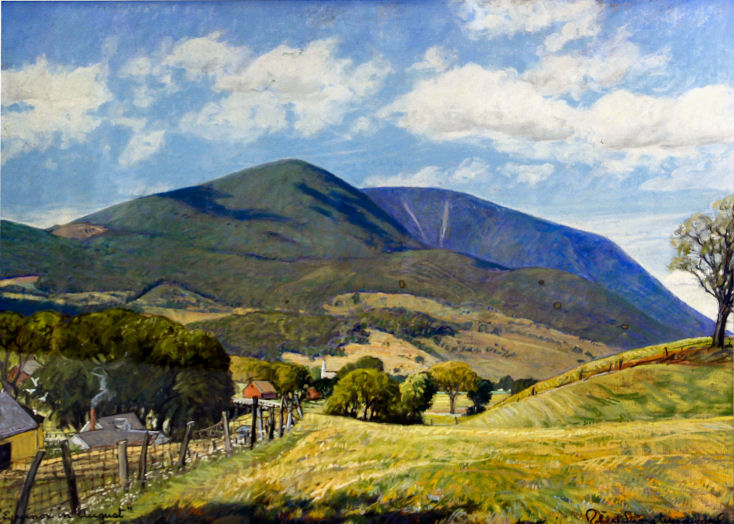 Mountains Gallery to view related pieces.
- See also the...
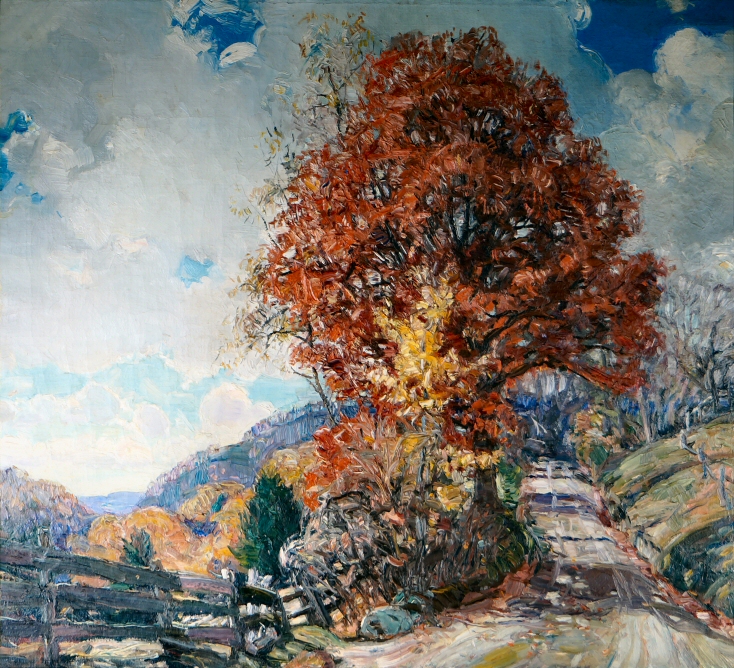 Burning Autumn Gallery to view related pieces.
- See also the...
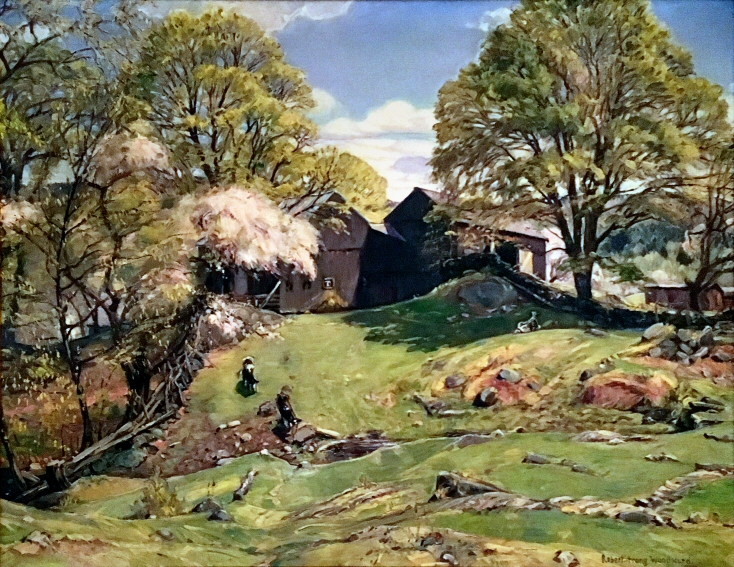 Pastures Gallery to view artwork.
- See also the...
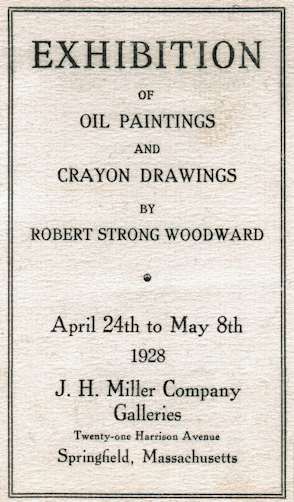 Exhibition List for a complete list of events
- See also the...
Mountains Gallery to view related pieces.
- See also the...
 Trees Gallery to view related pieces.
- See also the...
180.png) Award Winners Gallery to view related pieces.
Award Winners Gallery to view related pieces.
.png)
Featured Artwork: October (1944) 
734.png)
RSW's Diary Comments
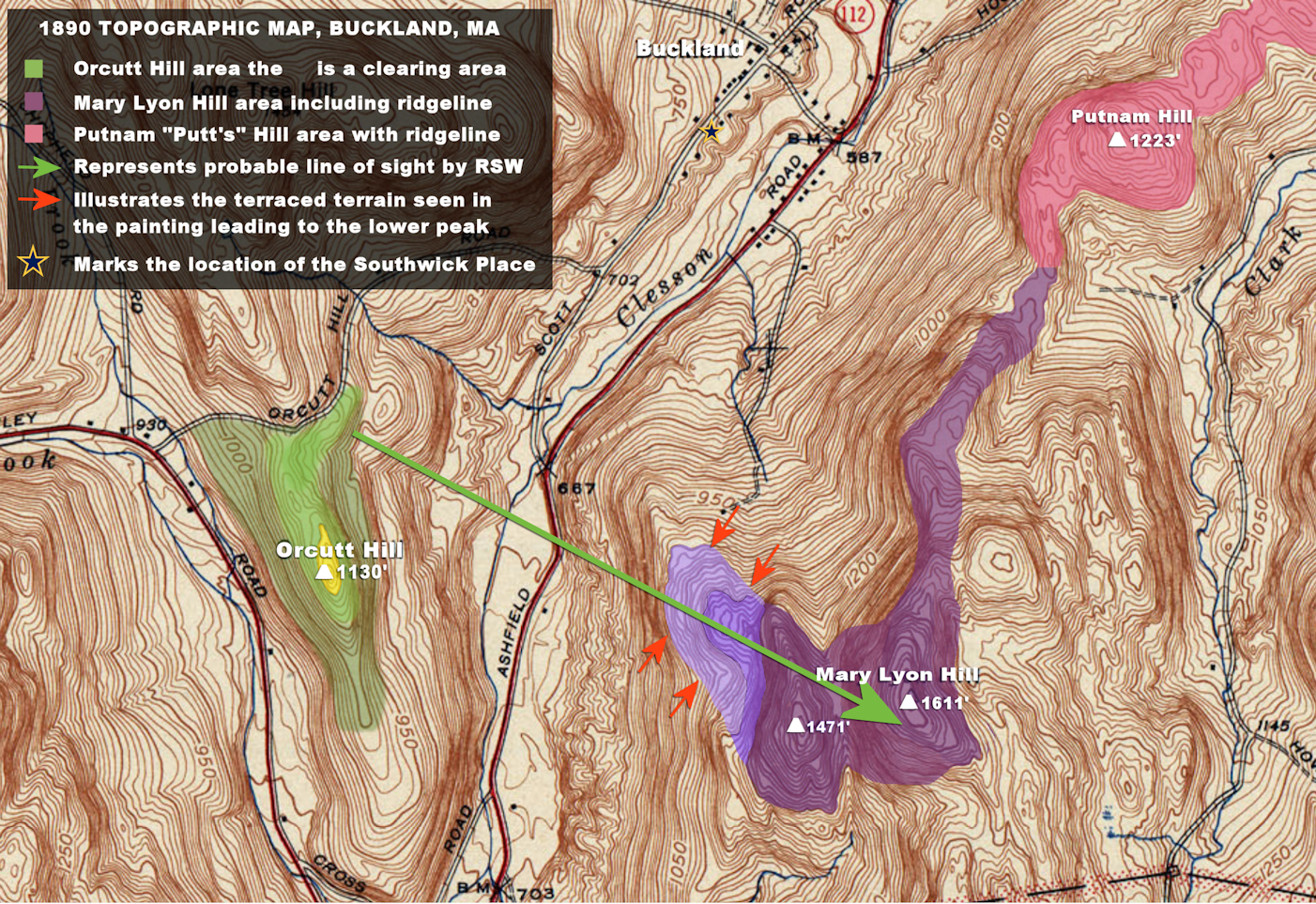
 A portion of a 1890 Topographic map of
Buckland, MA. Graphics were added to illustrate
the relationship of Orcutt, Mary Lyon, and Putt's hills
to each other, as well as, RSW's vantage point.
"Painted in fall of 1944. Painted in brilliant autumn halfway up Orcutt Hill with Putts Hill in the
background, sloping, dropping off scrub pasture in foreground, brilliant red and yellow foliage to left,
slender birches to right. Never out of the studio till bought in April, 1945, from the studio by Mr. E.
M.Switzer, Jr. of Amherst."
Editor's Notes:
① We take no joy in correcting Woodward but
there is just simply so much wrong about the diary remarks above that we must address it. First, let us
address his remarks about the painting having never left the studio until it was purchased. This information
does not fit with certain facts. For one thing, there is a sepia print for this painting. Not ALL paintings
have sepias because the photography was saved for paintings the artist wants to exhibit at a show. Outside of
the big shows, the National Academy, the Art Institute of Chicago, the Armoy Show, or annual Carnegie
Institute event, where the artist must send the painting for the jury panel selection, most others accept
pictures (before color) with color descriptions made on the back of the print. If this never left the studio
then why the sepia? (keep reading for the answer...)
We take no joy in correcting Woodward but
there is just simply so much wrong about the diary remarks above that we must address it. First, let us
address his remarks about the painting having never left the studio until it was purchased. This information
does not fit with certain facts. For one thing, there is a sepia print for this painting. Not ALL paintings
have sepias because the photography was saved for paintings the artist wants to exhibit at a show. Outside of
the big shows, the National Academy, the Art Institute of Chicago, the Armoy Show, or annual Carnegie
Institute event, where the artist must send the painting for the jury panel selection, most others accept
pictures (before color) with color descriptions made on the back of the print. If this never left the studio
then why the sepia? (keep reading for the answer...)
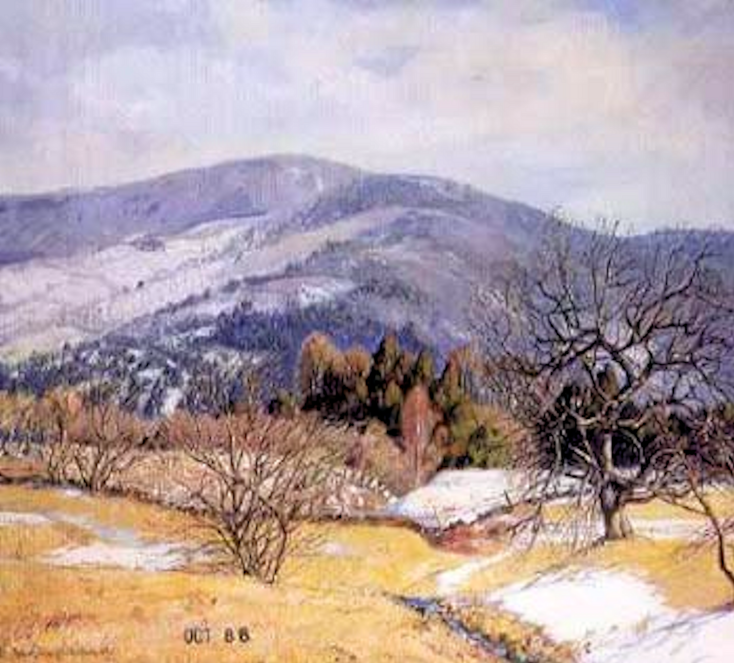
Winter Song, 1939
This painting was much loved by the artist and sent to
San Francisco, CA, where a close friend curated
the event. This painting is closely related to it.
Furthermore, we know that the diary matches the sepia because, even though, he gets the hill wrong, it is the subject of the sepia (see more on this in part2 of the notes). More still, we searched out ALL of the paintings of 1944 and 1943 and could not find another painting this could be mixed up with. Finally, we have a newspaper clipping from March of 1944 naming this painting as being the featured canvas of the Springfield Art League's annual show! We might even know why it slipped his mind. See the Addition notes section for more on this.
②This is one of those
situations where Wood-ward has some sort of mental block. That is NOT Putt's Hill in the background. One can
clearly see the double peaks of Mary Lyon Hill that closely resembles the painting Winter Song, to
the right. He makes the same mistake in that diary entry as well. Visit that page to see the topographic map
illustrating the error.
The reason we suspect that it is some sort of mental block by the
artist, is that he makes the SAME mistake in his painting diary entry for the painting, Mary Lyon's Hill, saying, "A large canvas of Putts Hill; which I
painted out of doors from Wilder's pasture..." Mind you that he wrote that entry at least 7 to 8 years
after the painting had been hanging in the library of Mt. Holyoke College, the school Mary founded, and he
NAMED the painting accordingly, yet STILL calls the hill Putt's and NOT Mary Lyon's which is further proof of
the disconnect. It is so humorous to us, and we are not making fun of him. We have our own, similar, blocks,
like how Brian can never, initially pronounce "Goodnow" correctly- It is "Good-know" not
"Good-now."
The diary entry still leaves us troubled. As we get better methods of confirming
information and now back check everything, we are finding that the mid-to-late 1940s have the most errors and
puzzling omissions. We wonder about his well-being and mental acuity, beyond just lapses in memory.
Additional Notes

Recorder-Gazette; Nov. 10, 1944
Greenfield Recorder-Gazette; November 10, 1944:
"Entering the hall one is greeted by the beautiful and dominating 'October' by Robert Strong Woodward of Buckland. On the left wall Lester Stevens and Gertrude Fiske divide the honors, the former with his 'Mill Brook,' a Corcoran prize winner and Miss Fiske with 'Charlotte in Gray,' also winner of a prize. On the right wall Harriet Lumis shows an 'Autumn Woodland', a very genuine appreciation of exquisite low toned color, and Harry Leith-Ross on the same wall shows a New England village 'Toward the Sea,' in newly fallen snow, which is arresting in poetic charm..."
Sometimes, we have to ask ourselves if there is some sort of mental block
regarding Woodward and his legacy. Here is a fine example of how a newspaper spoils what should be a moment of
recognition and pride for the artist. It is clear that his painting and the creator by association, that he is
THE featured artist of the exhibition. How so? His work greets attendees as they enter the show. It hangs
alone on its own wall, and the reporter reviewing the event makes note of it. What is even more astounding is
that, for lack of a better term, the second-tier exhibitors are-- Lester Stevens and Gertrude Fiske, both considered among America's all-time best artists sharing one
wall and on another wall local favorite and esteemed artist Harriet Randell Lumis
and renowned New Hope (PA) painter Harry Leith-Ross share space.
The placement and space you get at an
exhibition is clearly a matter of prestige for which the painting is held. It is often mentioned in articles
such as this; in fact, it was noted in an article on Woodward's second prize win at the Boston Art Club in
1932 that the first prize painting hung alone on the prime wall of the exhibit hall... and in this article,
the printers screw up his name listing him as Robert Armstrong Woodward (note RSW marked it out). What is not
mentioned is whether these paintings are prize winners. Is this painting a prize winner we do not know
about?

The Sepia for Abandoned Pastures, 1940, another poorly
focused and lit photograph, that was featured at the 1940
Deerfield Valley Art Association show.
Adding to our wonderings is that this painting's sepia negative is clearly blurry, ruining
our enjoyment of viewing it carefully. We can even tell you what went wrong with the photo. It appears to be
incorrectly focused on the foreground trees to the lower left of the painting and not its center. There are
other blurry sepia prints, and perhaps it was not critical to have the perfect image, but Woodward is known
for being very particular about quality, so we have trouble understanding how this is okay.
The
Springfield Art League typically has its annual exhibition in March. In this time period, "art season"
coincided with the coming of spring. The Nation Academy of Design also holds its annual show, the state of
Massachusetts holds a statewide "Art Week" each Spring, and all the art associations, museums, and galleries
plan exhibitions and cultural events. The fall seems reserved for special shows that lead into the holidays.
This exhibit, for instance, ends Wednesday, November 22, the day before Thanksgiving. Still, for "October" to
be hung in a place of honor, alone, at a specially curated event, to greet visitors above two award-winning
paintings by two of America's finest artists of its time is something of note. This is not the first time
Woodward bested much better known artist at Springfield. When Drifts
Melt Fast, took overall First Prize 1927 in an exhibition that included: Rockport School founder Anthony Thieme, portrait
artist Wayman Adams,
and again both Stevens and Lumis. When Drifts Melt Fast was honored again in 1937's annual show, a
decade after its prize.