
Quick Reference
1933-'34
Unknown
Pastel on Board
Landscape
Unknown- Houses?
22" x 29"
Weldon Hotel, Greenfield, '34
Unknown
NA
.png)
Featured Artwork: Opalescent April
RSW's Diary Comments
• Woodward did not keep records of the pastels he called "chalk drawings."
Additional Notes
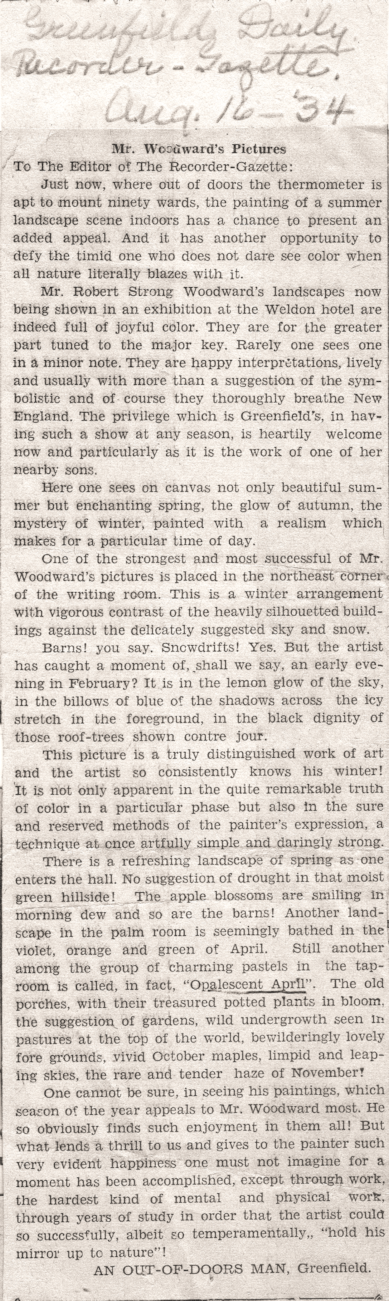
 Greenfield Recorder Gazette,
Letter to the Editor,
Aug. 16, 1934
This chalk drawing's name was discovered in a letter to the editor of the Greenfield Recorder Gazette in
August of 1934 enthusiastically signed, "AN OUT-OF-DOORS MAN, Greenfield." (to the right) There is a lot of
hoo-haw given to this exhibition at the Weldon Hotel organized by Mrs. Dana Malone after Woodward's devastating
fire to his Hiram home and studio destroyed it. There are as many
as five articles devoted to the show. It was covered in the both Boston Herald and Springfield
Republican.
A hint as to why this exhibit of just four oil paintings and two chalk drawings, at a
fine but small hotel in a small town in Western Massachusetts was such a BIG deal comes from a letter Woodward
wrote to the Springfield Republican and published by the editors. The letter is Woodward's response to the
amount of mis-information speculation being written about him in various publications regarding the state of his
career after the fire.
Woodward explains:
"Public statements about the tragedy have been so contradictory that I wish to state professionally to all galleries, museums, salerooms, and art pages, hitherto interested in my work and career, that in a responsive and normal way I still stand ready to carry on, to meet, as if no loss had occurred, any requests for exhibition or sale of my paintings. My entire year's work is intact and unharmed, as well as the scores of other canvases already seen so generally in nearly all the prominent exhibitions about the country. In New York my work is stilly to be seen at the Grand Central Art galleries and at the Macbeth galleries."
Woodward is trying to head off a repeat of the fallout that resulted from his 1922 Redgate fire that left his reputation and credibility in ruins and taking
nearly 4 years to even begin its repair.
How bad was it? His first one-man exhibition after the
fire was not held at a gallery! It was held at the residence of Mr. & Mrs. Ronald T. Lyman. The Lymans lived in
the former home of the famous poet Henry Wadsworth Longfellow and their home at 38 Beacon Street is known as the
Longfellow House. The Lymans are also neighbors and friends with Woodward's patron-saint and strongest advocate,
Mary "Minnie" Eliot. The Longfellow House has a second floor ballroom and it is believed Minnie asked the Lymans
to host the exhibit for the struggling artist.
While a huge success, it still took Woodward another 6
years before he got his first New York City exhibition. He worked his way back through the small towns and
galleries in such places as, Binghamton, Utica, and Troy, NY as well as Pittsfield and Stockbridge,
MA.
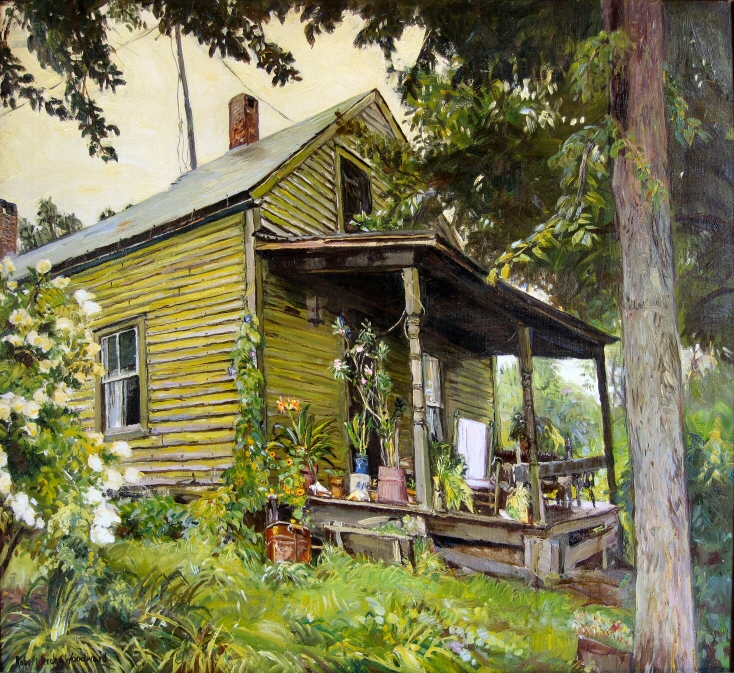
An excerpt from the letter to the editor above:
Still another among the group of charming pastels in the tap-room is called, in fact, 'Opalescent April'. The old porches, with their treasured potted plants in bloom the suggestion of gardens, wild under-growth seen in pastures at the top of the world, bewilderingly lovely fore grounds. vivid October maples, limpid and leaping skies, the rare and tender haze of November!
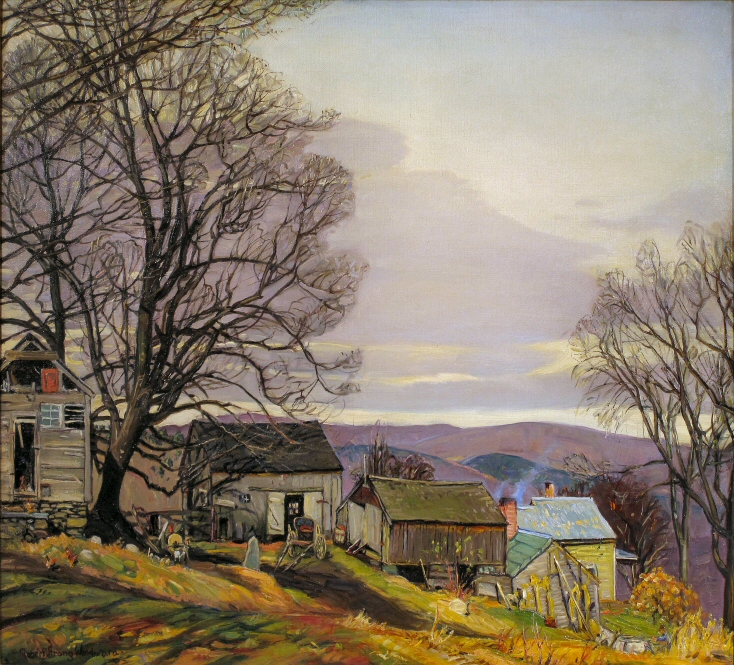
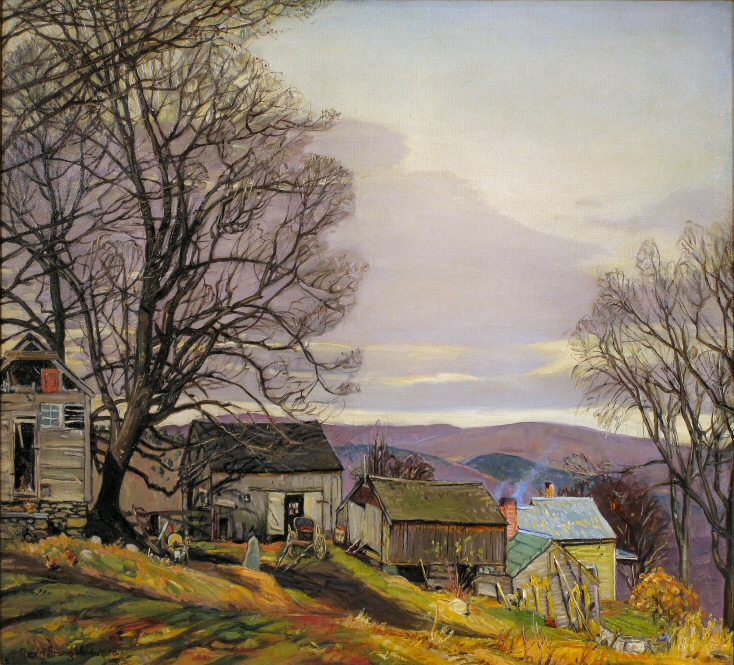
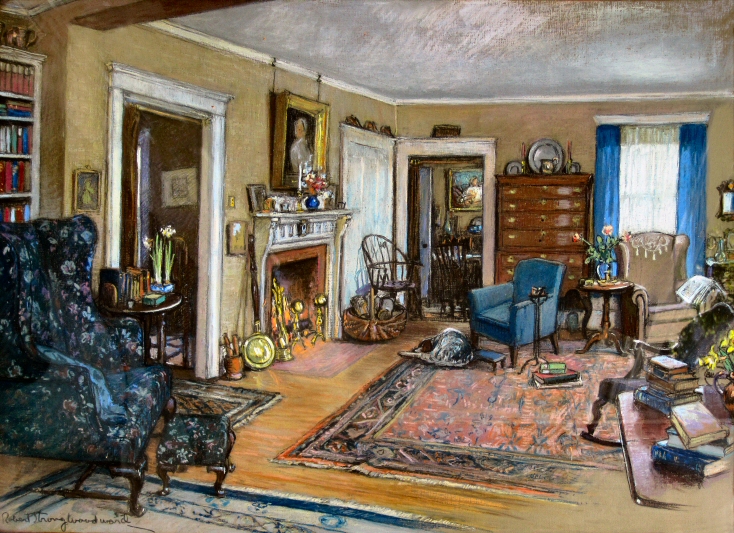
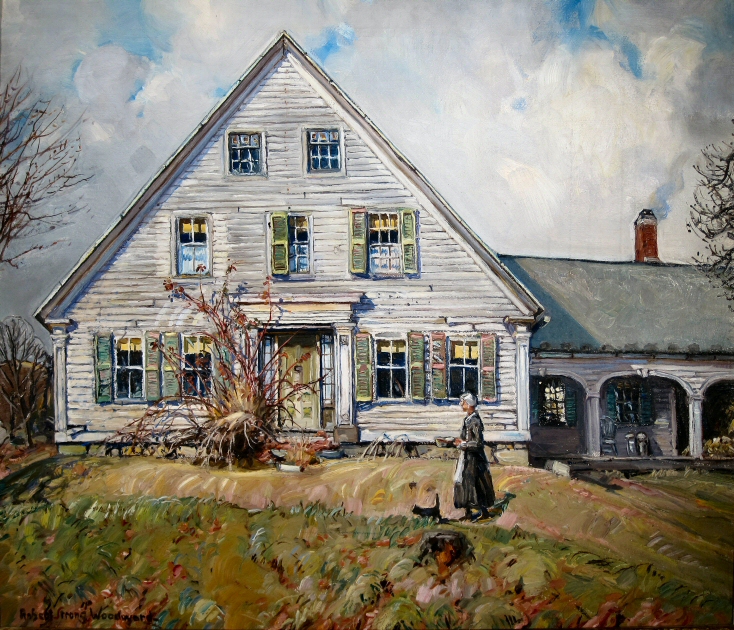
The description by AN OUT-OF-DOORS MAN is not enough to know for certain the subject of this chalk drawing. However, it was reminiscent of two paintings Woodward made from the Keach farm around the same year this chalk was made that leads us to believe this painting may be a broader perspective of the front of the farm itself with the full porch in view.