
Quick Reference
1918
Unknown, but probably Buckland
Oil on Canvas
Landscape
Sugaring, Snow on Ground, People,
and Roads, Streets & Paths
27" X 30"
Yes, but unknown
Unknown, Not available
NA
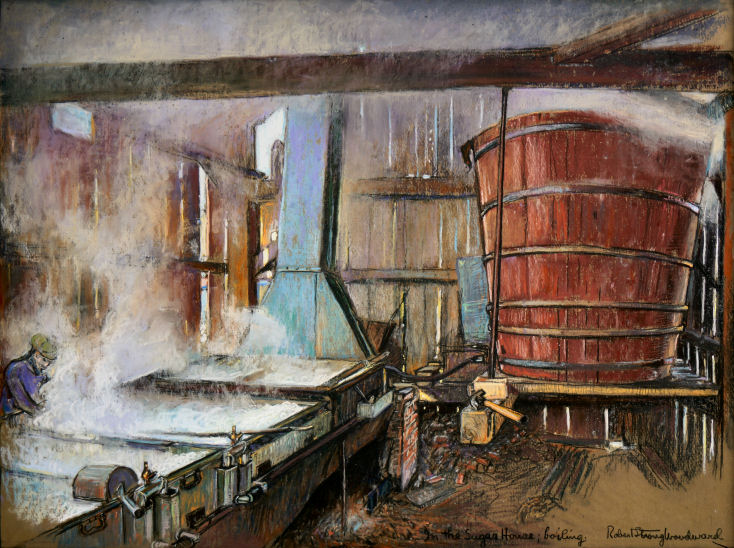
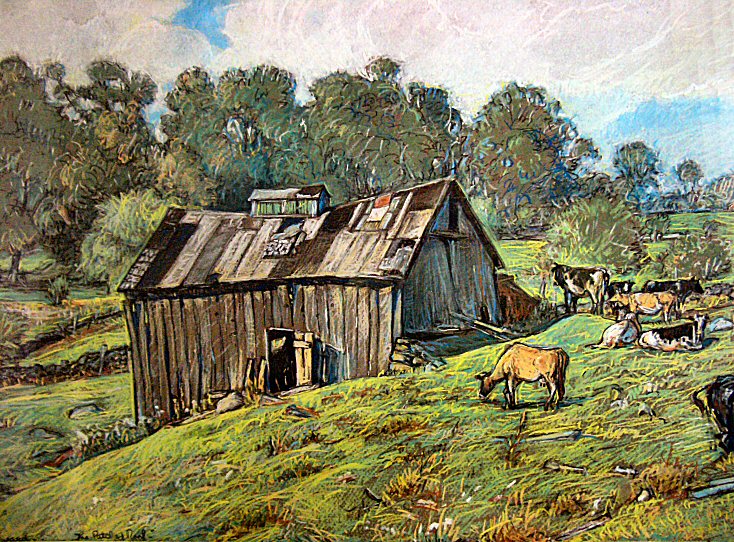
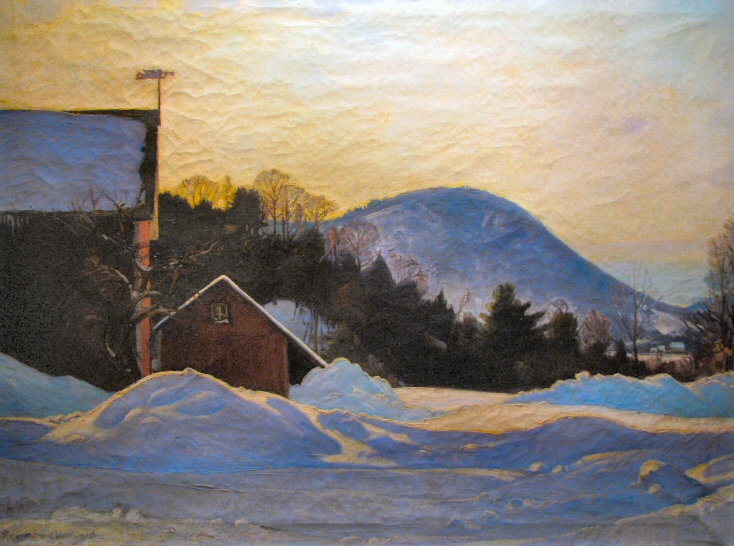
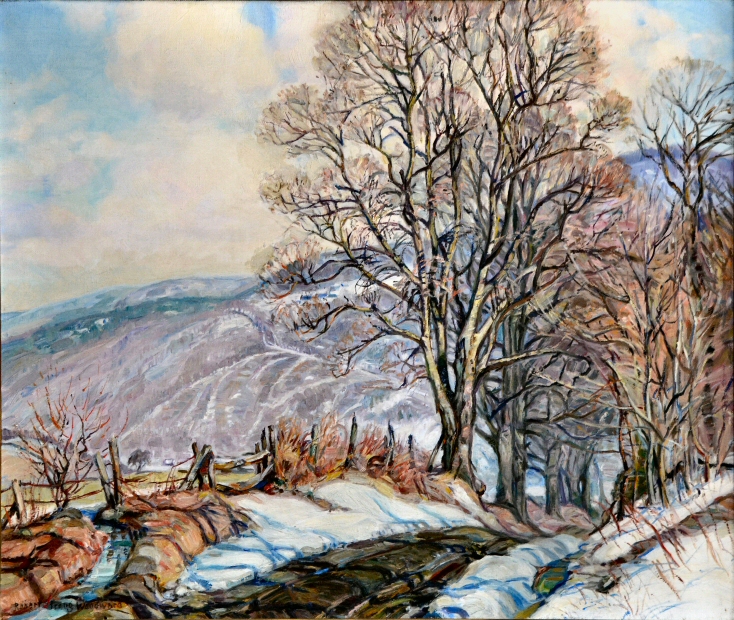
.png)
Featured Artwork: The Season Begins
734.png)
RSW's Diary Comments
♦ There is no painting diary entry for this painting. This is not unusual for most all of Woodward's
earliest paintings. He did not begin to compile the diary until very late in his career, sometime in the early
1940s, at the suggestion of Dr. Mark and
encouraged by Woodward's friend F. Earl Williams.
It does not
appear Woodward felt the same as Dr. Mark and Mr. Williams. He did not use the material he had available to him
(because it is the same material we use today to verify his entries). He did it almost entirely by memory, so his
earliest paintings are the least represented. We wonder sometimes if Woodward simply did not want to re-hash his
career after three studio fires and the loss of numerous book collections and personal items. More ⮟
Editor's Note:
-labelLG.png?url=photos/season_begins(25)-labelLG.png)
 A picture of the stretcher with the torn exhibit label.
We searched out all the exhibit labels we have pictures
of, but could not match the font to an organization...
For labels like this, the name was most likely on the
label, along with the artist's name and address.
Actually, we do not have a name for this painting. There was an exhibition label on the stretcher
but it has torn off. Because it exhibited, it had to have a name that is pretty much a rule. Still, what have been
naming "unnamed" paintings for the sake of organizing. It is much easier to remember, "The Season Begins"
than 'Unnamed: #98."
We are, in a number of ways, following Woodward's practice... he often did not give names to paintings that didn't
exhibit at a show, only to find that the buyers of the painting named it themselves. There are also examples of
Woodward changing the name of a painting AFTER it has exhibited under another name prior. Then there are examples
of owners changing the name of a paintings after buying them and Woodward always honored them and changed it in his
records. We continue these traditions and if the owners want to name it something else, we would honor that just as
Woodward did.
Additional Notes
-sigLG.png?url=photos/season_begins(25)-sigLG.png)
Woodward's 1918 signature from the lower left side.
We have a few matching examples of signature.
⮜ This painting came up for sale through an online auction site in November of 2025 and sold
for an impressive price. But why shouldn't it? Sugaring paintings are as rare as the artist's barn paintings and
very coveted. The website was contacted by several interested parties questioning the signature.
This
is how Woodward signed his earliest paintings, simply, R Woodward 1918. That would change soon enough because by
1919 he was signing his work using his full name. He included the year in 1919 but ended that practice before
the year was out (we do not know why, many artists include the year). We think this change was prompted by his
early success. We think he was genuinely surprised by his immediate success. Still, was have a number of
examples of Woodward experimenting with signing his name to his work. He often used R.S. Woodward, and on a few
occasions, signed his full name.
-menLG.png?url=photos/season_begins(25)-menLG.png)
A closer look at the horse, sleigh, and men. While
a lot of sugaring paintings show men working and
a majority of the people that appear in paintings
mostly occur in sugaring paintings, this stands out.
To the right ⮞ we grabbed a close-up of the horses, sleigh, and men working in order to feature just
how unique it is to his work. No other painting we know of shows these subjects so prominently. It is such a
dramatic scene that leaves us wondering why. We know Woodward was more interested in "place" as the main subject
but we think we speak for many others when we say we'd like to see more of these scenes!
We would also
like you to notice how Woodward uses the sugar shack to accentuate the drama of the surrounding landscape. The
rises of the hills and drops of the gullies... the subtle hint of the right side of the shack sinking with the
loss of its supporting piles shifting down the slope and the precarious path littered with red collection
buckets. There are so many details that builds the story of collecting sap.