
Quick Reference
1941
The south window
Buckland Southwick studio
Oil on Canvas
Landscape
Window Picture
25" x 30"
Grand Central Galleries (NYC),1941
Unknown
N/A
.png)
Featured Artwork: The South Window, 1941
734.png)
RSW's Diary Comments

 The Little China statue today.
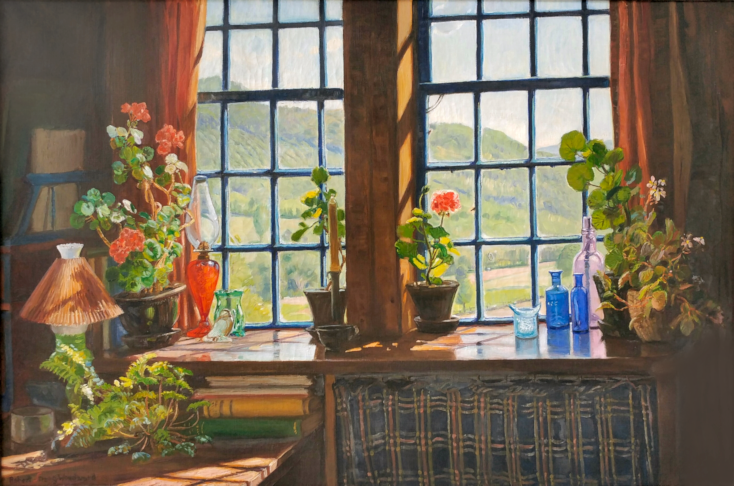
"My right hand south studio window, winter outside, showing roof of storage shop and Ashfield Hills, the little Chinese statue surrounded with ivy-geranium on the window shelf. Bought by Grand Central Art Galleries for their Founders show of 1941. Don't know who owns it."
Editor's Note:
When a painting is bought for the Grand Central Gallery Founder's Show, it means the gallery bought it to resell for the show itself. In one sense, it is an honor to have a painting bought for the show, yet it is unclear whether it is for a discounted price so that the gallery can earn a profit from the sale. It is the Grand Central Gallery's annual fundraiser. Woodward never complains about a painting being part of the Founder's show in regard to price. However, he hates the fact that the Gallery will not tell him the name of the buyer as a result.
Updated information, June, 2026:
We have had a terrible reproduction of the sepia negative for this painting of the far right
south window in the Southwick Studio. We checked Dr. Mark's original power point slides and while it
was better than what we had on the website. We decided to do new images using our new techniques to reproduce
all new high resolution images of all of the negatives. We haven't started this project yet at this time but we
made an exception for this painting and one other.
As you can see, the china statue is still in the
artist's collection (upper right ⮝ ), but not without its issues. The beard seen in the sepia has broken
off, all of its fingertips holding the horn are missing and its head it slightly separating from its body.
According to Gemini AI, "this is highly characteristic of a vintage Chinese Shiwan "Mudman" (or Mud Men)
figurine... The early 20th-century connection: Shiwan Mud Men were imported into the United States in massive
quantities from the 1890s through the 1930s. The Los Angeles connection: They were wildly popular novelty items
sold throughout LA's Chinatown and historic "Oriental Plaza" import shops."
It could be something
Woodward got as a young man living in Los Angeles, CA between 1906 and 1910, indicating it survived a couple of
fires before making it to Southwick. Below we have two close up pictures of the painting emphasizing the
interesting features ⮟

We wanted to draw your attention to the old pane glass
panels that RSW painted the bubbles often seen in the glass of
earlier techniques. Also, note the cracks in the second pane.

The appearance of the Shiwan statue in this
canvas is the most prominent of any other paint-
ing we know of at present. It might be the only
one but we cannot say for sure at the moment.
Additional Notes
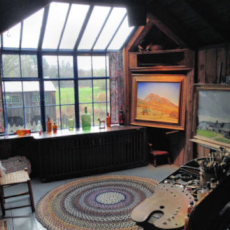
When Woodward writes in the painting diary entry, "My right hand south studio window..." he is referring to the windows nearest the hearth. He and thus we as well call them the "south windows." They are actually a double window as seen in our examples below. The above painting of this artwork page is just the "right hand" side of the double. Still, the perspective outside the window picture paintings below are facing toward Mary Lyon hill and not Ashfield like the perspective above of Ashfield.
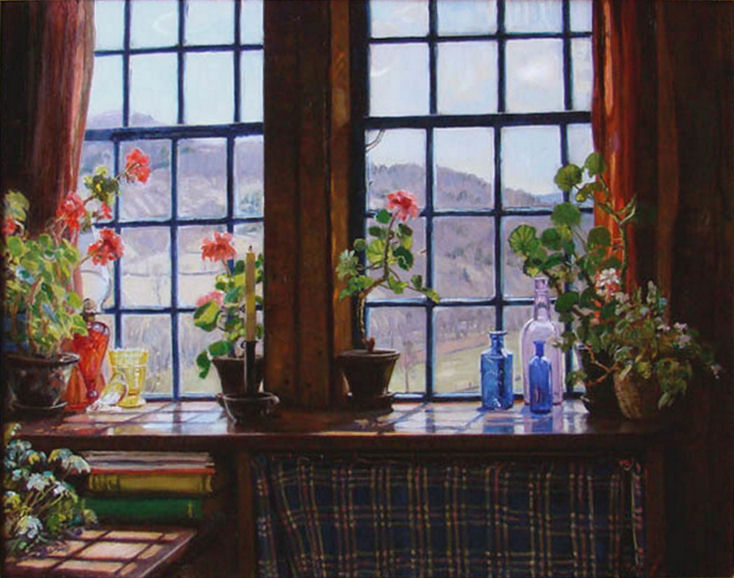
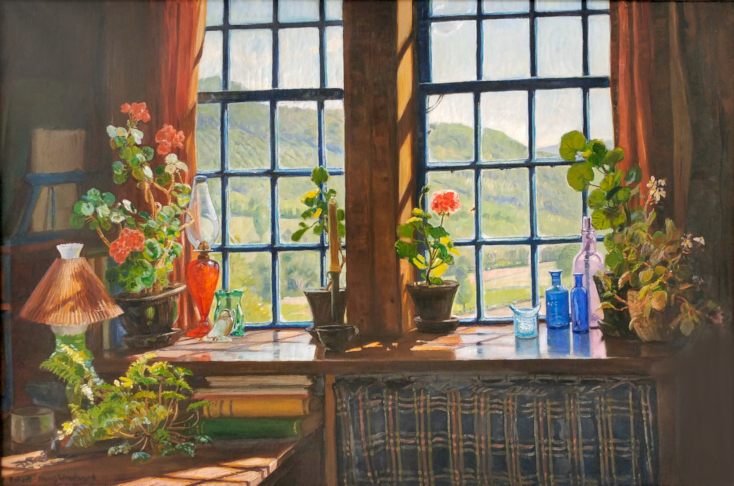
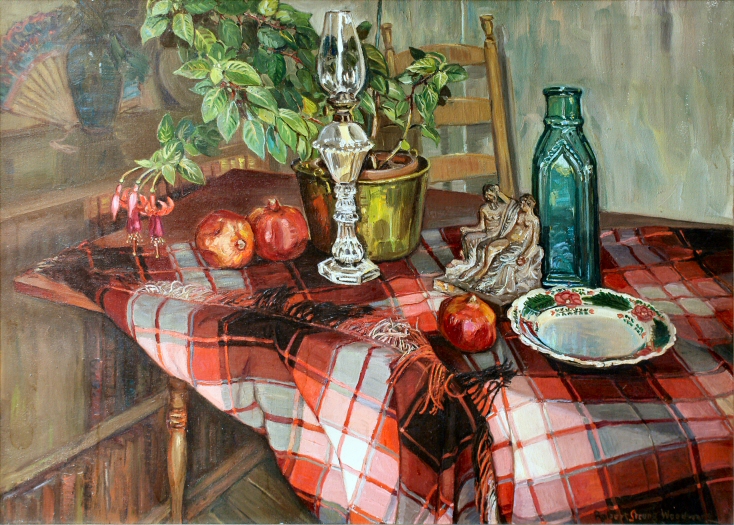
There are two other paintings similar in perspective to the painting of this artwork page. There is Snowing Outside and When The Pear Tree Blooms), but they are also sepia prints so we have included the images above to show the south window in color but not of the same perspective.