
Quick Reference
c. 1947
Old Stage Rd. facing south
to Jacksonville Stage Rd.,
West Halifax, Vermont
Oil on Canvas
Landscape
Halifax House, Houses
25" x 30"
Gardner (MA) Womans Club, 1948
Grand Central Galleries (NYC),1957
Unknown
Click Here
.png)
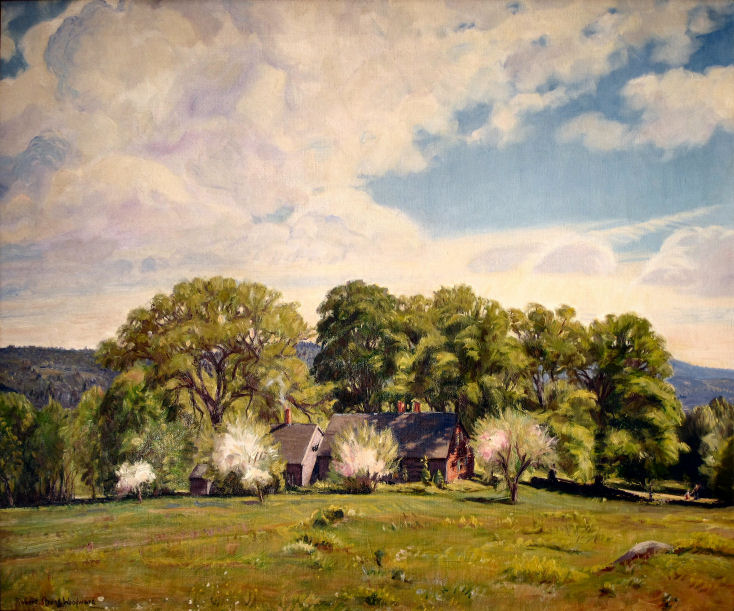
Featured Artwork: Spring Comes to New England
RSW's Diary Comments
"Painted in 1947. The Halifax House shrouded in a band of trees in May foliage (the spring yellow elm, maple row, etc. ) with blue hills showing here and there in the brakes. Foreground of green weed-spotted mowing, three small apple trees in pink bloom against the home section, stone wall to the right, beneath maples a suggestion of white dusty roadway to extreme right."
Additional Notes
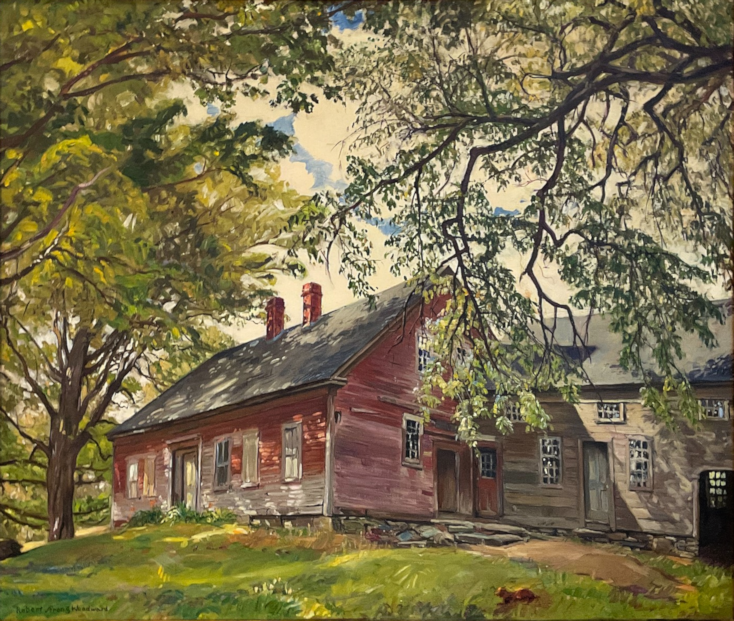

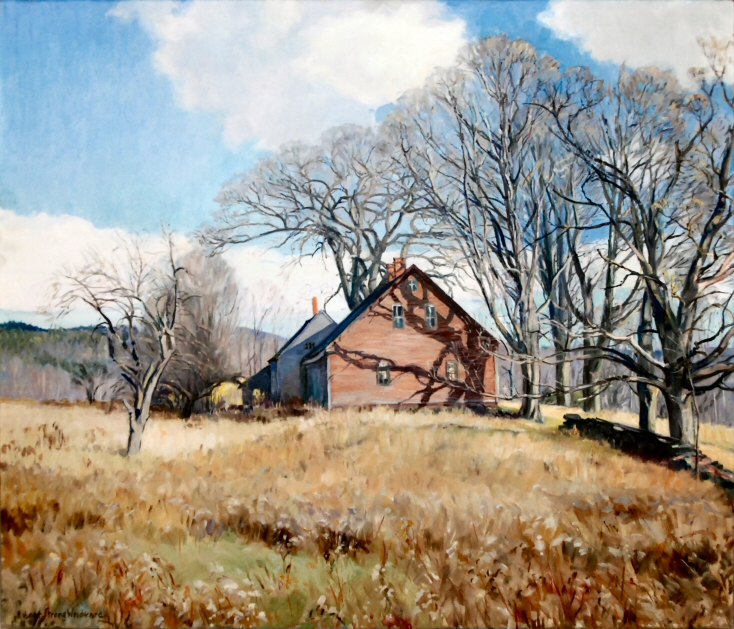
This painting, while still part of Woodward's study of the abandon farm in West Halifax, VT, is more the
"after" of a before and after study. The farm was purchased and fixed up by a woman living near the U.S.
Military Academy, West Point (NY) at the outbreak of World War II. She feared for her safety, because it was
a possible German target.
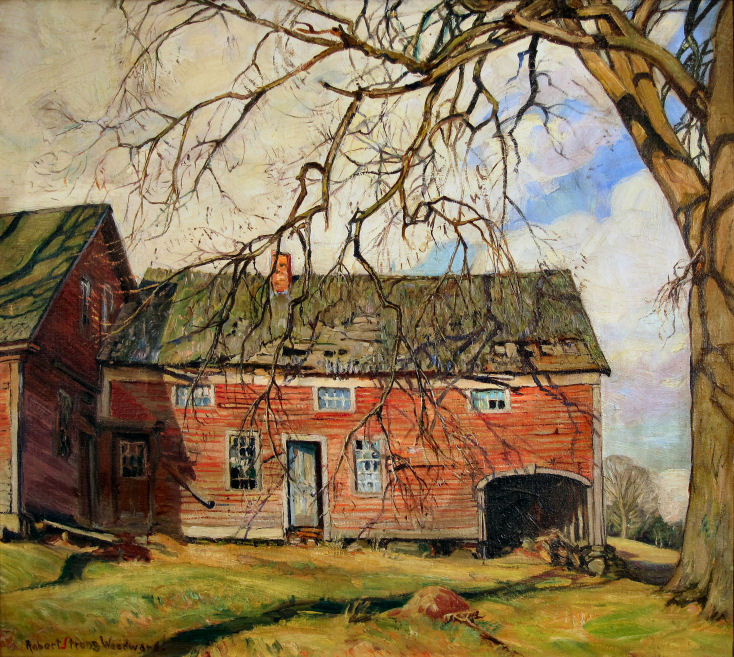
⮜ To the left is the main house and attached barn as seen in 1936.
However, the painting is misleading. You can see the wear and tear on the house with missing paint, but Woodward
positioned himself in a spot where the portion of the barn is collapsing. While the roof appears to have been
repaired first, the remaining house and barn will take a couple of years.
⮜ The painting to the left is nine years later. It's November and Japan surrendered a couple months ago
and Woodward returns the the Halifax place to paint this painting. It is a nice perspective to see, close up, what
is seen from a distance in the artwork of this page he makes two years after.
The woman who bought the
place would sell it after the war ended but at least it was no longer abandoned.