
Quick Reference
c. 1948
Southwick studio
Oil on Canvas
Landscape
Window Picture, Still Life
27" x 30"
Shelburne Falls AC Window, 1948
Deerfield Valley AA, 1948
Gardner (MA) Women's Club, 1948
Mr. Frank G. Shields
NA
.png)

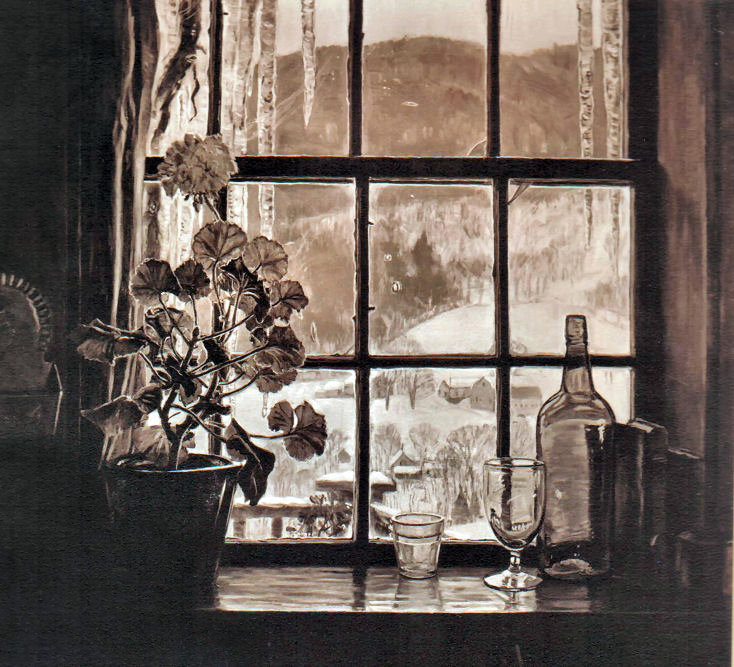
Featured Artwork: February Window
RSW's Diary Comments
"Painted 1948. A painting of and out the little studio window to the right of the glass door. Outside a prominent lot of icicles from the eaves, the winter mountain and Lilly's farm; inside, blossoming red geranium to the left (plus pewter match holder on the wall) lavender goblet and vivid green bottle with books to the right. The finest window shelf 'patina' and reflections I've ever done. Shown in the window of S.F. Art Center in June for 2 weeks, then sent to D.V.A.A. Exhibition in Deerfield in early July from where it was bought by Mr. Frank G. Shields, 97 Berkeley Rd., Upper Montclair, N. J. The first picture I ever sold from a D.V.A.A. Exhibition."
Editor's Note:
There was no record of this painting exhibiting in either the Shelburne Falls Art Center window or the Deerfield Valley Art Association (DVAA) in 1948, in the exhibition records. They have been added. It is also quite remarkable to think this is Woodward's first painting to sell at the DVAA exhibition when you consider that 1933 was the first year he participated with the group.
Additional Notes
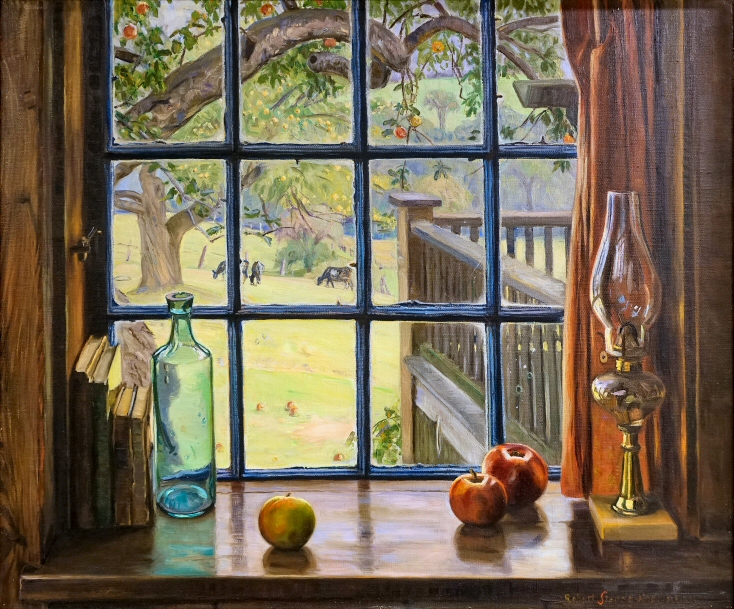

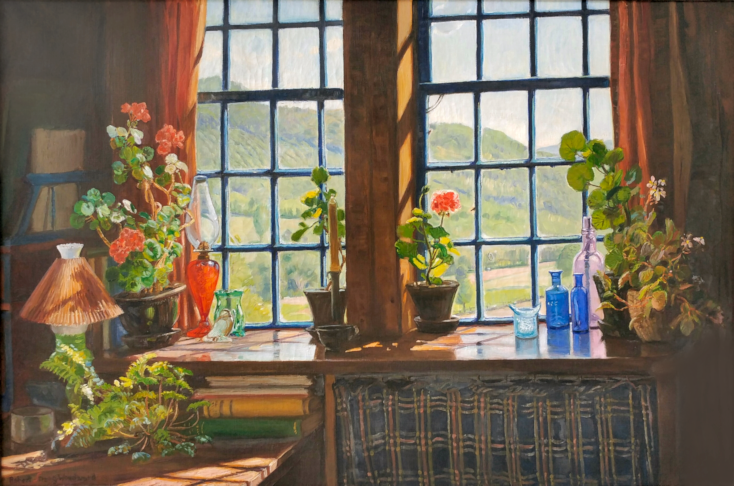
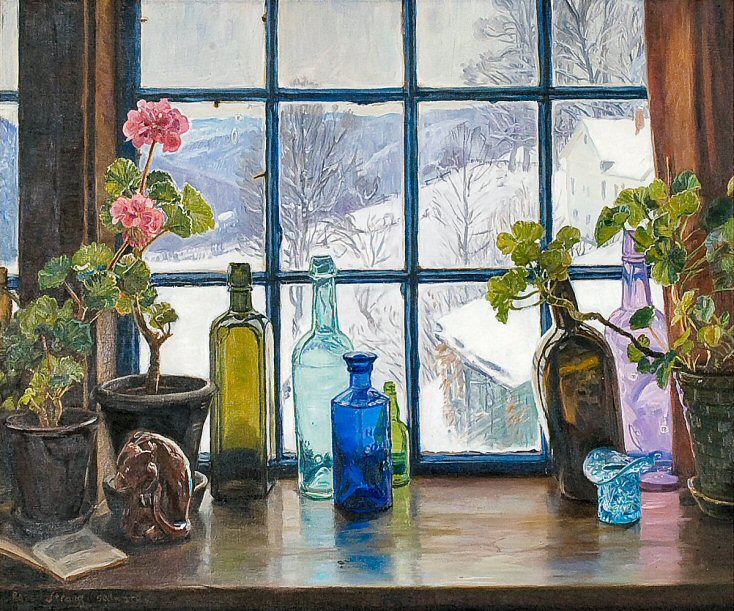
 Not to be mistaken for the little east window. This painting is of the
first window of his desk corner facing east.
Not to be mistaken for the little east window. This painting is of the
first window of his desk corner facing east.
One can clearly see the southern portion of the railing
to his rear balcony on the south side of the studio. Beside there are no apple trees are visible from the
view. The little east window is blocked from this sort of view by the orchard of apple trees directly outside
the little east window. From the little east window you get a view of the corner of the north balcony railing
in the painting to the right - When Apples are
Ripe
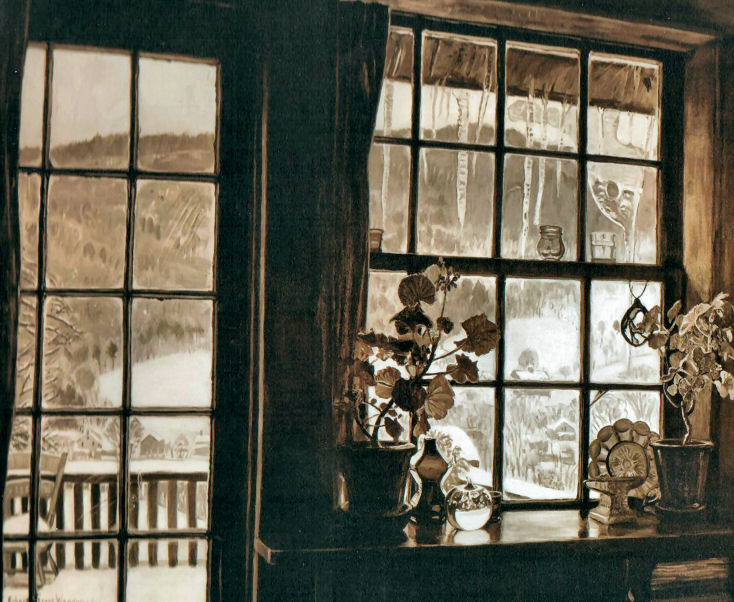
For a better perspective of what we are referring too. The painting to the
left, By the Balcony Door shows the window in February
Window next to the door out to the balcony. In it you can see the same railing to the balcony and its
unobstructed view across the valley to the hills of the east. Both windows are east-facing windows, only one
is at the north end of the studio and the other the south end.
Interesting enough and overlooked for
some time, this "other" little east window technically appears in two balcony door paintings but when painting
the desk corner itself, this window left out of all three paintings despite being part of the desk corner's
three window sequence.