
Quick Reference
c. 1936
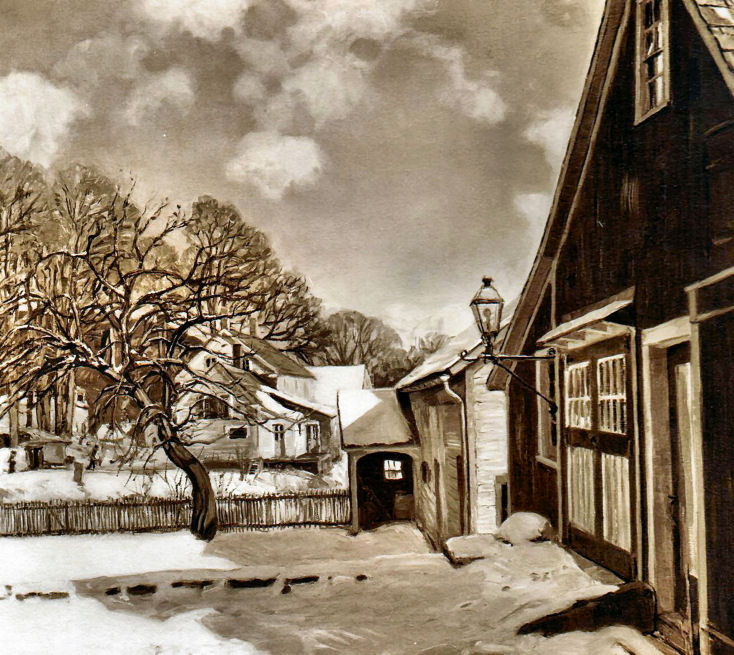
Front Yard, Buckland, Mass.
Oil on Canvas
Landscape
Villages, Houses
27" x 30"
Vose Galleries (Boston), 1936
Westfield Athenaeum, 1936
Grand Central Galleries (NYC),1937
Buck Hill (PA) Art Association, 1937
Art Institute of Chicago (IL), 1938
Grand Central Galleries (NYC),1938
Mr. Paul J. Ihling brokered through
the Grand Central Art Gallery
NA
Related Links
.png)
Featured Artwork: From a Village Yard, 1936
RSW's Diary Comments
"Painted in 1936. Painted from the north window in the little reception room of my house of my yard with Gould's neighboring house, the Buckland street, etc. Exhibited generally and finally sold through the Grand Central Art Gallery to Mr. Paul J. Thling, 929 Edgemore, Kalamazoo, Mich."
Editor's Note:
We have questioned the spelling of the buyer's name. We believe it is an error made initially by Dr. Mark. A google search of the name in the the diary comment produced multiple results NONE of which are how it is spelled above. We found "Thling" which was an error made by optical recognition readers (OCRs) mistaking "I" for "T". There were a large number of results for "Ihling" in Kalamazo, because of a publishing company in the Michigan town. Also, we could find plenty of residents in Michigan with the name Ihling and none for Thling. We illustrate the issue with the screen captures seen below:
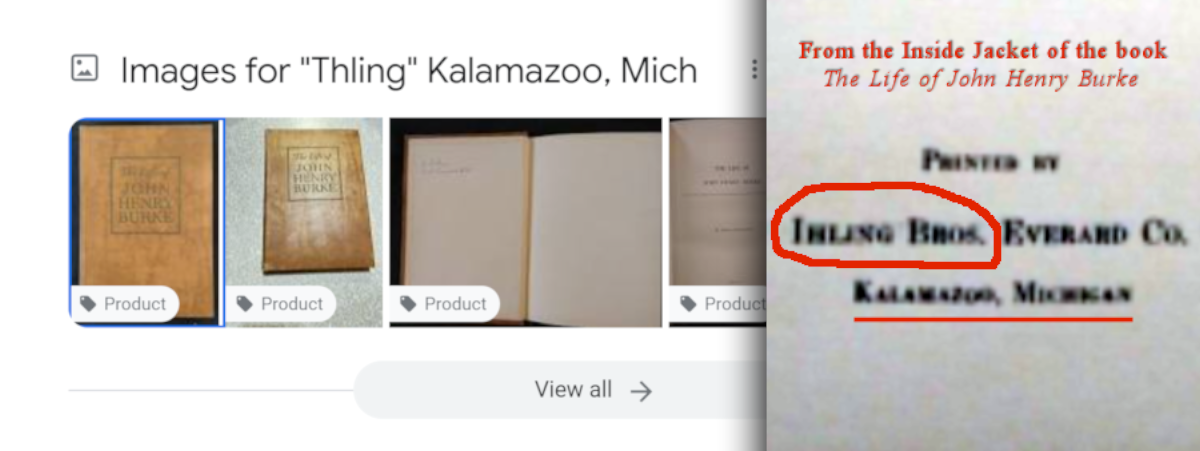
 Google Screen capture illustrating the error OCR makes on recognizing the letter. There was another
example of the OCR mis-reading the letter "I" for "T" in a PDF from the same publisher - "IHLING."
See also how the "H" looks like an "N". These are common mistakes made by OCR.
Additional Notes
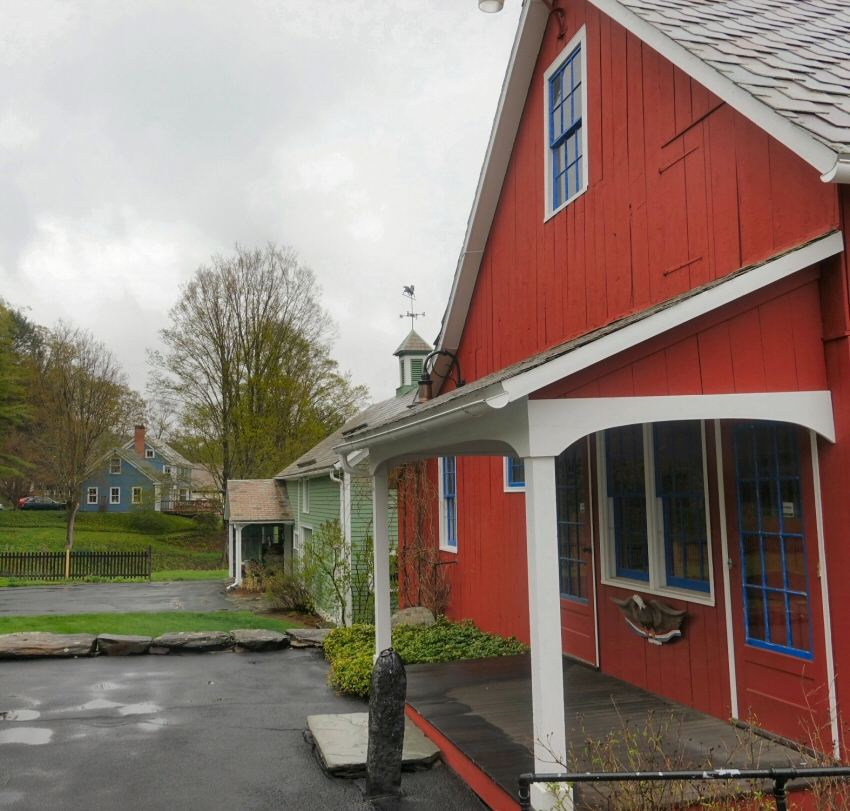
A picture of the yard today (2016)
 To the right: Is a picture of the yard today. As you can
see, the barn has remained pretty much the same. The carriage house garage however was converted into offices
for a "country doctor's" practice.
To the right: Is a picture of the yard today. As you can
see, the barn has remained pretty much the same. The carriage house garage however was converted into offices
for a "country doctor's" practice.
This is a special painting for Woodward though he does
not say so in his diary comments. You need only look at where it exhibited to know that he considered this an
editorial piece specific to his brand. Vose, the oldest and most prominent art dealer in Boston took Woodward
on as a client beginning in 1936. Westfield always exhibited important paintings by Woodward and Wodoward was
especially proud of being part of the Grand Central Art Galleries in New York City. Yet is it the two exhibits
outside New York or Boston that says it all. Buck Hill AA has strong ties to the "New Hope (PA) Artist Association" of the Bucks County
school outside Philadelphia, as well as the Pennsylvania Academy of Fine Art and proximity to the NEw York
City market and still exist to this day. But its appearance at the Art Institute of Chicago in 1938,
Woodward's fourth straight year in Chicago, is the cherry on top.
There is ANOTHER painting by the same name! It also exhibits at the
Westfield Athenaeum, only in 1934, ten months before Woodward would move into the Southwick Place in March of 1935. However, we do not believe it
is a similar painting from the Hiram Woodward Place that burned
after a lightning strike in July of 1934.
All references to the term "village" in Woodward's catalog
are specific to town centers, like Upper Street in Buckland (10 paintings). Others paintings include, Heath (3
paintings), North Hadley ( 1 painting) and Leyden (1 painting). Without any other information, we couldn't
hazard a guess as to what the subject of the original painting could be other than to say the most likely
would be Heath (possibly Mrs. Moors home he visited as early as 1927) and the least likely would be
Buckland.
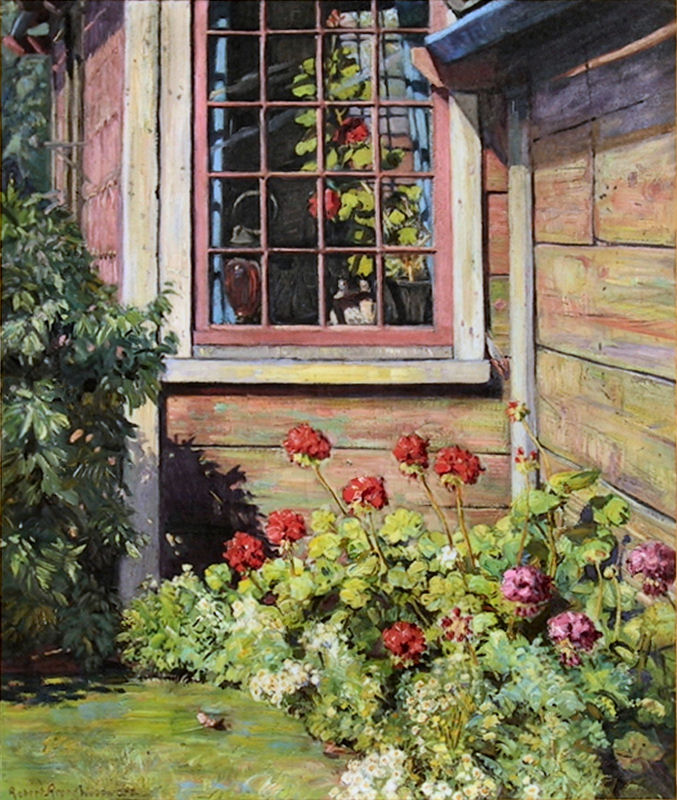
Woodward had a process of getting familiar with a new studio. Doing
an analysis of his first "Window Pictures" made at his Hiram Studio
revealed that he started in his window corner and worked his way counter-clockwise around the room before
getting less Window Picture and more Still Life. We then compared the order of paintings made from Southwick
and learned that his first Window Picture painting was of his scenic north artist window in March of 1935
christening the studio. It would be another year before he makes another and that one would be from his
storage closet window of the carriage house of the North Window counter-clockwise from his first painting. He
then paints the South windows, the desk corner and finally the little east window completing the circle. The
very next painting he makes, just like at Hiram, is outside the studio.
Did you notice the two
men and delivery truck in front of the neighbors house? We once had a viewer complain to us there were NO
people in the People & Livestock Gallery. Lol! Woodward did not do
portraits. He referred people to his friend and portrait artist Dorothy
Tufts for those.