
Quick Reference
Prior to 1937
End of Main Street
Greenfield, MA
Pastel on Board
Landscape
Houses
Unknown
Unknown
Unknown
NA
 commission sponsor
 .png)
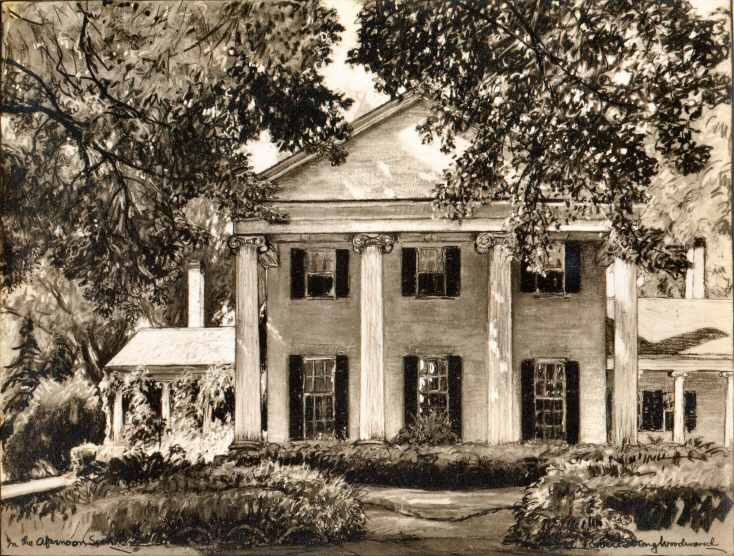
Featured Artwork: In The Afternoon Sun
RSW's Diary Comments
An excerpt from RSW's diary comments for The Potter Homestead.
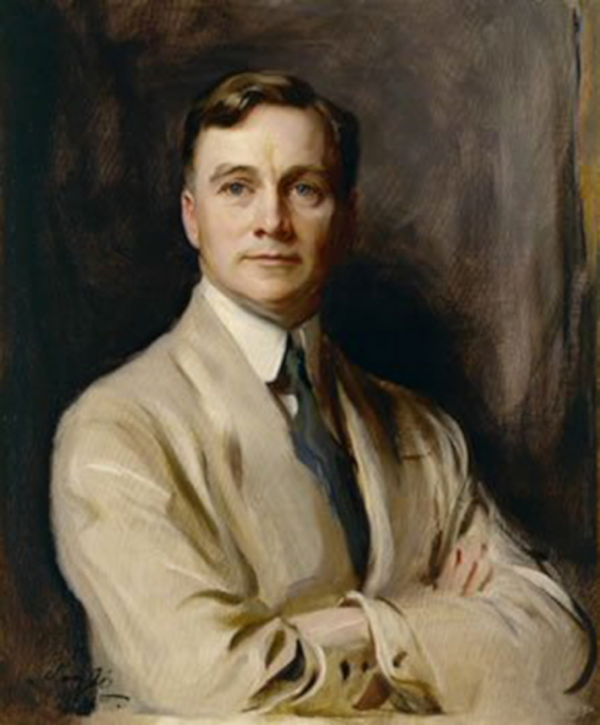
 Mr. Francis P. Garvan
Mr. Garvan and his wife Mabel (Brady) spent
years compiling one of the finest collections
of early American home decor, furnishings,
and decorative silver serveware in her name.
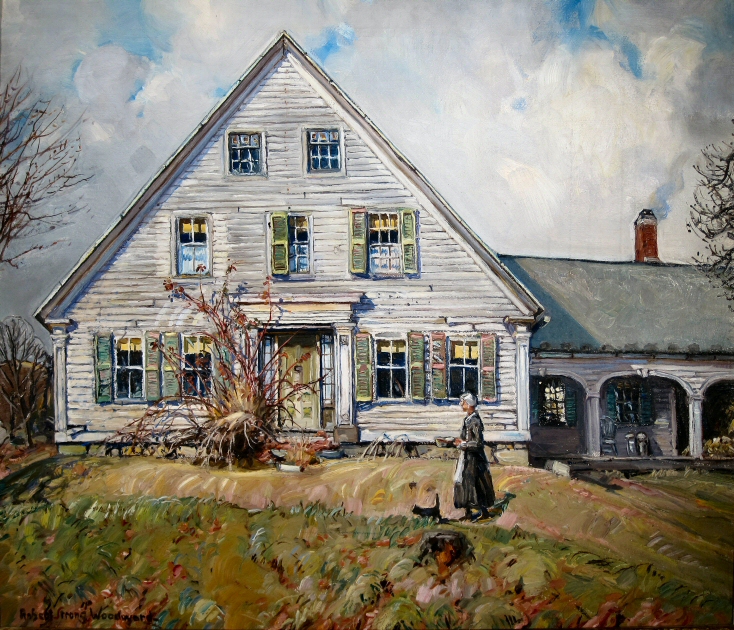
"Painted 1937. One of the many paintings I made this season of 1937 through Macbeth for a Mr. Garvan who wished to present a collection of paintings to Yale University showing the growth of architecture (largely churches but also of fine dwellings) in America. I made many of this series but Mr. Garvan suddenly died before he could honor his contract with me, much to my loss. Since I could now sell them privately the above canvas was bought by the owner of the house itself, Mrs. Arthur D. Potter, of 486 Main Street, Greenfield, Mass. and hangs in her beautiful drawing room."
Editor's Note:
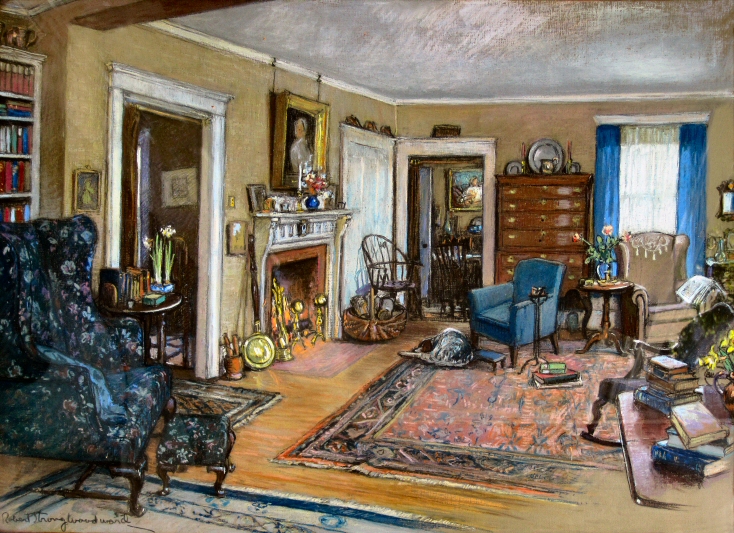
This is remarkable. We have, at the most, three sepia prints of chalk drawings and this is by far the best of them. Why there is a print, we do not know. It could be for any number of reasons but primarily the sepias were used to send to galleries and exhibition panels as an illustration of the painting. Not all paintings have sepias, probably because it would be expensive. However, because this pastel is linked to the Garvan Commission, it is likely that Woodward made the chalk at the scene to paint later in his studio and the print was made and sent to Mr. Garvan for his approval of the subject which is the "fine dwelling."
Additional Notes

The Potter home- front view
 The timing of this commission of paintings is coinciding with two
substantial events of historic significance being celebrated in Vermont. There are two anniversaries. The
first is the 175th anniversary of the Battle of Bennington. It is one of the most significant battles of the
Revolutionary War and perhaps marks the turning point of the war. The victory would lead to the victory at
Saratoga Springs weeks later. For that celebration, the Bennington
Church is being renovated and will hold a rededication ceremony to commemorate the anniversary.
Approximately 60 miles to the north is the East Poultney
church that is in the midst of a full restoration, funded by its hometown son George Jones, co-founder of
the New York Times (NYT) newspaper. Poultney is linked forever to Bennington because it was attacked by the
British before the Battle of Bennington and its women and children walked the 60 miles in the dark of night to
Bennington for safety and to warn Bennington of the British troops impending approach.
The timing of this commission of paintings is coinciding with two
substantial events of historic significance being celebrated in Vermont. There are two anniversaries. The
first is the 175th anniversary of the Battle of Bennington. It is one of the most significant battles of the
Revolutionary War and perhaps marks the turning point of the war. The victory would lead to the victory at
Saratoga Springs weeks later. For that celebration, the Bennington
Church is being renovated and will hold a rededication ceremony to commemorate the anniversary.
Approximately 60 miles to the north is the East Poultney
church that is in the midst of a full restoration, funded by its hometown son George Jones, co-founder of
the New York Times (NYT) newspaper. Poultney is linked forever to Bennington because it was attacked by the
British before the Battle of Bennington and its women and children walked the 60 miles in the dark of night to
Bennington for safety and to warn Bennington of the British troops impending approach.
It is fair to
say that this is a BIG deal at the time. Heck, the NYTs is covering its progress regularly in its paper.
People like Garvan, and probably Electra Havemeyer Webb, founder of the Shelburne Museum and sister to
Woodward's best customer, Adaline Frelinghuysen, both devoted
Vermonters, are in all likelihood involved. There is no way this is not a big deal for Woodward and his
career, possibly to his legacy as well. Then misfortune with the death of Mr. Garvan, and Mrs. Garvan does not
honor her husband's deal with Woodward. We have a couple theories as to why but that is for an essay we are
currently working on and coming soon.

The Potter home- side view
There are 3 known paintings of the Potter homestead, 2 oils and 1 chalk
drawing. One of the paintings was intended to be part of the Francis
Garvin commission. Garvin, through the MacBeth Galleries, commissioned Woodward to paint historically
significant New England architecture demonstrating its "growth." The series was to focus mostly on churches
but include certain "fine dwellings." RSW only painted 3 churches in oil before Garvin's unexpected and sudden
death (there were, we believe, a number of unfinished paintings - 1 oil and 2 chalks plus a sketch in pencil)
and as far as we know the was the only home. Photographs of the Potter Homestead were found in RSW's personal
items along with pictures of the Bennington Church, we believe to
work from in his studio.