
Quick Reference
circa 1935
NA
Ink on Paper
For Print
Bookplate
NA
NA
NA
NA
Related Links
- See also the...
 Bookplate & Cachet Gallery to view related pieces.
- See also the Scrapbook essay on Bookplates &
Illuminations. - See also the...
 Churches & Cemetery Gallery to view related pieces.
- Read the Scrapbook story for more about the Marlboro, VT church paintings.
- See our page devoted to ...
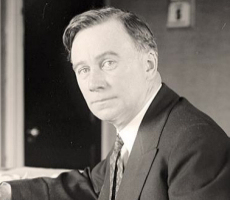 commission sponsor Francis Garvin
- See also the...
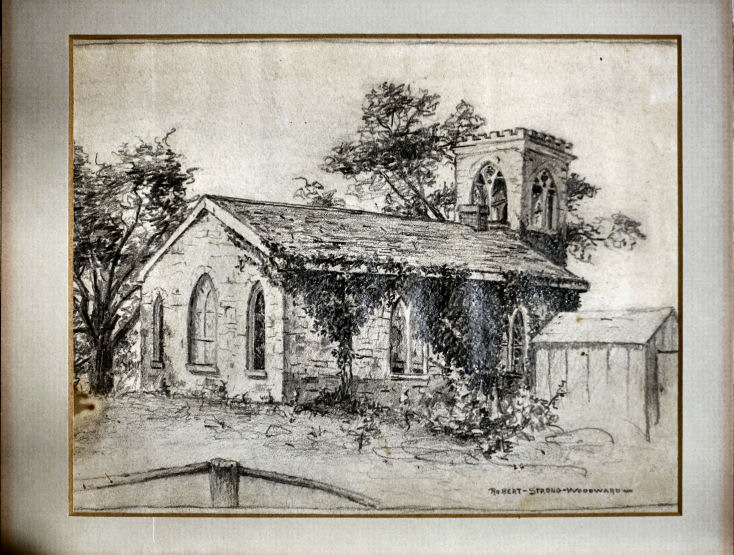 Sketch Book Gallery to view related pieces.
- See also the...
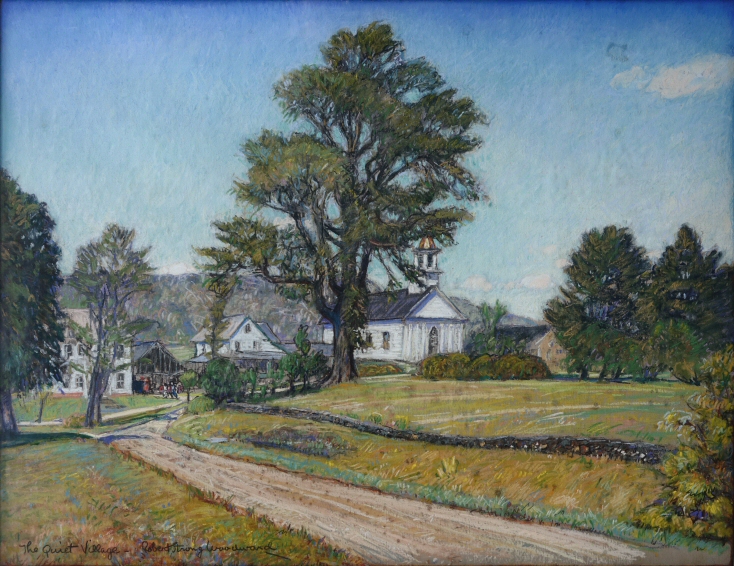 Villages Gallery to view related pieces.
- See also the...
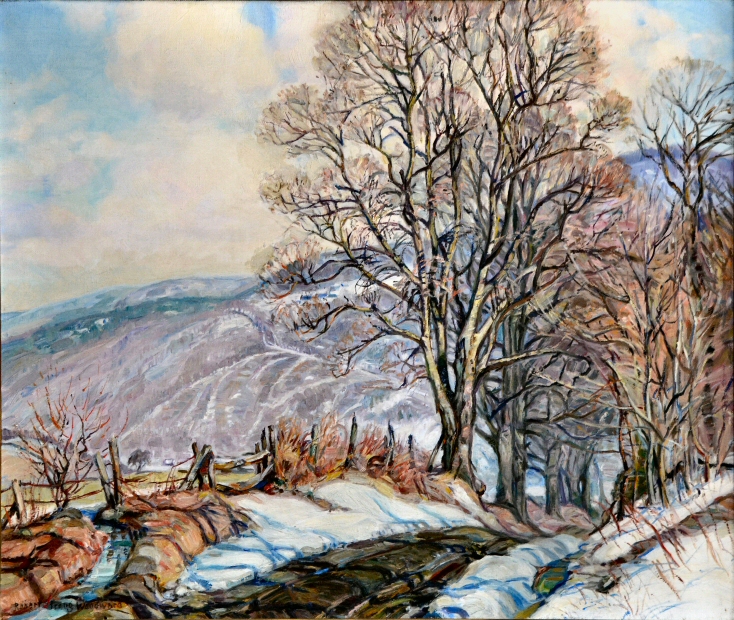 Roads & Streets Gallery to view related pieces.
- Besides Mr. Garvan visit other Vermont residents that were customers of Woodward:
Adaline Frelinghuysen
and industrialist & museum founder Bartlett Arkell
.png)
Featured Artwork: Marlboro Meeting House Library, Bookplate
552.png)
RSW's Diary Comments
 The artist only made a record of his oil paintings.
Editor's Note:

 A portrait of William Macbeth by
Stephan Douglas Volk from the
collection of the Brooklyn Museum.
There are just a couple occasions where Woodward had made a bookplate after giving up
commercial work to devote his career to painting in 1917. This is one of those times, as it should, because
his painting of Marlboro (VT) Meeting House just so happens to be one of his most lasting legacies.
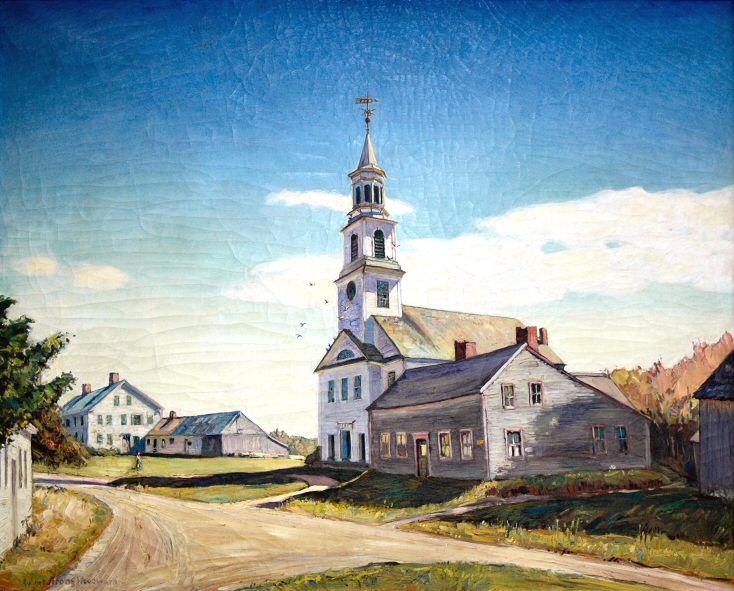
As we understand it, a brief summary of the story is as follows: Woodward made the painting Enduring New England from his car in 1931. The very next year,
a fire destroys the early American styled church. We understand it was a complete loss. A campaign begins to
rebuild the church and its architect discovers Enduring New England. hanging in the MacBeth Gallery
in New York City. A request is made to allow the architect to use Woodward's painting for the design and of
course, permission is granted.
Around the same time, two other Vermont churches, the Benningto of the Battle of Bennington in
1937. Here is where it gets murky. It is believed that William Macbeth introduced the idea for Francis P. Garvan to commission Woodward to paint those
churches as well as a number of others to be included in the collection of early American home decor given to
Yale University under his wife's name, Mabel Brady Garvan, on their 20th wedding anniversary.

The Marlboro Meeting House today
Unfortunately, the commission primarily went unfulfilled because Mr. Garvan would die before
he could see the finished product. This happened 20 days after he did purchase Enduring New England
for the collection which is where it remains to this day.
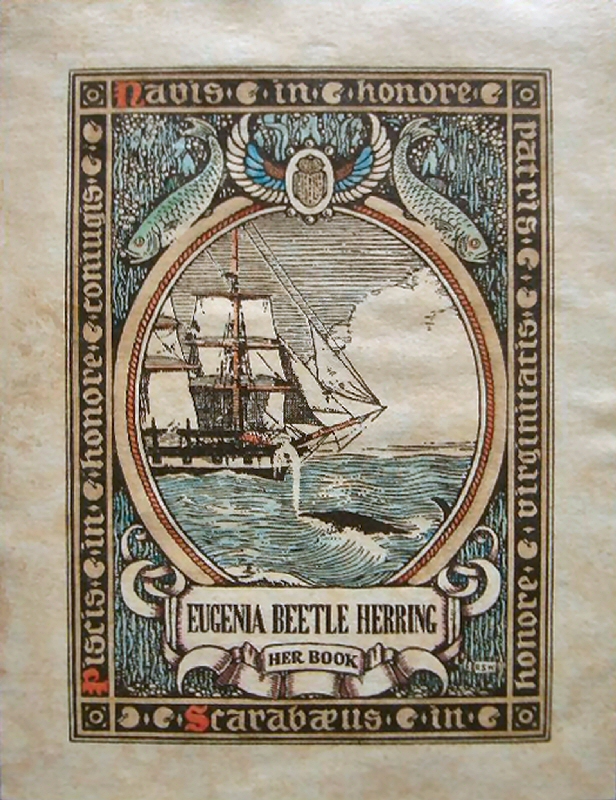
The bookplate above is also another tribute
to Woodward and the role he played in assuring the Marlboro Church's lasting legacy. Note the Meeting House as
it appears today in comparison to how the original appeared in the painting. The architect stay true to the
traditional origins of the place.
It is important to keep in mind, the church itself does not call
itself a church but rather sticks to the tradition of referring to itself in the non-denominational term,
"Meeting House," which is wonderfully explained in the NYT newspaper clipping below.
Additional Notes
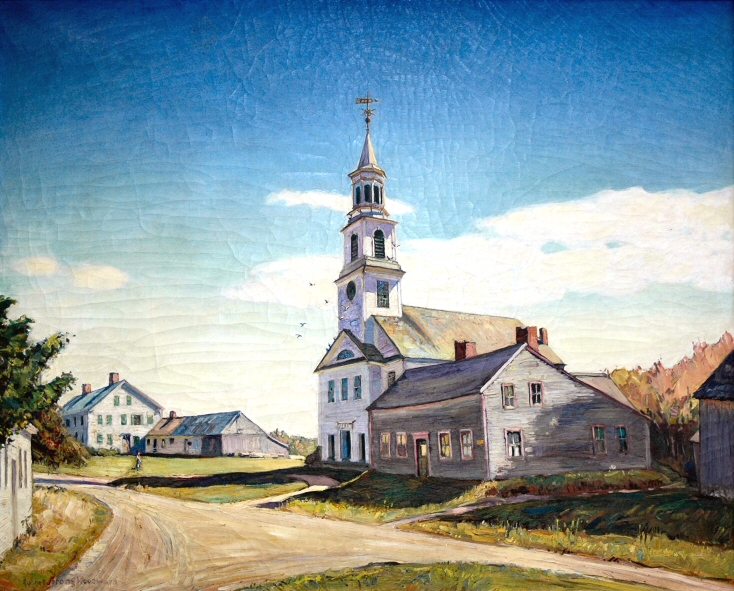
After having made the oil painting Enduring New England RSW was requested
by the Marlboro Library to make a bookplate for them based on his painting. The intent was to place this in
all books donated to the library giving their names on the plate.
The above design is based on the oil painting Enduring New England. Woodward made two additional versions of
this scene, The Marlboro Church which was sold to his Alma mater,
today known as Bradley University, and New England which was sold to
the artist patron-saint and sponsor, Mrs. Ada Small
Moore.
Bonus Material

An invitation to the dedication
of the New York Times tower
From Woodward's Personal Scrapbooks:
To the left is the artist's invitation to the East Poultney (VT) church dedication.
We do not know if he attended it, however, we are sure that the invitation resulted in some way through Mr.
Garvan because of his commissioning of the church's painting. It should also be noted the E. Pounltney is
probably the farthest Woodward ever traveled to paint (excluding Boston which is a surprising 2 and a half
hours even in modern times. But when RSW went to Boston to "paint" he stayed at his cousin Florence's place in
West Newtown, MA).
Remember this all came about because of the painting Enduring New
England above, and while we have no record of the East Poultney Church painting ever exhibiting, the
Bennington Church was shown a number of times. The Bennington Church is the leading star of the story of the
Battle of Bennington (July 7, 1777) and East Poultney has an important, yet, supporting role in the story.
Still, both churches are being re-dedicated in the very same year, the Poultney church is being refurbished
and renovated with funds being provided by Poultney son, and New York Times founder, George Jones, making it
more visible. Do not forget also that, the Marlboro Meeting House, which burned in 1932 is being rebuilt
during this time and its architect used Woodward's Enduring New England. to make the design. The
artist is very involved in all three of the biggest church projects in Vermont at the time.
