
Quick Reference
Prior to 1931
Boston, MA
Oil on Canvas
Landscape
Boston
40" x 50"
Stockbridge (MA) AA, 1931
Mt. Holyoke Coll. Dwight Hall, 1931
GCAG, Founders' Show, 1952
Northampton MFA, 1962
Unknown
Click Here
 relationship with
 .png)
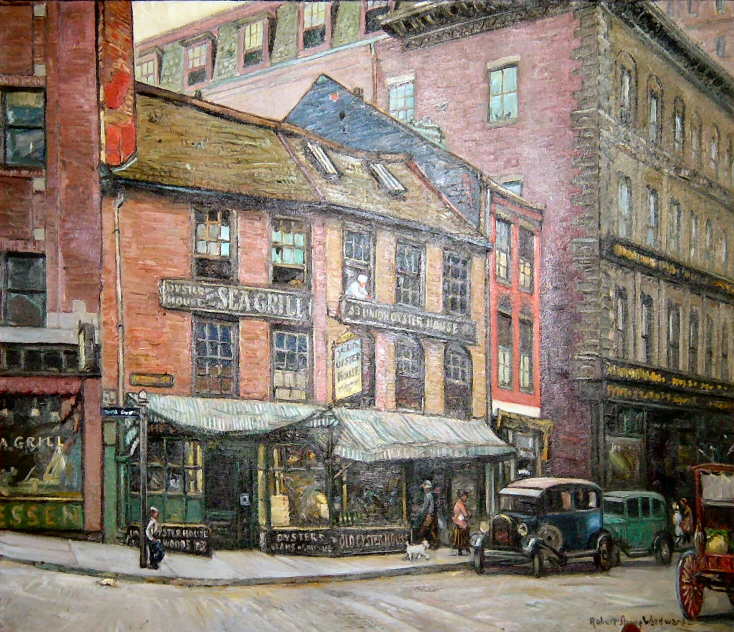
Featured Artwork:Old Boston 40" x 50"
RSW's Diary Comments
There are no diary comments regarding this painting...
Editor's Note:
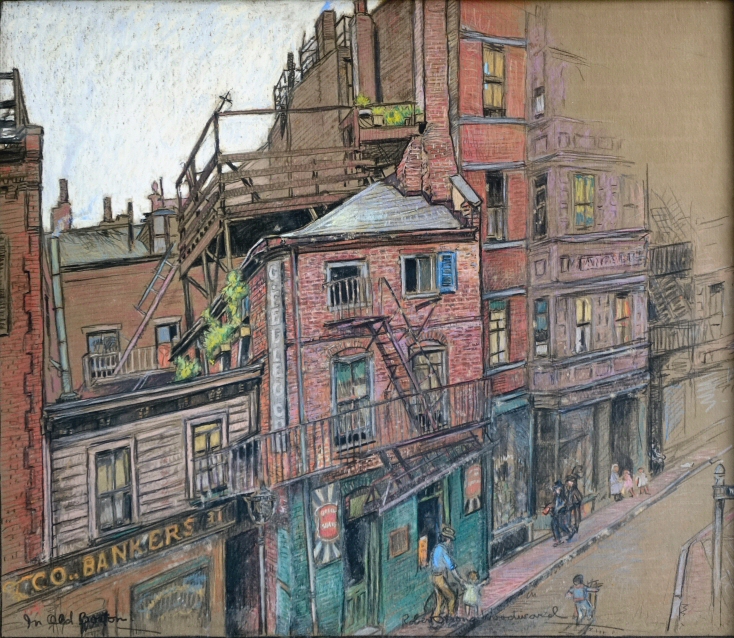
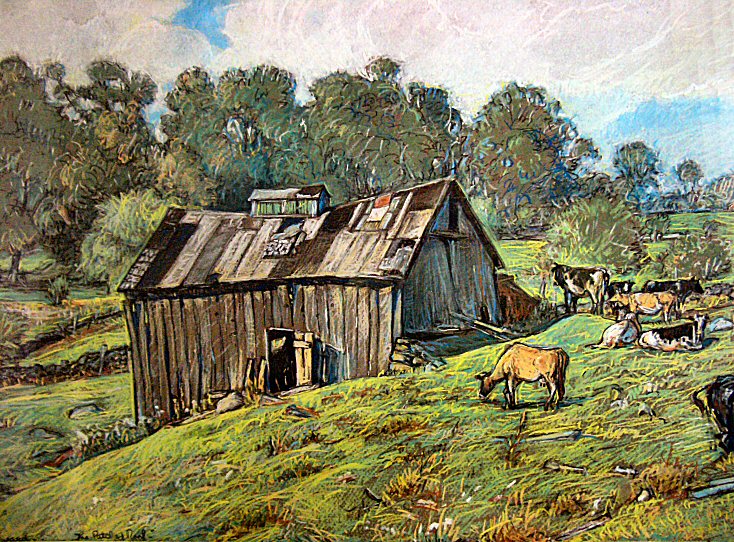
 In Old Boston, Chalk
As an aside, the pastel above is the artist's rare attempt
at emulating the NYC "Ashcan" school's methodology,
"art rooted in the raw, visceral reality of the city,"
much the same way RSW was doing for the old NE farm.
...In fact we wouldn't know it exist if it not for the exhibition records! Here at the
website we have been bouncing around, flip-flopping, and waffling in every direction as to the subject of this
painting. We once reasoned it had to be the same scene as the chalk drawing, In Old Boston, seen to
the right, because, 'Why would Woodward paint two large versions of this painting and not say anything about
it?' Especially when you consider that he held on to it up to his retirement in 1952. Here is the wrench in
that fact and it is that he held on to and never sold the original 36" x 42" oil, In Old Boston,
either. It makes no sense to keep two large paintings of the same scene, thus it makes sense that it is a
different subject than In Old Boston.
To help support the argument that it is the same
scene as the chalk drawing to the right is that of the NOW 5 'Old Boston' paintings circulating around various
shows at the same time, this 40" x 50" painting hung along with the chalk drawing pictured at the 1931 Mount
Holyoke College event. While Woodward would never hang two oils of a similar scene (even if they were
different sizes) at the same show, he would absolutely exhibit and oil with its comparable pastel painting
from time to time. We have even recently learned that much of the appeal to the 1929 Pynchon Gallery show was
to emphasize the relationship. The show featured the chalk drawings but for comparison a number of similar
oils hung in another room for affect.
Additional Notes
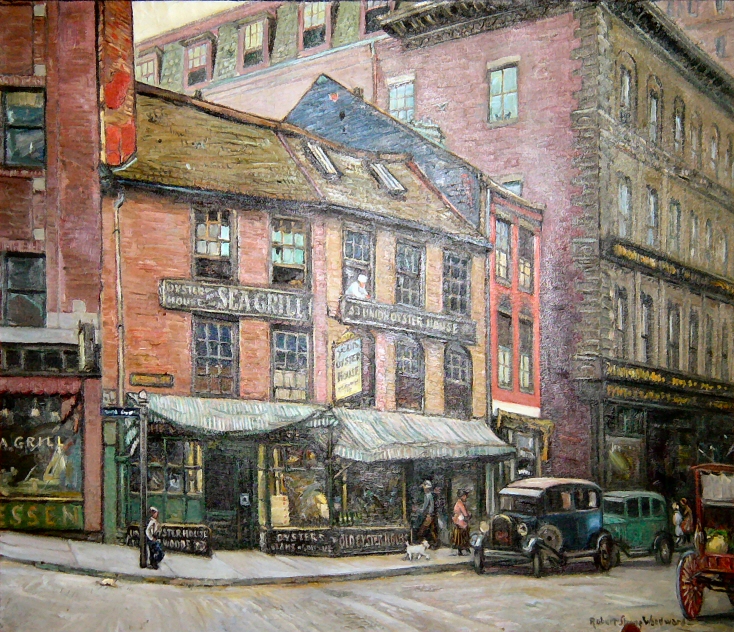
In Old Boston, 1931, oil
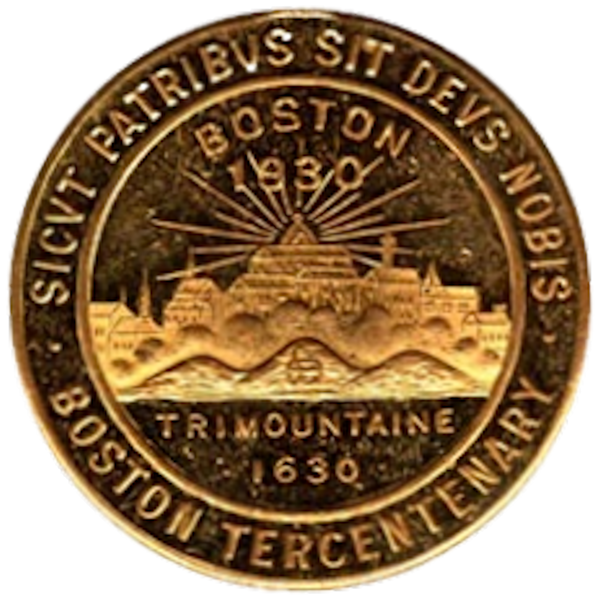
The 40" x 50" painting is beleived to be the same or very similar subject to the chalk drawing In Old Boston. In 1930, to partake in the 300th birthday celebration of
Boston, Woodward swapped homes with his cousin Florence Haeberle who was living in West Newton at the time to painting a series of
paintings in "old Boston" and around the waterfront of the north end.
The old Boston paintings,
6 in all, are of only two subjects. The first and most popular is his paintings of the Ole Oyster House on
Union St. (formally known as Green Dragon Lane) and the other is somewhere nearby we believe is Salt Lane just
behind the Oyster House (see the pastel painting above).
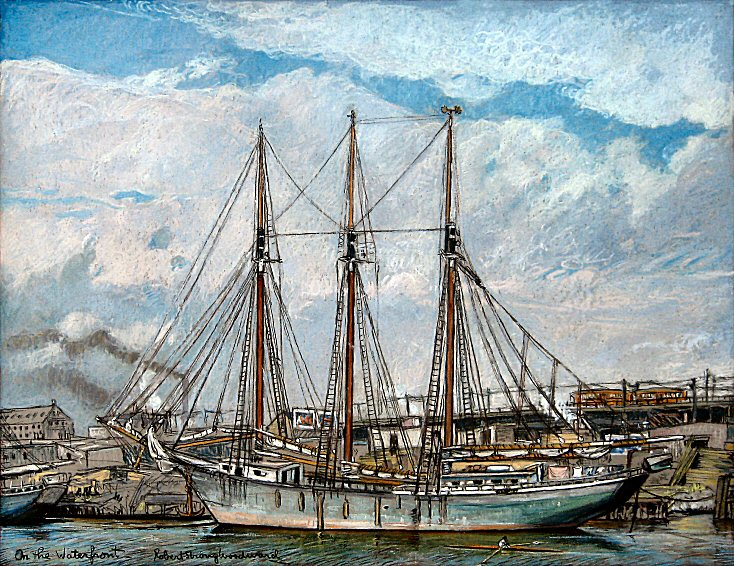
On the Waterfront, 1930, Chalk
There are other pastels, Woodward called chalks, of the
waterfront, including one we have only read a descript-
ion of in newspapers. We do not even have a name for
it! The reporter never names it. It is of a boy fishing off
the end of a pier. Also, we recently found a postage size
image of the pastel painting Drying Nets; T Wharf
Woodward made two chalks from this neighborhood and made all of the resulting oils from these two pastels.
The original pastel of the Oyster House was sold immediately and never exhibited. The other five paintings all
exhibited at numerous shows from 1931 to 1935 with only the 1931 Mount Holyoke event hanging an oil and pastel
of the same subject- the neighborhood scene.
These Boston paintings are "off-brand" for the artist.
For one thing, they are far more romantic than Woodward allowed himself to go when painting the rural
countryside. The indulgence was most likely an allowance of the celebration. We surmise this from the history
of the paintings themselves. Of the 10 known paintings made from the Boston excursion, 4 of them were kept by
the artist for himself up to 1952 when this painting was finally let go, perhaps to fund his recent
retirement. The artist typically kept his indulgences for his private collection.
The contrast, with
a 'good yet unintended' circumstance regarding Woodward's legacy. The oil painting In Old Boston (36" x 42") fetched the largest sale price ever for one
of his paintings. Yet, like we point out, it was an 'out of the ordinary' situation and not typical of his
brand. Although we believe the artist would appreciate the irony of the situation since much of his more
serious work was about the issue of circumstance and their inherent outcomes, and the accompanying assumptions
made as to the cause of such events, which often leads to misunderstanding.