
Quick Reference
c. 1932
Cummington, MA
Oil on Canvas
Landscape
Barns
25" x 30"
Salons of America, 1932
Hartford Art Academy, 1932
Deerfield Academy, 1932
Rudman Gallery (NH), 1936
Vose Gallery, Boston, 1937
Unknown
Unknown
Other Oil Paintings
mentioned in 1932 article
- Under the Village Map
- Keach's Stove
- New England Winter
- Up the River Road
- Enduring New England
- From Old Deerfield
- Out of The Past
- October Farm
- Hills In April
- Friendly Doorway
Related Links
- See also the...
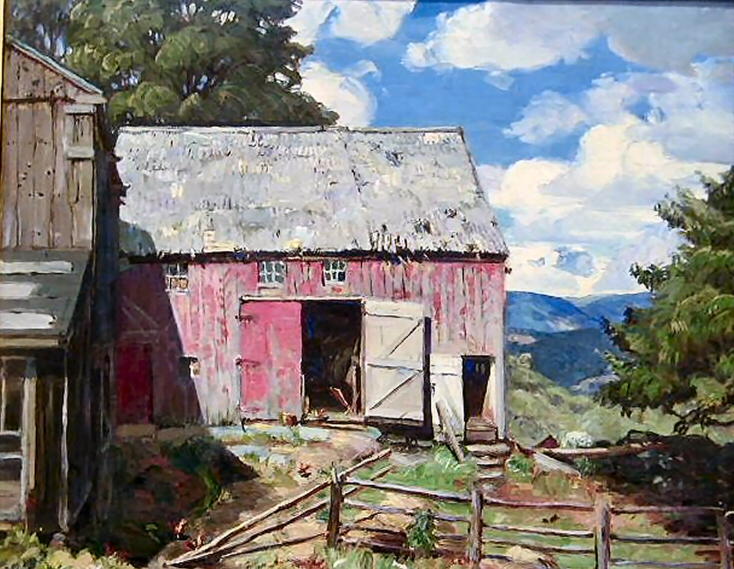 Barns Gallery to view related pieces.
- See also the...
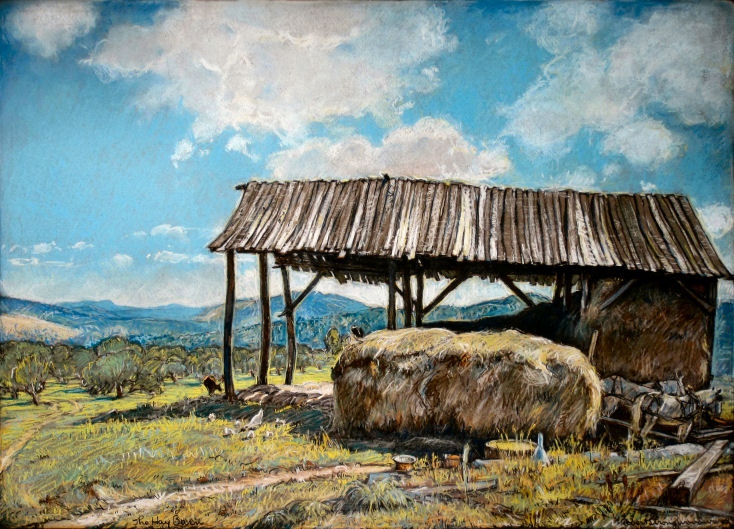 Buildings Gallery to view related pieces.
- See also the...
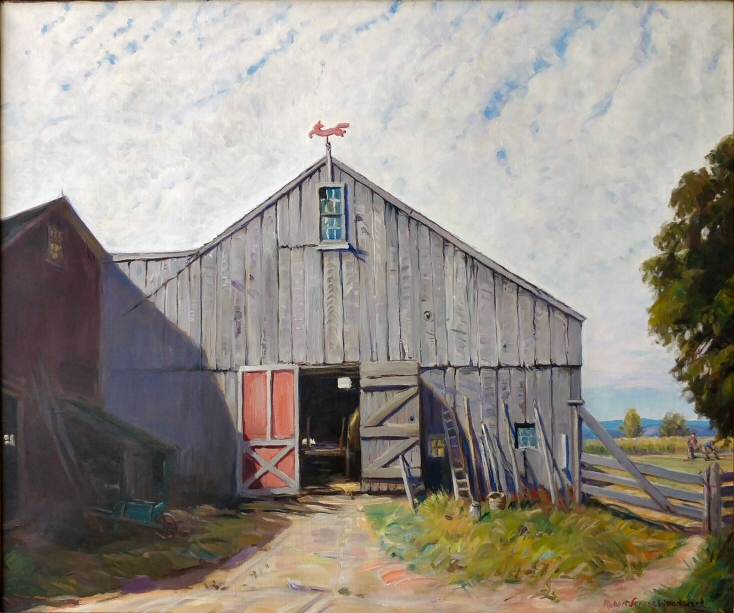 Fences, Gates & Doors Gallery to view related pieces.
.png)

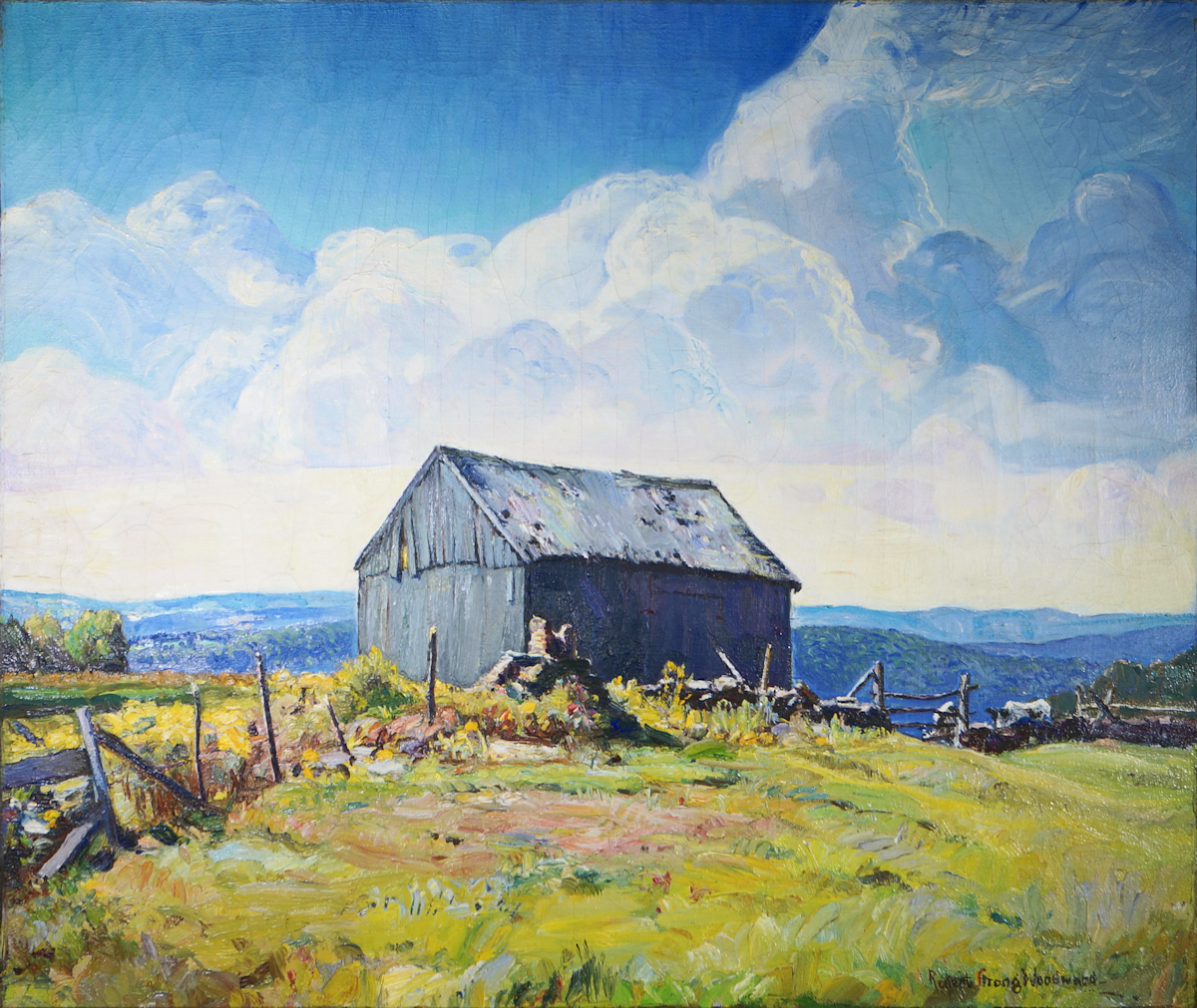
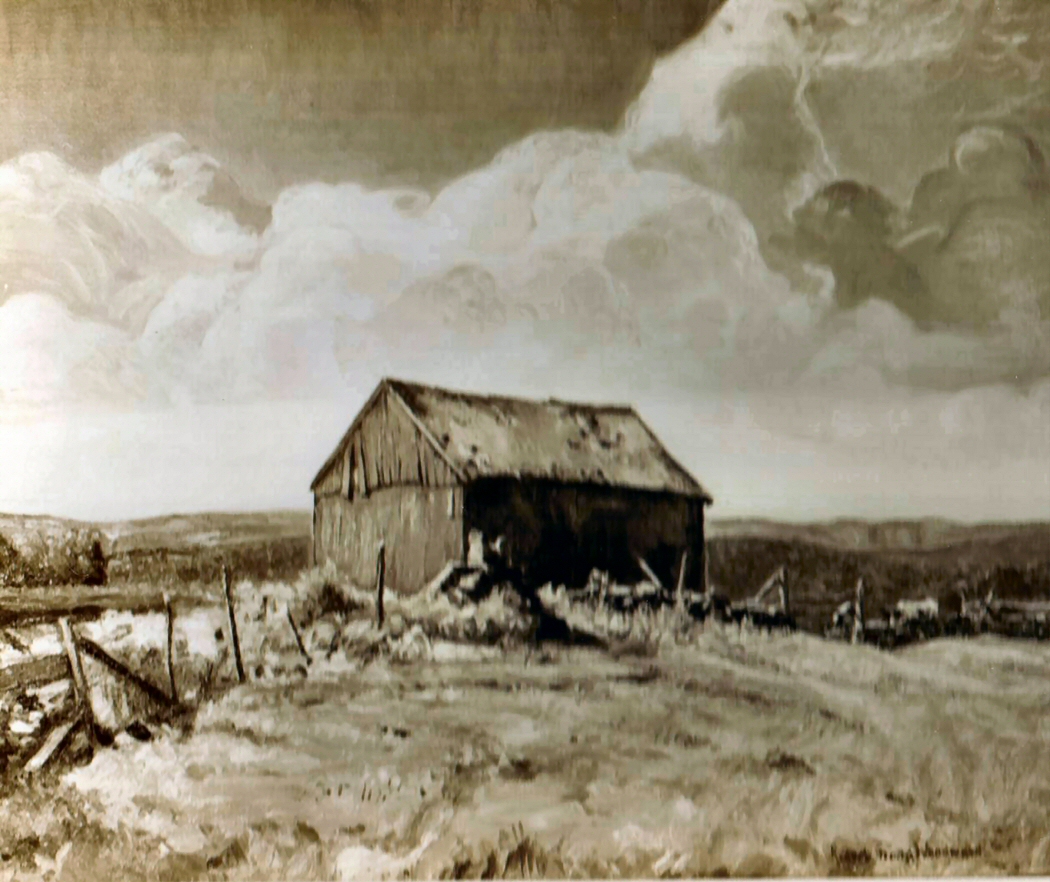
Featured Artwork: New England Heights
RSW's Diary Comments
 When you hover over image, you can enlarge
the
image simply by clicking on it.
New England Heights, Sepia
"Painted around 1930. Painting of a barn in Cummington-Chesterfield district on steep old road that goes out of Swift River up by the Howes' farm (where Contentment was painted). This is the same subject as the 40" x 50" New England Origins. Sold from the studio in April, 1950 and is currently in a private collection in Massachusetts."
Comments in notebook by RSW:
"Sent to Salons of America, American Anderson Galleries, By Fabian April 11th, 1932. "New England Heights" (a small Cummington barn). In Bradmorth's hands May 16th."
Additional Notes
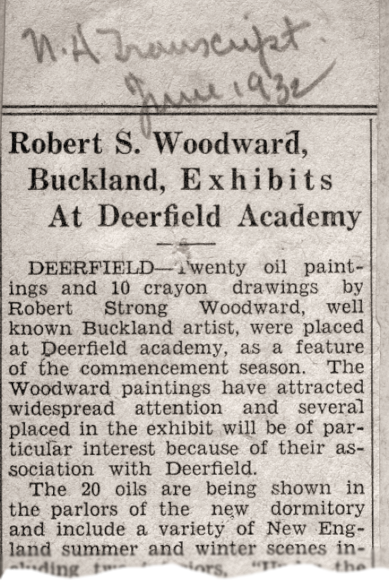
North Adams Transcript, June, 1932
Re: the Deerfield Academy Exhibition of 1932
North Adams Transcript, June 8, 1932
"Other fine canvases are New England Heights, showing a lonely barn on a windswept hillside,......"
To the Left: An article clipping from the New Hamphire Transcript regarding RSW's exhibition at the Deerfield Academy (1932). It is one of 12 oil paintings mentioned in the article and one of 20 oil paintings and 10 chalk drawings exhibited.
 A photograph of this painting was sent to this site in 2007 with the
following quote:
A photograph of this painting was sent to this site in 2007 with the
following quote:
The painting is currently in a private collection in
Massachusetts.
An essay by Dr. Mark Purinton 2018 [edtited by BCM]:
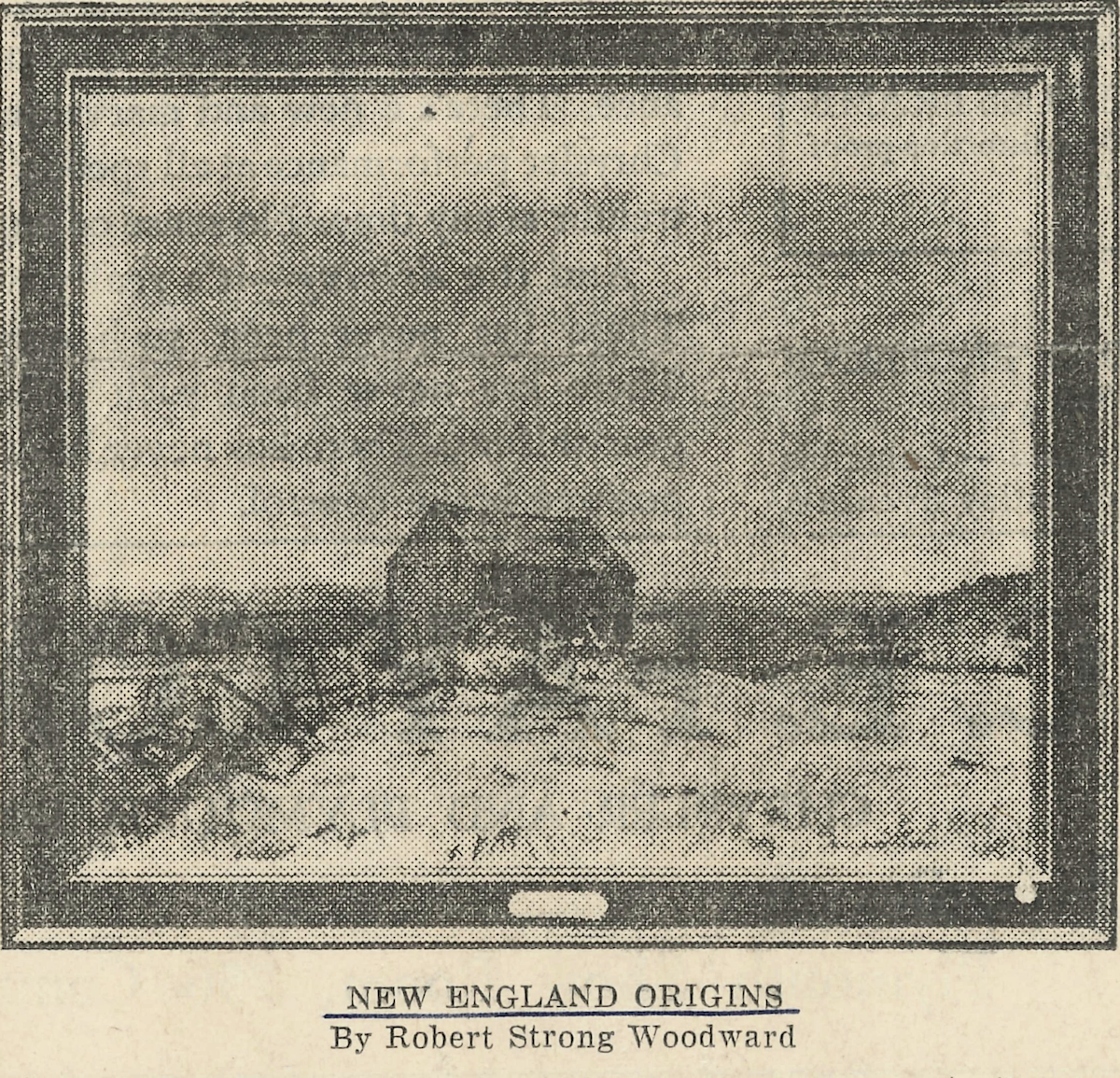
The picture above is taken from the April 10, 1932,
Boston Globe article announcing the opening of the
Boston Art Club sponsered exhibition held at the
Jordan Marsh Gallery. This was the only image we
had of this painting! CLICK on image to see the article.
"In about 1931, according to the Robert Strong Woodward diary, he made a large 40" x 50" oil
painting of a small farm on a hill in the Swift River district of western Massachusetts. He named it New England Origins. The painting was widely exhibited about the
country and won much praise by viewers and critics.
At about the same time, Mr. Woodward made a
smaller 25" x 30" oil of the same subject which he titled New England Heights, essentially an exact
copy of New England Origins. It was recorded in the RSW diary and it was photographed by Mr.
Ashworth. The next year after that Woodward made a third painting of the same scene and named it High on the Hill.
The only remaining negative, in Mr.
Ashworth's handwriting, had the title High On The Hill written on it in pencil. But this was boldly
crossed out by Woodward and was filed as New England Heights. The negative is still stored in the RSW
studio.
The scene of all three paintings, a single, weathered barn (or shed) high on a hill,
was so popular that all three were widely exhibited concurrently over the same years of 1933 and '34. Perhaps
the reason Woodward felt it necessary to have three paintings of the same scene was the result of its high
demand.
MLP