
Mr. Garvan and the Mabel Brady Garvan Commission


INTRODUCTION: Great Intentions
In October of 1937, the painting, Enduring New England, hung along with four other paintings at the Macbeth Galleries in New York City (NYC). Enduring New England was there specifically for lawyer, philanthropist, and arts & crafts collector, Francis P. Garvan to view, with the hope of being purchased as part of the Mabel B. Garvan (his wife) Collection, and to be given to the Yale University Art Museum. Mr. Garvan makes it there just before the showing ends on the 18th of the month. He buys the painting and it is immediately sent to Yale where it remains to this day. Mr. Garvan would unfortunately die unexpectedly just twenty days later apparently leaving Woodward on the hook for a number of other, similarly themed "church paintings" reportedly ordered by Mr. Garvan to be included in the collection.
Apparently, as mentioned in Woodward's painting diary remarks for Enduring New England, the other completed church paintings did not make it to Macbeth in time for Mr. Garvan to see them and so Enduring New England is the ONLY painting to make the collection. After Mr. Garvan's untimely death, Mrs. Garvan refused to honor the contract between Woodward and Mr. Garvan for a series of paintings described by Woodward in his remarks for The Potter Homestead, to be a study, "showing the growth of architecture (largely churches but also of fine dwellings) in America."

 18th Century American Decorative Serveware
The oddity to this commission is that it does not meet or even seems well suited to the initial intent of the collection itself. The Garvans had amassed over 20,000 pieces and artifacts of early American furniture, Folk and Decorative Arts, along with one of the finest collection of handcrafted silver-smithed serveware and tableware (from pitchers and beakers to spoons and punch ladles) by renown American silversmiths. The collection also includes jewelry and indigenous American crafts. We could not find any mention of artwork, specifically paintings. This fact alone indicates that perhaps why Mrs. Garvan did not honor the agreement. It was not her doing. This was something specifically carried out by Mr. Garvan.
This essay will explore the origins of this contract between Mr. Garvan and Woodward and put it into context
using all the information we have from Woodward's records:
 to laying out a timeline...
revealing the paintings that never made it to oil as well as...
what became of the paintings he did finish, and
what it tells us about what Woodward considered his brand
While we will not be able to answer all of the questions we will ask. Asking the questions themselves will prove helpful for context.

Enduring New England, chalk, 1930
Enlarging the image will show only the lower third
of the drawing to emphasize the village's dirt road
AN INNOCENT BEGINNING: The Village Center
It is 1930 and Woodward has a new 1929 Nash 421 5-passenger phaeton. He has been traveling to Heath for
at least eight years. From time to time he would cross the state line into Halifax were he will later discover (1932) his beloved abandoned farm, the Halifax House, in West Halifax .
Marlboro Vermont is the town just north of Halifax. If you look at the Vermont state locater map we prepared for this page (below right), the four squares on the southeastern side. Three are
towns Woodward frequently traveled to paint (Whitingham, Wilmington and Halifax). The fourth is Marlboro.
We cannot say what brought Woodward to Marlboro. He did not
paint from there again that we know of and so we have to assume he went there specifically to paint this scene.
We know from his diary comments in all of the related paintings
of this scene that: he painted the large 40" x 50" painting right there from the backseat of his car. The chalk drawing you see to the left had to have been made later, most likely from the
original painting. A smaller (27" x 30") third painting of this exact scene, named, Marlboro Church, was also made
later but is NOT part of this commission. Marlboro Church was later sold to Woodward's alma mater, the Bradley Polytechnic Institute, in Peoria, IL, which was now a full fledged 4
year college (and became a University in 1946).

A Vermont Town Map. We color the
Vermont towns Woodward frequents through
his career in pink. In red are the towns he
paints his church paintings for the study.
The blue spots at the top note the area
the Garvans would summer, St. Albans.

A photograph of Main Street looking east,
Marlboro, VT in or about
1909. Note the dirt road.
Going with the assumption that Woodward went to Marlboro to paint this scene. We learn from his
diary entry for, New England (1940- also not part of the commission), he calls the scene, "a typical New England
village street." This is important because while the painting became about the church, it was not necessarily a church-scene he was painting. More on this later in the essay, but for
now the distinction is significant to the story.
For additional context, Enduring New England is a depression-era painting when Woodward leaves the pure
landscapes of nature to produce a series of typical New England scenes of farms, homes, roads and villages. He has just won one of only four Gold Medal honors at Boston's
Tercentennial Celebration Exhibition in Boston for New England Drama (the only landscape artist
honored). It is safe for us to say, for now, that the appeal of the scene is more about the village center and its dirt road than it is about the church.
What changes this is that the 1776 church would burn the next year in 1931. That very same year, Enduring New England first exhibits at the Grand Central Art Galleries in NYC where it is seen by the architect hired to re-build the new church and he will use the painting to help recreate its design. The painting now becomes about the church, although an argument can be made that is most likely the weather-worn home to the right of it linked by the road to the farmer in the field and farmhouse in the distance that appealed most to Woodward. We will make that argument after we introduce Mr. Garvan and when we illustrate how the paintings changed and what inevitably happened to them.
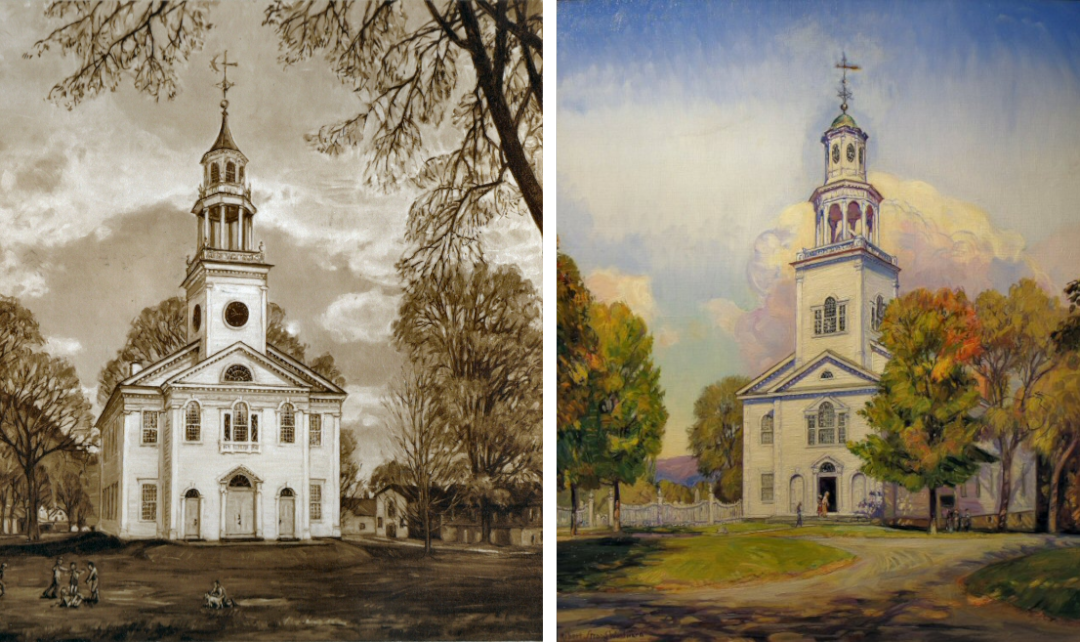
L to R: the East Poultney and Bennington Church-
es. We cropped a third of the left side of the Poultney
church to balance the two images. Full version of both
paintings will be available farther down in the page.
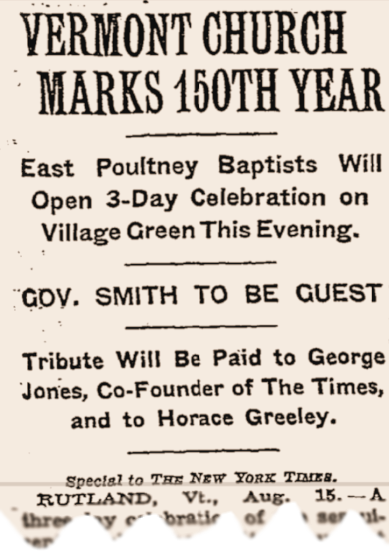
Aug. 16, 1937, New York Times
There is more...
Adding more to this story than just the lost and reclamation of the Marlboro Church. There are two other churches in the process of being repaired and restored from their many years of service- the Bennington Church in Bennington, Vermont, and the church in East Poultney, Vermont 60 miles farther north. Both churches are important to the history of this country and played prominent roles in one of the most crucial battles of the Revolutionary War- the Battle of Bennington. The victory there would lead to the victory in Sarasota, New York months later and proved to be a critical turning point of the war. August 16th is an official state holiday in Vermont and it is celebrated each year. It is known as, "Bennington Battle Day."
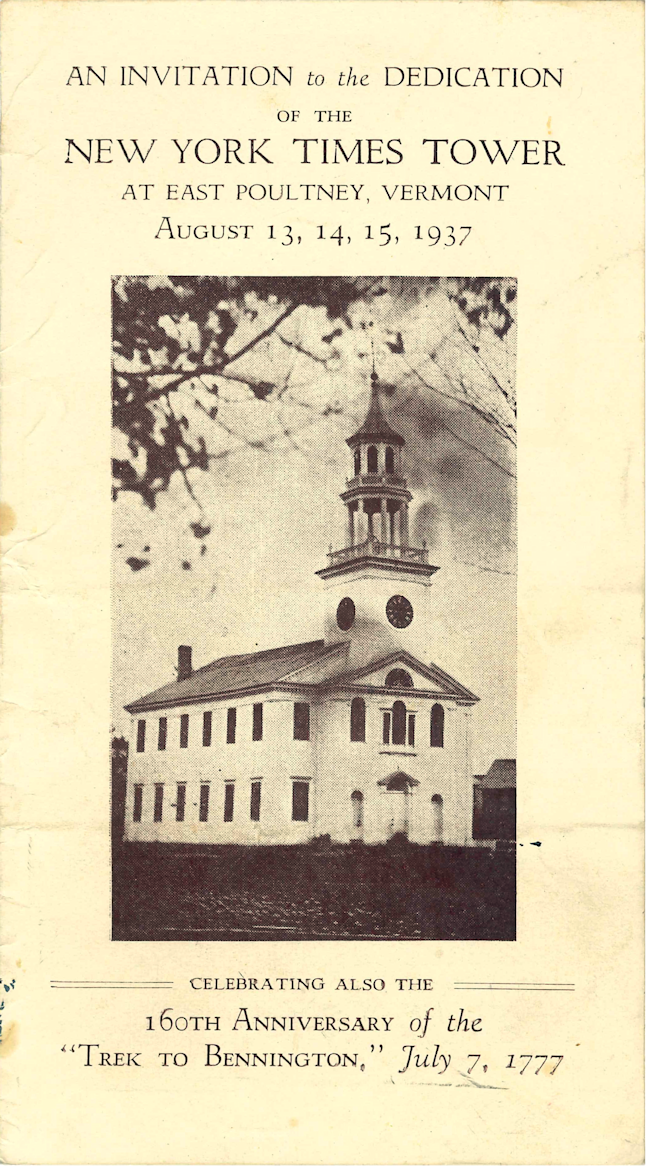
The year 1937, the same year Woodward painted his two Vermont church paintings, would be a grand celebration. In Poultney, it would be the 175th anniversary of the town's charter, as well as the 160th anniversary of the Battle of Bennington, which held its prelude first in Poultney, when it was attacked days prior to the battle in Bennington. A large group of almost exclusively women and children fled Poultney in the darkness of night and marched the 60 miles south to Bennington to take refuge. They were cared for at the Bennington church when the Bennington battle broke out.

Francis Garvan (1875 -1937) portrait
Lawyer, Philanthropist, and along with his wife,
Mabel Brady, collectors of Early American furni-
ture, decorative art, crafts, and silverware.
THE CONNECTION: By Network or Chance?
As far as we know, Mr. Garvan nor his wife, had not bought any paintings from Woodward outside of Enduring New England and so it is safe to say there was not a relationship prior to the agreement on the commission project. With that being said, it raises the questions: (1) Where did the idea originate? (2) Who originated it? (3) And how was Woodward chosen?
The link between the painting, Enduring New England, and its use by the architect designing the re-build of the church (1933) and Mr. Garvan's viewing of he painting (1937) is art gallery owner William Macbeth. Both occasions happened at Macbeth's gallery and so he is most likely the intermediary. But is he the originator? Was it his idea to put Garvan and Woodward together? Macbeth, known for establishing the first gallery in New York City dedicated solely to American art in 1892. An exhibition in 1908 titled, "The Eight" featured eight of America's top artist, including Robert Henri and George Luks. The exhibit is referred to as a watershed moment for American art work.
Woodward and Macbeth have a history and not necessarily a good one. Macbeth was once prepared to give Woodward his first ever "One-Man Show" in New York City sometime in January 1923. Still, it took some convincing by Woodward. Prior to the exhibit the correspondence between the two men was somewhat contentious. Macbeth is complaining to Woodward about being harassed by Woodward's friends to his to give the artist a show and Woodward in turn denying any involvement, but also offering no apologies. It is possible the Woodward was also being put in a bad spot. Perhaps he was also uncomfortable with the idea and maybe felt unready to face such a challenge so early in his career. That things were moving way too fast which is why his responses to Macbeth are lacking sincerity.

A portrait of William Macbeth by
Stephan Douglas Volk from the
collection of the Brokklyn Museum.
When Macbeth makes a criticism of Woodward's work, he responds, a bit arrogantly, in his own defense.
After the exhibition is agreed to (1920), Macbeth is now shocked to learn Woodward is NOT going to attend the show's opening. Something that is perhaps an unfathomable risk to the
art dealer for an unknown artist first show and for Macbeth already has his reservations about Woodward is deservedly concerned. While Woodward's reason for this is in many ways
legitimate, he does not give Macbeth the real reason why he will not attend.
The reason is because he does not want potential buyers to be influenced by his condition or
his wheelchair. What he tells Macbeth instead is:
"Altho it is a matter which I insist upon keeping entirely out of business relations, yet because of your natural questioning as to why I do not appear in person, I am forced to say briefly that a physical handicap makes it impossible. I work quietly and alone here in the hills."
Woodward to William Macbeth, 28 July 1920, from "Redgate"
The problem with this explanation is twofold, (1) Woodward attended the 1919 National Academy of
Design (NAD) with artist Gardner Symons to accept his HallGarten Prize in New York City just the before and, (2) money should not be a concern considering he will surely earn enough
from the exhibit to cover whatever cost the travel incurs.
This exhibit will never happen. On December 22, 1922, the night before 50 paintings are about to be shipped to
New York City from Buckland Massachusetts. Woodward's Redgate studio ignites in the flames most likely the result of a wood-burning stove. It was a total loss. Only one painting
survived.

Mrs. Ada Small Moore
Mrs. Moore is Woodward's patron-saint hav-
ing entered his life in the mid-1920s to pick
up the cost of his sizable medical cost.
Left with NO exhibit two weeks before it was scheduled to occur and after the previous difficulty in working with Woodward. Macbeth held a grudge and Woodward would not only not exhibit at Macbeth Gallery for almost a decade (1931), when he does get back on his feet his first one-man show is not in New York City but rather Boston. It is not at a famed gallery. It is not even at a mediocre, middling gallery. Rather, it is held in the second floor ballroom of the home, a neighbor, and friend of Woodward's patron-saint Mrs. Mary "Minnie" Eliot. Minnie is Woodward's greatest advocate. It is possible she is the one recruiting her friends to pressure Macbeth after Woodward's 1919 award.
Other people we considered having a possible involvement in this comission, but there is no evidence to suggest it, is Woodward sponsor Mrs. Ada Moore, of NYC and Pride's Crossing, MA. Mrs. Moore surely knows the Garvan's through NYC society but also both gave sizable collections to Yale University and have long connections to the school. However, we have no evidence she had an interest in Vermont. She is undoubtably a beach person summering in Pride's Crossing North of Boston every year.

Adaline Havemeyer Frelinghuysen
from the Class of 1905 Bryn Mawr College
Yearbook. It is the only picture we have.
The other is Mrs. Adaline Havemeyer Frelinghuysen. Mrs.
Frelinghuysen and her husband Peter are summering "Vermonters", hill people if you will (contrary to beach-goers). Also, Mrs. Frelinghuysen's sister, Electra Havemeyer Webb, is
founder of the Shelburne Museum in Burlington, VT, known for its remarkable and notworthy restorations and preservation of numerous early American buildings and structures. While
Adaline made her summer home Manchester, her sister has close ties to the Lake Champlain area where the Garvans also summered. As a side note, the Frelinghuysen family tradition
had always been for the children to get their undergraduate degrees from Princeton and graduate degrees from Columbia University but Adaline's son breaks with that tradtion and enters
Yale Law School in 1938, a year after the death of Mr. Garvan. Just something that makes us go hmm...
If Garvan were to speak to either woman in regard to Woodward,
both would have given him glowing reviews and their support. Mrs. Frelinghuysen was far and away Woodward's best customer. In 2010, we had the number of paintings, she bought
at nine. Today that list has ballooned to over 30, mostly pastels (her favorite medium) and the list is still growing. It you have never taken the opportunity to visit the Shelburne Museum
in Burlington, VT, we implore you to do so but plan to stay over night. It cannot be properly seen in just a day. In fact, the purchase of a pass is good for two days for that very reason!
Make a weekend of it. Click here for more.
We do not have any definitive answer to any of the three questions we ask above. Macbeth is the most likely link between Garvan and Woodward. We are just not sure he would have
originated the idea for Woodward to paint a study of early American churches and fine homes. It is more likely that Garvan heard the story of the architect discovering Enduring
New England at Macbeth, maybe even from Macbeth himself, and Garvan himself came up with the idea and contacted Woodward personally. The fact that Woodward has strong
relationships with two well-known collectors Mr. Garvan would certainly know pretty well did not hurt the confidence he had in his idea that Woodward was the perfect artist to carry out
his idea. Still, there is a problem Mr. Garvan does not anticipate...

Winter Window, 1937
With a little bit of both glass and tin this paint-
ing of from the storage closet of the adjacent
carriage house looking toward his artist north
window, icicles et al, also features the bubbled
imperfections of the sandwich glass he loved.
This painting was ACTUALLY sent to New York
as a placeholder for the late arriving church
paintings still in transit for Mr. Garvan to see.
THE THIRD WHEEL: Being the Odd Man Out?
For all appearances, Woodward seems to share many similar interest with the Garvans. The artist held a great appreciation for history and passion for items that are handcrafted, particularly prior to the post-industrial tool and die age of mass production. He loved sandwich glass and had a number of 19th century glass pieces in his last home and studio that appear in most all of his Window Picture paintings, including old medicine and cologne bottles. Still, in terms of "metals" Woodward appeared to be more a pewter and tin guy. There were very few silver pieces in his collection of things. In terms of furniture, Woodward seemed to like; from the several he had in his studio, small yet plain and simple rocking chairs.

Boston Globe, April 21, 1913
by A.J. Philpott
We will say this much because it feels relevant to the bond between Woodward and Mr. Garvan. Woodward began his career as a commercial artist. This included "home decor" if you will. As a side gig, he would take inspiring verses of poetry and add artwork to go with it called - Illuminations. We still see this sort of thing everywhere to this day. But he also did reverse glass painting which were very popular in the 1830s to the 1850s. Those were mostly of local or famous churches! Later, when Japan opened its ports to trade in the 1870s, the Japanese discovered reverse painted glass from Europe and began a new take on the art-form that prompted a revival in the early 20th century. We do not know what sort of scenes Woodward painted. We did find in his home an old, chipped, reverse painted glass painting of a church but it was unsigned. His first art review was made by Boston Globe art critic A.J. Philpott in 1913 on his painted glass from a local arts & crafts fair.
There is a pattern of Woodward's best professional relationships being with avid collectors. People
who are inflicted with the treasure hunting bug. So it would be no surprise to us that he would get along well enough with the Garvans to form a good relationship. But we get the
sense that, like his friendship with poet Robert Frost, it is not a perfect fit. This is not to say he does not hold them in high regard. We are sure he had the utmost respect for them.
However, they are not cut from the same cloth as he (a phrase he used on occasion). The Garvan's have the feel of being a bit lavish for his taste, perhaps a bit over the top by looking at
their resting place and family portraits. I mean, even Mrs. Moore gets her hands dirty and is often photographed wearing nice but modest clothing, etc. The Frelinghuysens prefer life
on their ranch raising cattle, just to make our point.
We do get the sense Mr. Garvan is a highly patriotic and principled man. A man on a mission if you will. It would
make sense to us that Garvan would get wind of a historic early American church tragically burning in Vermont and become interested in the twist of fate that its reconstruction was
being guided by the work of an artist who captured it a year before its demise.Woodward also just so happens to be a highly principled man on a mission and on this we are certain
they connected just fine in that regard. But these small differences may have also been their undoing as well.

The Potter Homestead, 1937
It would be unfair to say this is the ONLY painting of
its kind, yet, it is also a great example of two things
being true at the same time. RSW made a second
version of this Neoclassical style home naming it
In The Afternoon Sun. This suggest that he liked it.
Still, it is as "off-brand" a scene as it gets for the artist.
The problem becomes ideology. Woodward is caught in a delicate situation and he needs to be careful.
The whole focus of this commission centers on, "showing the growth of architecture (largely churches but also of fine dwellings) in America." [from RSW's painting diary for
Potter Homestead]. Yet, Woodward states clearly in his diary comments for
New England (1940) that the scene is, "a typical New England village street..." and it is more than fair to say that "fine dwellings" are not his thing. Far from it! We
do not believe the church was in any way, Woodward's focus, as much as it was the dirt road with its ruts and grooves; the weathered saltbox home in front of the church that could
be even older than the church or the large Georgian farm house and barns in the distance with the solitary farmer in the yard. The church is purely incidental. It is the entirety of the
scene Woodward is appreciating. Try and find a New England Village center that does NOT have a church / Meeting House. You can't, it is synonymous with the village center.
However, as we alluded to earlier, Woodward is a man of strong faith and conviction. He was known to frequently remind his young employee,
Dr. Mark to remember, "who is in charge," and he wasn't referring to himself. He was referencing God. So while the painting Enduring New England's journey has
put him in a fateful situation outside his comfort zone, he remains faithful to the commission- to a point. It is an opportunity he cannot deny will be a big feather in his cap and elevate
his legacy more than perhaps anything else he has done to date.
CLICK HERE for more on popular American House Styles and
their time periods from which they originated and were popular
presented by the This Old House
series on PBS.
( Page will open in a new tab)

The Francis Garvan Family portrait sans Francis
By the Hungarian artist Alexius de Laszlo in the spring of
1921. De Laszlo is known as a painter of kings, emperors,
and society figures. From left to right: Mabel Brady
standing aside her brother, Francis Patrick, Mrs. Garvan,
Anthony Nicholas Brady at her lap, and then Flora Brady.
As we hinted at earlier, we are suspicious of just how involved in this commission Mrs. Garvan was. We know so little about her and Woodward never mentions her except to say she would not honor the contract after her husband's death.. He only talks about communicating with Mr. Garvan. Yet, as far as teams go, the Garvans are said to be as tight as it gets. In an article published in the Jan. 28, 1929, issue of Time Magazine says of the couple, "Many a wife is a compliment, no complement to her husband. Mrs. Mabel Brady Garvan is both to her Francis Patrick Garvan." [ Complement: thing that completes or brings to perfection. ] There has to be some truth to this because the article is about the couple receiving the American Institute of Chemists Medal for Mr. Garvan's work as President of the Chemical Foundation the Institute could not decide which of the two were more deserving:
"So when the American Institute of Chemists last week pondered upon which one of the Garvans to give their medal 'for noteworthy and outstanding service to the science of chemistry and the profes-sion of Chemist in America,' there was no intelligent solution except to give it to them jointly."
Time Magazine, 28 January, 1929
So how is it that Mrs. Garvan does NOT honor the commission? Is it a situation where, as to this one thing, the Garvans did not see eye-to-eye? It is possible that she was so grieved she made the decision in hast. Still, wouldn't you think that she would want to honor her husband's memory, even if it was something she was not in full agreement. This is the biggest mystery to the whole commission, why did Mrs. Garvan not follow through with her husband's wishes? Could it be that she did not support it at all? That she was in complete disagreement with her husband. Or were there other reasons?
There are enough questions here to see something was not right in this collaboration. We mentioned that we could not find any reference to the collection having any paintings included in its assemblage. Moreover, while the intent of Mr. Garvan appears to have been to capture these historic structures for prosperity by a primarily self-taught and distinctly American artist- the paintings themselves would still be contemporary. We can see Mr. Garvan's vision. Who else but Woodward could capture the essence of these places better? But we do not believe Mrs. Garvan was on board with the plan making Woodward and his work, the odd man out. Even the painting Enduring New England is NOT with the collection in the museum! Sadly, it hangs in an office on the Yale campus out of the site of the public.
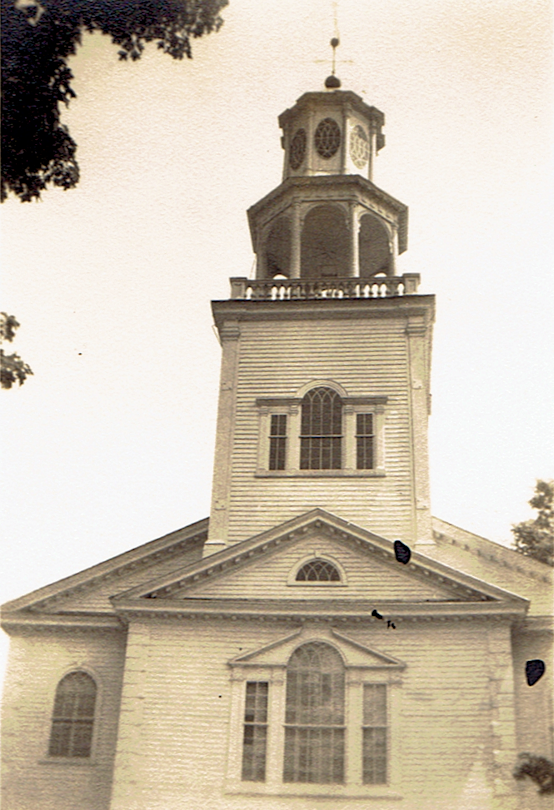
Photo of the Bennington Church steeple
found in Woodward's personal items suggest
he did use photographs to help him complete
his work on the commission. There was a
second photo matching the angle of the
painting seen to the left of the page.
A DEVASTATING BLOW: And Yet Probably for the Best
We believe there is evidence that suggest Woodward was hoping Mr. Garvan would see the value of expanding the range of paintings to be included in the collection. What jumps out the most are the paintings that hung with Enduring New England at the October exhibit at the Macbeth Galleries in New York City we assume to fill the space until the church paintings arrived. Those pieces are an odd lot but more than that... each piece has a case that fits the parameters of the commission with one exception- they are definitely not "fine dwellings." This suggest to us that Woodward was being a bit subversive and perhaps while he could not say no to the opportunity; he may have had his own agenda.
This is NOT to say he did give the commission his best effort. The fact we found old photographs in
his personal items of the Bennington Church as well as the Potter Homestead suggest to us he wanted to do as little traveling and work from the studio using the pictures. While
two of the churches he finished were Vermont churches, he did pull out of his storage a painting he made in the 1920s to re-paint it. This would become
The Village Church in Winter,. (the original was then destroyed.) It is a scene of the old Episcopal
Church in Shelburne Falls (MA) on the Deerfield River frozen over with skaters at play. A very romantic scene.
Other painting in various stages of completion are the
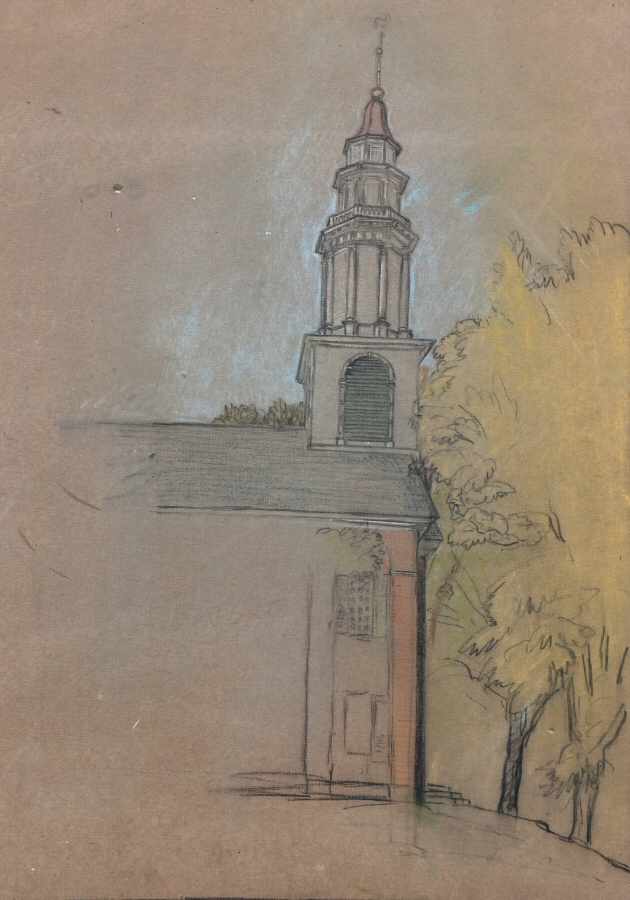
Plainfield (MA) Church and the brick First Church of Deerfield in the historic of Deerfield, MA.
For the Plainfield Church, there is a pencil sketch with markings to indicate scale, an
unfinished chalk drawing, and an unfinished oil painting. There is also
a sketch of the Deerfield church as well as two chalk drawings with different vantage points of the church, one
front-facing, the other a profile.
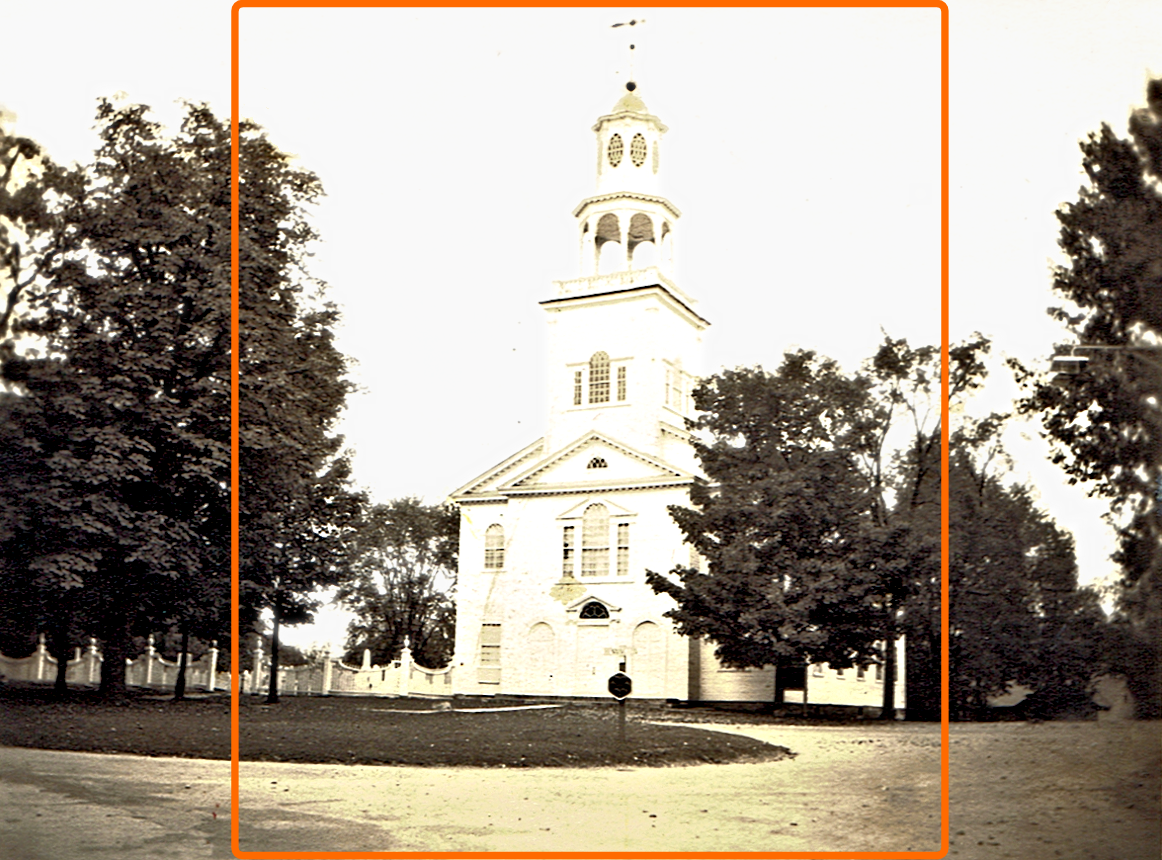
Photograph of the Bennington Church also found
in Woodward's personal items appears to be the
perspective he would use to complete the paint-
ing. The perspective outlined in orange for you.
It would seem to us that this consumed a great deal of his time and attention throughout the year 1937 which is coincidently the year he paints the first Window Picture painting from the storage closet in his carriage house of his adjacent artist north window that launches a regular stream of similar paintings for the remainder of his career and arguably his greatest legacy. That painting, we used above as our example of Woodward's appreciation of old glass and the use of tin, Winter Window ALSO, suspiciously, just happen to be one of the paintings choosen to hang with Enduring New England.
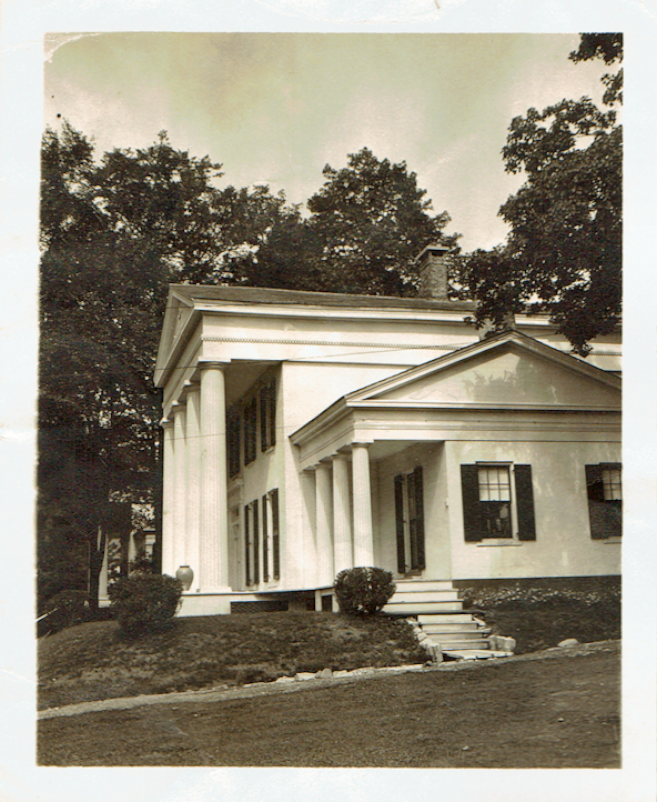
A photograph of the Potter Homestead
from Woodward's personal items.
We cannot think of any other instance where Woodward took pictures, made sketches, and/or made chalk drawings to compose a single oil painting. We have examples of him making an oil from a chalk drawing he made or vice versa. We have a few photographs that match painting scenes. This suggest he is taking this quite seriously and giving it his best effort and perhaps it was too much to do in a short period of time because the one item that stands out the most is how the completed churches did not make it to the gallery with a two week window to get there. It raises the question as to whether it was Woodward who was late or was it the shipping company's error.

Plainfield Hills Church, 1937
An old image of the painting given as a gift to
the church by RSW, unfinished and unsigned.
This incident has the feel and is reminiscent of Woodward's fateful Redgate fire in 1922. On a deadline
for 50 paintings to be sent to Macbeth, his studio ignited in flames when extra wood was put into the wood burning stove to assure the paintings did not freeze over night. How does
4 paintings ( including Enduring New England) Woodward makes much earlier than 1937 make it to New York and the 3 church paintings, all made in 1937, not make
it but a window painting made in 1937 did? And as far as we know, the churches NEVER arrived. Woodward says not one thing about the paintings actually getting to New York. He
says only that Mr. Garvan dies before he can see them. Woodward say in his diary comment for The East Poultney Church
Woodward claims he went to Dorset, VT, "in great pain" and "painted under tense difficulties," suggesting that his health may have been a contributing factor
delaying the delivery of the paintings on time.
Okay, so how many paintings were suppose to make it to the Macbeth Galleries? Hanging at Macbeth when Mr. Garvan visits
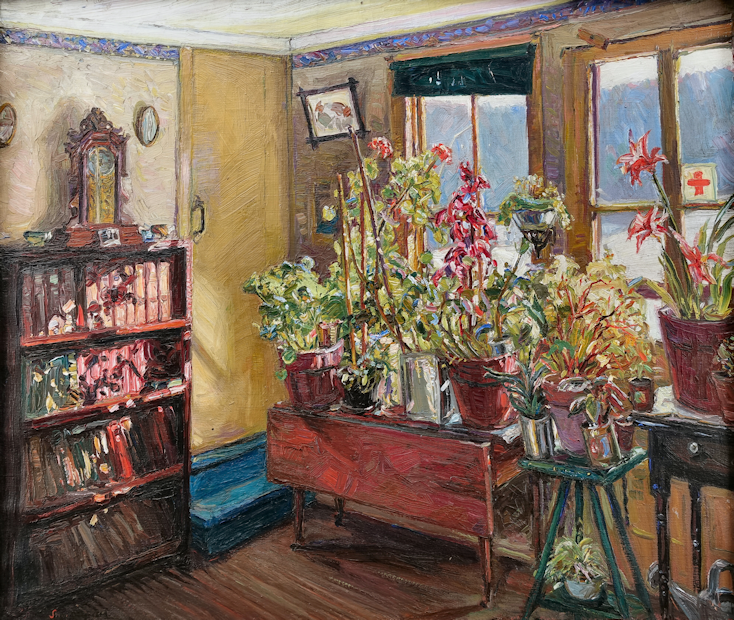
are: Enduring New England, and four other paintings: Winter Window (mentioned earlier and seen above on the right), A Country Sitting Room,
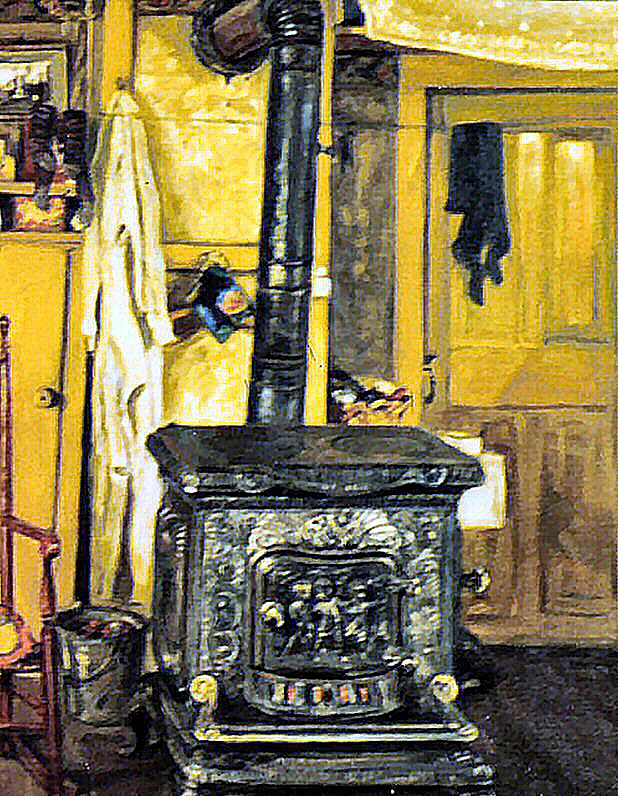
The Keach's Stove , and The Genial Old House (all seen below). From this we can assume that 4 church paintings were expected after Enduring New
England and we suspect that the fourth painting is the never-finished, The Plainfield Hills Church, seen to the upper left. The three completed church paintings
(seen below the paintings that did hang at Macbeth) are: The Bennington Church, Vermont, The East Poultney Church, Vermont, and The Village Church in
Winter. Yet, there is no mention of the completed "fine home" painting, The Potter Homestead or was that actually in transit as well, but delayed? We do not have
the answers to those questions, however, those unanswered questions raises still more questions. This project and subsequent exhibit is beginning to appear quite suspiciously like
an intentional sabotage.
ASIDE FROM WINTER WINDOW, THE THREE OTHER PAINTINGS THAT ACCOMPANIED ENDURING NEW ENGLAND AT MACBETH GALLERIES

THE THREE PAINTINGS THAT DID NOT MAKE IT TO THE MACBETH GALLERIES SANS THE POTTER HOMESTEAD


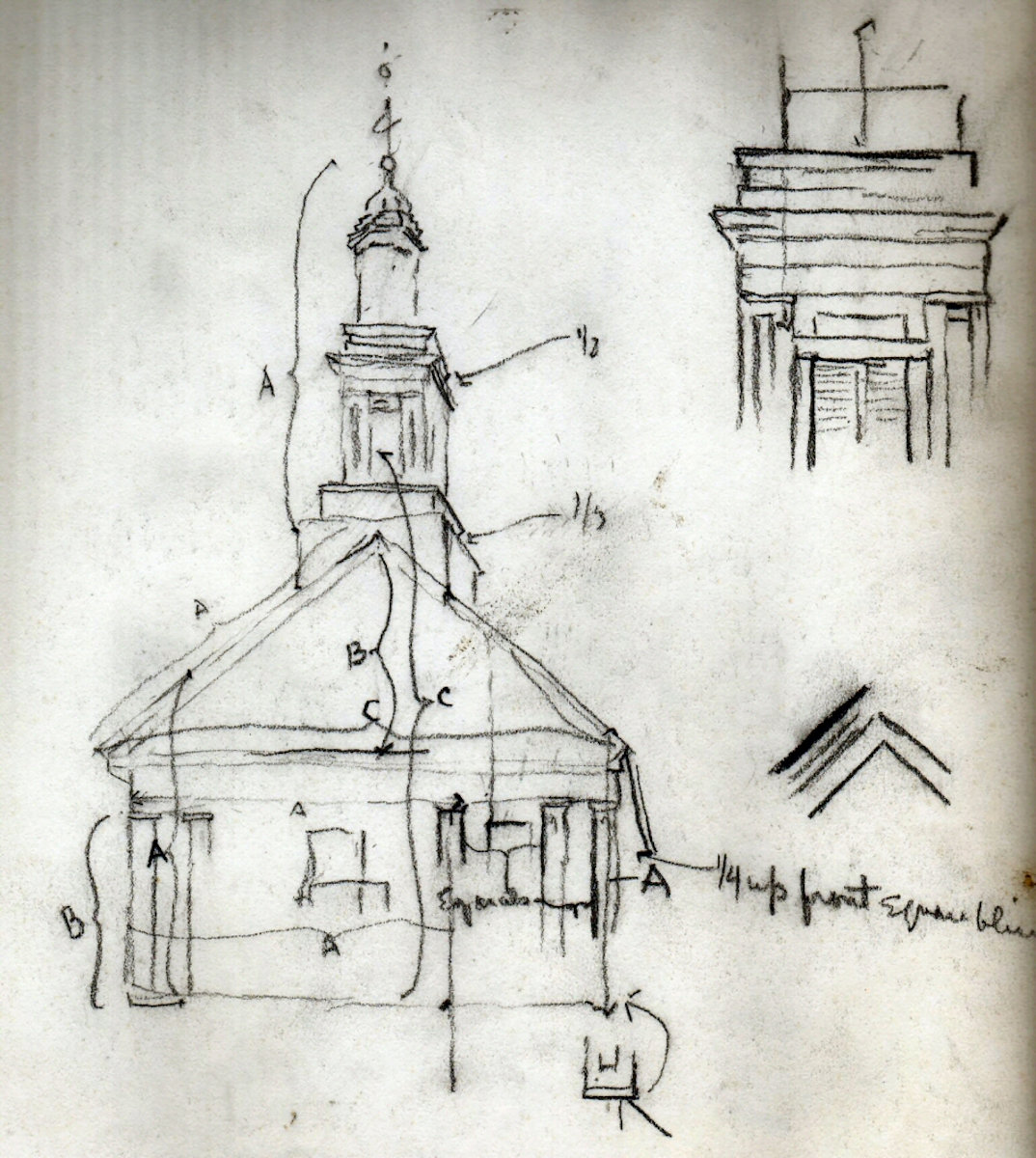
The Plainfield Hills Church- Sketch
From a sketchbook found in his studio.
INSINCERITY: Woodward's Passive-Aggressive Crutch
The only perfect outcome of this commission would be for all of the church paintings Woodward made
for the Garvan collection to be included in the collection itself. The paintings were not going to go anywhere but Yale University. The history of the paintings tells us that.
Of the four finished paintings, only Enduring New England made it to Yale. The other three completed church paintings were never sold by Woodward. The one house painting
was easily sold to the home's current owner, and Woodward made additional versions suggesting that he did like the scene despite being off-brand for him.
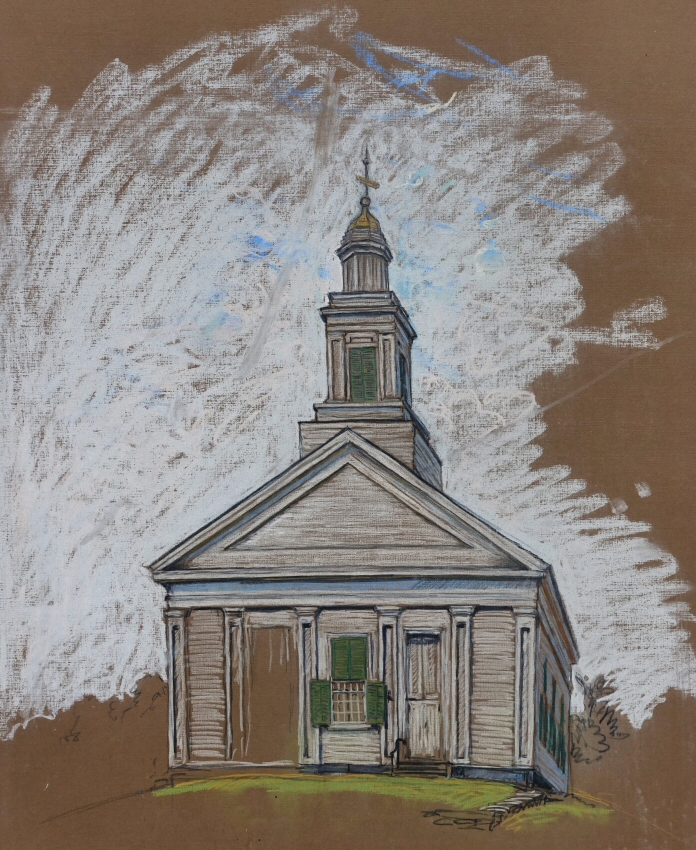
There were three chalk drawings in various stages of completion, including the Plainfield church, meaning that both the oil painting and chalk drawing were both incomplete.
There were also two versions of the brick church in Deerfield. One, a profile of the building and its steeple, the other, the front of the church itself. Both pastels had finger swipes
through the middle of them suggesting that they were either unsatisfactory or that Woodward had no intention of finishing them. Note the finger swipe through the middle of the
first Deerfield Brick Church drawing. Was that made because he did not like the outcome of the drawing or after the commission fell through and he packed the drawing in storage?
THE UNFINISHED CHALK DRAWINGS FOUND IN A SHIPPING TRUNK IN THE ATTIC OF THE CARRIAGE HOUSE
★★ AND CAN YOU FIND THE FINGER SWIPE IN EACH PAINTING? ★★

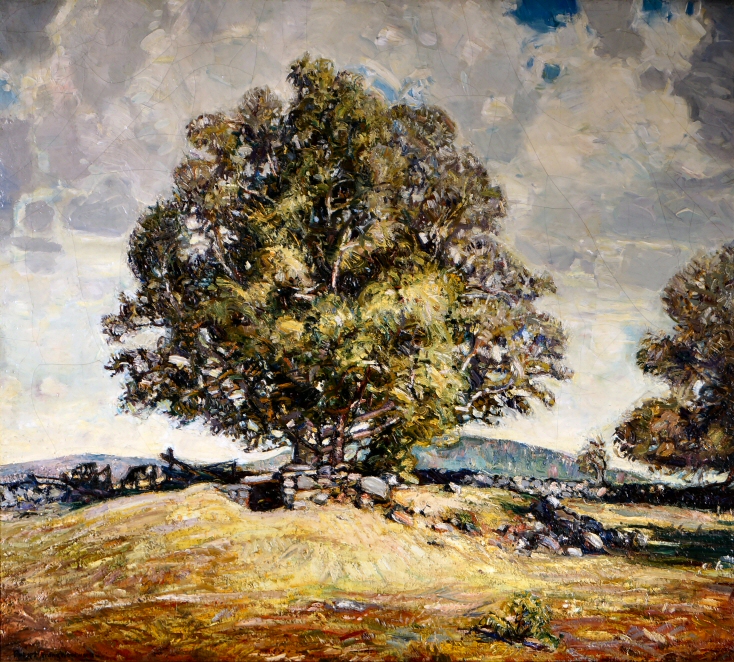
Unnamed: Stonewalls Meet
The painting gifted to the Trinity Church, Shelburne, MA
As mentioned prior, the unfinished Plainfield church painting was donated to the church by
Woodward, however, Woodward did this without finishing or signing the painting. This is highly unusual for the artist. Not to donate a painting to a church. He had donated
a painting to the Trinity Church in Shelburne, MA. That painting was also not signed. Woodward did not sign gifts because he did not want people to profit from them. Still,
for the most part, the painting given to the Trinity Church was basically a finished painting whereas the Plainfield one was not. It is almost as if he just be rid of it than spend
another minute finishing it.
Does these behaviors indicate some resentment that the contract was not honored or that the project fell through? We are certain
Woodward was disappointed. There is no doubt his work being included in the collection would've been quite the feather in his cap. Perhaps even critical to his lasting legacy.
Still, our argument that the artwork was a poor fit with the apparent objectives of the collection adds unique twist to this story. Did Woodward will feel the same way that his
paintings were not a good fit for the collection? What's more, did Woodward try to sway Mr Garvan towards paintings he felt were a better fit and more appropriate addition
to the collection. There is evidence of this possibility that we have asked ourselves.
VISIT THE UNNAMED GALLERY: Many of the paintings are gifts Woodward gave away.
THE REST ARE PAINTINGS IN HIS STORAGE SPACE HE DID NOT DESTROY BUT NEVER FINISHED
( Page will open in a new tab)
① Why were the three church paintings late to Macbeth?
And not just the late by a day or two, they missed the entire window for the exhibit. What stands out most is that the window was two weeks, and Mister Garvan did not get there until the very last day of the showing. So what happened to the three church paintings that were in transit?
If this project was truly a legacy making effort
for the artist, how could he possibly not have completed the assignment? This does not sound at all like Woodward. Was he sick? Did something happen that delayed him
from completing at least two of the paintings? Was he simply not given enough time to complete the contract?
If this project was truly a legacy making effort
for the artist, how could he possibly not have completed the assignment? This does not sound at all like Woodward. Was he sick? Did something happen that delayed him
from completing at least two of the paintings?
We ask because, A Village Church in Winter, is a
reproduction of an earlier painting, meaning he could complete it in a matter of days if not less. This leaves the paintings Bennington church, and the East Poultney
church as the two possible holdups. He does say in his diary comments for The East Poultney Church, "When in great pain went in Dorset, just to paint this picture...
Painted under tense difficulties." So we know for at least that painting, Woodward was not well. Yet still, in his career, he averaged making at least 23 oil paintings a year
and he could not get four done?
Woodward never says if the paintings ever arrived at the gallery.
We know they were returned to him because the estate has them. But here is the thing that puts a crimp in it being the fault of the shipping company... Five paintings did
hang at Macbeth. They were shipped, probably as backup because the other paintings were not finished yet or Woodward was not yet satisfied with them, so what does this
suggest?
② And why is there no mention of The Potter Homestead?
Perhaps there is something we are missing here, but Woodward is clear in his diary comments for the Bennington Church, that Mr. Garvan ordered "many" of the paintings. Because Woodward sometimes phrases things in weird almost benign way, it is hard to tell if he means: (1) specific paintings were ordered, or (2) that he asked for a particular number of paintings and then let the artist choose the subjects. We raise the question as to how A Village Church in Winter, did not make it to New York. We can ask the same of the Potter Homestead.
The home is located in Greefield, MA. We know from his 1932
diary that he made numerous trips, sometimes twice at week, to Greenfield for errands. The home is on Main Street and it is right around the corner from the Weldon Hotel
where Woodward frequented for dinners in its dining room where his paintings routinely hung.
We also know from the diary that the summer months are Woodward's
most active. He would have surely been bouncing around Greenfield in his brand new 1936 Packard Touring car. In 1932, we read stories of
him riding up to Vermont for most of the day and stopping somewhere in Bernardston, or Greenfield for dinner.
So, at the time there are 5 paintings hanging in the Macbeth Gallery
for Mr. Garvan to review, where is the Potter painting? Woodward only indicates the church paintings did not make it. There is no mention of a painting, likely painted during the
summer months of a location close to his home.
③ What is unique about the paintings he did send to Macbeth?
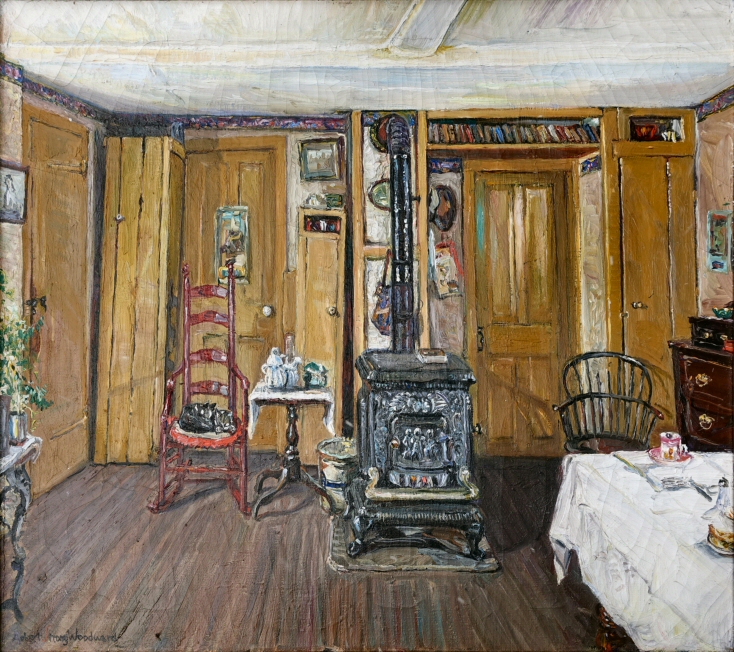
We do not believe that it is mere coincidence or even simply happenstance that 3 of the paintings holding the spaces for the expected church paintings just so happen to also be from Woodward's own personal collection of his favorite paintings. Paintings was have nicknamed, the Orphan Paintings, meaning that Woodward never found the right home for them. What is particularly unique about the paintings that hung in the Macbeth Gallery along with Enduring New England is that they all possessed a quality from a passing time the Garvan's were attempting to preserve. The unique style of the old house Woodward called "genial", or the classic design of the old cast iron stove in Mrs. Keach's living room or the drop leaf table and old clock in the "sitting room" of Mrs. Keach's old house.
These are the paintings he was most selective about selling. We believe
these are paintings that Woodward is specifically trying to find the perfect home. The perfect home would be, in a museum, or the collection of an esteemed private collector,
and/or as part of the distinguished collection to be held in a prestigious university. John Doe was never going to be able to buy, Mrs. Keach's Front Porch, from Woodward. Jane
Smith had no chance of hanging in her parlor, Mrs. Keach's Stove. Of the three orphan paintings only Mrs. Keach's Stove found a home at the Canajoharie (N.Y.)
Art Gallery.
What is baffling to us is why other orphan paintings, like,
A Country Interior or editiorial paintings exhibiting about the country like, Contentment
or even one of the paintings of the Halifax House were not sent instead of let's say, A Country
Sitting Room or Winter Window for that matter. Which lends to the question as to why Winter Window was there at all?
This is the one crimp in our argument about the paintings sent
to Macbeth to serve as space holders for the church paintings. We suspect Woodward sent these paintings was a ruse to get Mr. Garvan to consider them for the collection.
But why not send A Country Interior? A painting that has ALL one could want of early American craftsmanship and home decor: the old stove, the Windsor chair,
the New England slat-back rocking chair, the bureau, the ceramics, a tea set on the table, and pottery behind the stove. All of these items are key elements to the Mabel B. Garvan
Collection but Woodward does not send it.
We believe this is because A Country Interior holds rarefied air to Woodward. Consider this, it only exhibits
once, J.H. Miller in 1928, yet it hangs in his home for the entirety of his life. Its counter-part, the other side of the room, A Country Sitting Room, however, exhibits
seven times, including twice at the Myles Standish Gallery in one of the artist most highly regarded shows in 1931 and then again in the final farewell event before the hotel's
closing personally curated by Woodward with many of his favorite paintings and orphans.
④ Why send Winter Window if RSW was covertly trying to influence Garvan?
Winter Window, 1937
This painting does not fit with the others
The outlier of these paintings is Winter Window. For one thing, it is made in February or March of 1937, the same year as the church paintings. It is the youngest painting hanging at Macbeth and it is a Window Picture. Woodward has only made ONE other Window Picture painting since 1931 and that painting, From the North Window, was made the same month he moves into his new home & Studio, The Southwick Place, so technically, also an outlier. It took some time for it to come to us. We needed to ask ourselves, 'what is unique about the painting? What is 'early American' about it?
Winter Window, is painted from the newest building on the
Southwick property, the Carriage House (c. 1900). It shows only a corner of the c. 1820 Blacksmith Shop Woodward converted into his studio and study. The blacksmith shop does
qualify under the criteria of preservation the Garvans were hoping to capture. Yet, so little of it is visible and the artist north window is an addition to the studio. Though this sort of
window has a tradition going back to early Greece. It is not distinctly American. It was made special for Woodward.
Could Winter Window have been an alternative option for the
Potter Homestead painting? Both are neither church related; they are homes, although one is an interior and the other an exterior; and Woodward did send two other
interiors, The Keach's Stove and A Country Sitting Room.
Still, what does this say for the painting The Genial Old House,
another one of the 5 paintings in New York that neither a church painting nor a fine dwelling? Was this Woodward's alternative to The Potter Homestead
Donec turpis urna, consequat eget accumsan id, tincidunt in sapien. Aliquam imperdiet risus in tortor suscipit, sed malesuada ligula consequat. Nam feugiat viverra quam id sagittis. Curabitur egestas vel metus ornare fermentum. Phasellus mattis, nulla vitae condimentum fermentum, nisi diam dapibus nunc, at consectetur est felis posuere eros. Suspendisse potenti. Vestibulum sollicitudin mollis ipsum, vitae egestas nisl tempus sed. Proin vel nulla leo. Morbi fringilla porta dui eu scelerisque. Nunc non lobortis nulla.
Vestibulum dapibus, ante quis imperdiet tristique, massa magna finibus magna, ac iaculis sapien erat sed tellus. In varius sollicitudin nulla ac ullamcorper. Duis ut mattis ante. Aenean viverra sed ipsum et pharetra. In fringilla nisi at commodo condimentum. Integer scelerisque nec nisl malesuada tincidunt. Nunc bibendum fermentum mauris, non semper justo vehicula ut. Suspendisse sagittis tellus eget faucibus hendrerit. Phasellus eleifend faucibus libero id mollis. Nulla non dui id lectus sagittis rutrum. Donec mollis erat nec erat tempus molestie. Sed tincidunt ultrices dui, at rutrum lorem gravida fringilla. Nulla eget ex libero. Fusce malesuada turpis hendrerit viverra varius.
Donec turpis urna, consequat eget accumsan id, tincidunt in sapien. Aliquam imperdiet risus in tortor suscipit, sed malesuada ligula consequat. Nam feugiat viverra quam id sagittis. Curabitur egestas vel metus ornare fermentum. Phasellus mattis, nulla vitae condimentum fermentum, nisi diam dapibus nunc, at consectetur est felis posuere eros. Suspendisse potenti. Vestibulum sollicitudin mollis ipsum, vitae egestas nisl tempus sed. Proin vel nulla leo. Morbi fringilla porta dui eu scelerisque. Nunc non lobortis nulla.